In this biography
Quick facts
- Born
- 1894-02-10
- Died
- 1986-12-29
- Birthplace
- London, England
- Country
- United Kingdom
- Nationality
- British
- Known for
- Prime minister, 1957–1963; post-war prosperity, African decolonisation and nuclear diplomacy
- Prime minister
- 1957–1963
- Parliamentary constituencies
- Stockton-on-Tees; Bromley
- Earlier occupation
- Publisher at the family firm
- Peerage
- Earl of Stockton, 1984
Why this life matters
His career connects the social priorities of interwar Britain with the difficult adjustment from imperial power to a nuclear, European and Commonwealth role.
Timeline
Key moments
Born in London
Macmillan grew up in a family associated with the publishing firm.
Wounded at the Somme
His First World War service interrupted his Oxford education.
Elected for Stockton
Industrial unemployment became a lasting influence on his politics.
Housing minister
He joined Churchill’s post-war government and pursued expanded housebuilding.
Succeeded Anthony Eden
He became prime minister following the Suez crisis.
Wind of Change
His Cape Town speech acknowledged African national consciousness and differences over apartheid.
Treaty and resignation
The Partial Nuclear Test Ban Treaty preceded his October departure from office.
Died in Sussex
He died on 29 December, two years after receiving his earldom.
War interrupted an established family path
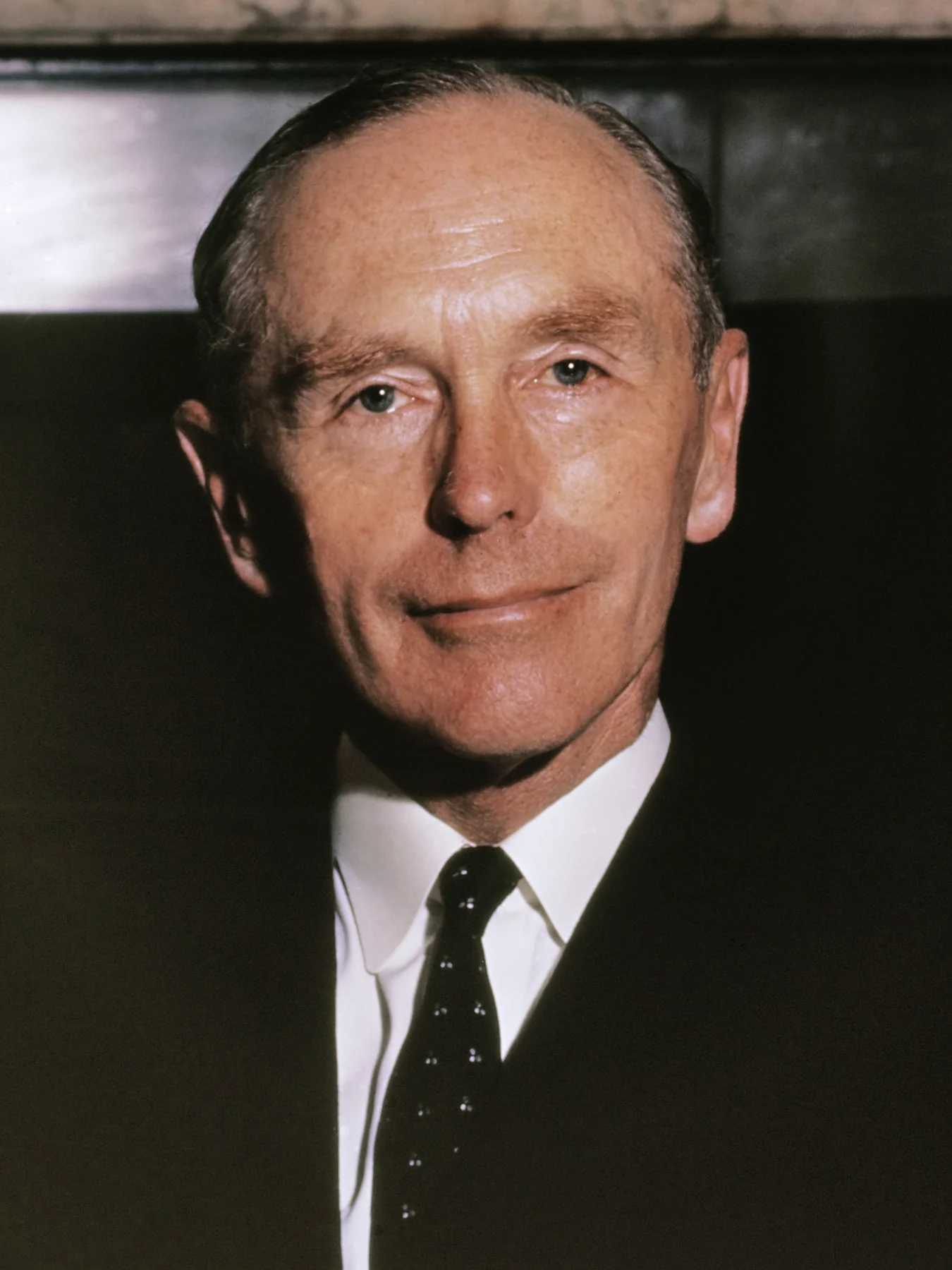
Maurice Harold Macmillan was born in London on 10 February 1894 into the publishing family. Education at Eton and Balliol College, Oxford placed him within an established elite, but the First World War interrupted his degree. He served with the Grenadier Guards and was seriously wounded at the Somme in 1916. He did not return to complete his Oxford studies after the war.
In 1920 he married Dorothy Cavendish and joined the family publishing business. Their household and political connections offered advantages, but his public identity was not simply inherited. War experience and the conditions he later encountered in an industrial constituency helped produce a Conservative interest in social protection, employment and the responsibilities of government.
Stockton shaped his social Conservatism
Macmillan first won Stockton-on-Tees in 1924, lost in 1929 and returned in 1931. The hardship of the interwar depression challenged comfortable assumptions about market recovery. He supported economic intervention rather than accepting mass unemployment as inevitable. During the 1930s he was also critical of appeasement, bringing him closer to Winston Churchill before he held senior government office.
Wartime ministerial work included service in the Mediterranean theatre, where he dealt with Allied commanders and political questions. Defeat at Stockton in 1945 did not end his parliamentary career: he returned through a Bromley by-election that year. These changes connected local representation, wartime administration and high diplomacy well before the premiership for which he is best remembered.
Housing and prosperity became electoral strengths
As housing minister from 1951, Macmillan helped deliver the Conservatives’ drive to increase housebuilding. He subsequently held the defence, foreign affairs and Treasury portfolios. After Anthony Eden’s resignation in January 1957, he became prime minister in the aftermath of Suez. He had supported that venture himself; succeeding Eden did not place him outside responsibility for the policy that had failed.
His government benefited from rising living standards and won an enlarged majority in 1959. The famous prosperity message associated with “never had it so good” was accompanied by concern about sustaining the improvement. Employment, inflation and the balance of payments created competing demands. Apparent affluence therefore did not mean that the structural difficulties of the British economy had disappeared.
Decolonisation and alliances changed Britain’s position
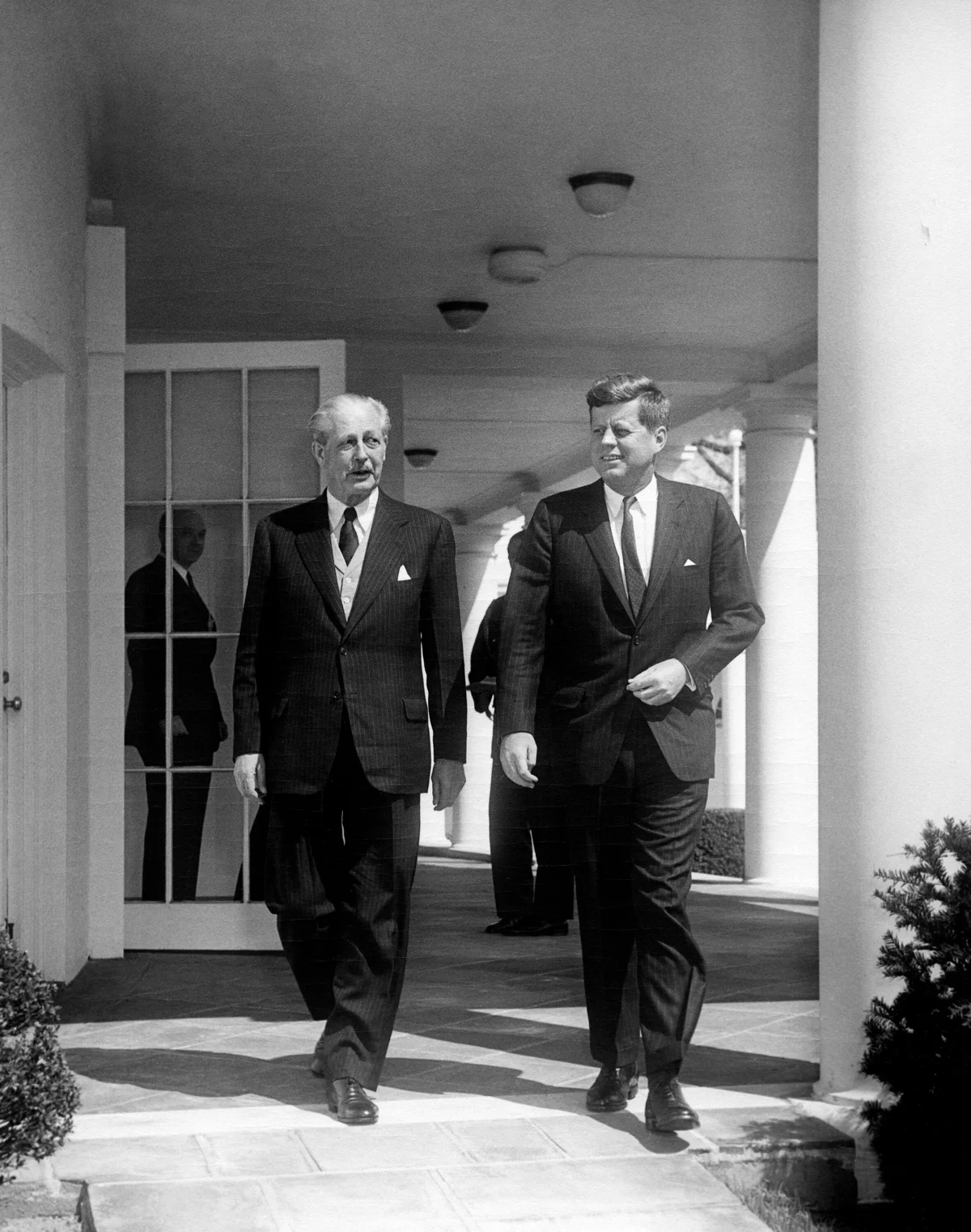
Macmillan repaired relations with the United States and worked with both Eisenhower and Kennedy. Nuclear cooperation supported Britain’s deterrent, while his government also pursued arms-control diplomacy. He was closely involved in the negotiations leading to the 1963 Partial Nuclear Test Ban Treaty. These policies combined continued strategic ambition with recognition that Britain depended heavily on its allies.
In Cape Town on 3 February 1960, his Wind of Change speech recognised African nationalism and challenged aspects of apartheid. It did not grant every colony independence or transform South African law. In the Commons afterwards, Hugh Gaitskell welcomed the language but pressed him about detained African leaders and constitutional choices. The exchange exposes the distance between a declaration of principle and particular colonial decisions.
European rejection, scandal and a long afterlife
Macmillan sought entry into the European Economic Community, but Charles de Gaulle blocked Britain’s application in January 1963. A dramatic cabinet reshuffle in 1962 and the Profumo affair further damaged his authority. Profumo’s misleading statement to Parliament made the scandal a question of ministerial accountability, not merely private conduct. Macmillan resigned in October 1963 following illness, amid this wider political deterioration.
He left the Commons in 1964 but remained a public figure and Oxford’s chancellor. Created Earl of Stockton in 1984, he died at Chelwood Gate, Sussex, on 29 December 1986. His record resists a simple verdict of either effortless prosperity or inevitable decline: practical social Conservatism and diplomatic achievements coexisted with unresolved economic weaknesses, imperial contradictions and an increasingly vulnerable governing establishment.
Quick answers
Frequently asked questions about Harold Macmillan
- When was Harold Macmillan prime minister?
- He served from January 1957 until October 1963, succeeding Anthony Eden and preceding Alec Douglas-Home.
- Did he graduate from Oxford?
- No. The First World War interrupted his Balliol studies, and he did not return to complete the degree.
- Did the Wind of Change speech end apartheid?
- No. It publicly acknowledged African nationalism and expressed disagreement with South African policies, but it did not change South African law or end apartheid.
- Why did he leave office in 1963?
- Illness prompted his October resignation after European disappointment, economic strain and scandals had weakened his government. Treating any single scandal as the complete explanation misses that combination.
Keep exploring
Lives connected to this story
- James Callaghan
Compare another post-war prime minister’s choices about employment, inflation and Britain’s external financial position.
- John Major
Follow later Conservative debates about Europe, economic credibility and the limits of prime-ministerial control.
- Edward Heath
Heath supported Macmillan’s earlier European-entry attempt before leading the successful later government.
- Alec Douglas-Home
Douglas-Home was Macmillan’s foreign secretary and successor as prime minister.
Sources and further reading
Explore the evidence
These references support the biography and offer further reading. Official records, first-person accounts and independent reporting provide different perspectives; image records document attribution and licensing.
- 1. UK Prime Minister’s OfficeHarold Macmillan: life and premiership
The government biography, council heritage account and museum narrative establish the main sequence. Their occasional compressed or inconsistent details are not reproduced: Macmillan attended Oxford without graduating, and no disputed reshuffle count is used.
- 2. Museum of the Prime MinisterHarold Macmillan: life, ministries and political difficulties
- 3. Stockton-on-Tees Borough Council, Stockton HeritageHarold Macmillan: education, war service and Stockton representation
- 4. UK Parliament, Historic HansardAfrica: Prime Minister’s visit, 16 February 1960
Read the selected Cape Town speech transcript and the published Commons statement and opening opposition exchanges. These reveal contemporary arguments, not a review of every colonial file or an independent endorsement of Macmillan’s own account.
- 5. Harold Macmillan / ThinkIB teaching documentWind of Change, 3 February 1960: selected speech transcript
- 6. Abbie Rowe / JFK Library / Wikimedia CommonsMacmillan and Kennedy in the West Wing colonnade, 5 April 1961: original and rights
- 7. Creative CommonsPublic Domain Mark 1.0