In this biography
Quick facts
- Born
- 1966-10-09
- Birthplace
- Marylebone, London, England
- Country
- United Kingdom
- Nationality
- British
- Known for
- The Conservative–Liberal Democrat coalition, austerity and the 2016 EU referendum
- Born
- 9 October 1966, London
- Education
- Eton College; Brasenose College, Oxford
- Prime minister
- 11 May 2010–13 July 2016
- MP for Witney
- 2001–2016
- Foreign secretary
- 13 November 2023–5 July 2024
- Status checked
- Living; Conservative life peer, parliamentary record checked 23 October 2026
Why this life matters
His career shows how party modernisation, coalition bargaining and the use of referendums could produce consequences far beyond a leader’s intended settlement.
Timeline
Key moments
Born in London
His upbringing and education gave him access to elite political and professional networks.
Elected for Witney
He entered Parliament after work in Conservative research, ministerial advice and communications.
Won the party leadership
He promoted a modernising Conservative message.
Formed a coalition
The Conservatives and Liberal Democrats agreed to govern after a hung Parliament.
Won a majority
A Conservative government replaced the coalition.
Resigned after the referendum
He campaigned for Remain; Leave won, and he left Downing Street on 13 July.
Greensill lobbying scrutinised
A Commons committee criticised his informal approaches to ministers and officials.
Returned as foreign secretary
He entered the Lords and served until 5 July 2024.
Education and political work preceded election
David William Donald Cameron was born in London on 9 October 1966. He attended Eton and studied philosophy, politics and economics at Brasenose College, Oxford. Conservative research work led to appointments advising Norman Lamont at the Treasury and Michael Howard at the Home Office. He then worked for Carlton Communications before winning Witney in 2001.
He married Samantha Sheffield. Their first child Ivan was born in 2002 with severe disabilities and died in 2009, aged six. Cameron later described the family’s experience of care and bereavement in his memoir. The personal account illuminates his family life without providing an automatic explanation or justification for his government’s health and welfare policies.
Modernisation took him to the Conservative leadership
After three successive Conservative general-election defeats, Cameron won the leadership in 2005. He sought a less forbidding party image, emphasising public services, environmental issues and social concerns. His communications background and generational distance from the governments of 1979–1997 helped the argument for renewal.
The 2010 election made the Conservatives the largest party but denied them a majority. Negotiations produced a coalition with the Liberal Democrats. Cameron became prime minister on 11 May, with Nick Clegg as deputy. Government policy consequently reflected bargaining between two parties as well as Cameron’s preferences.
Austerity and reform reshaped the domestic agenda
The coalition responded to the aftermath of the financial crisis with spending restraint intended to reduce the deficit. Education, welfare and NHS reforms accompanied it. Supporters emphasised fiscal control and economic recovery; critics challenged the distribution of cuts and their effects on public services. A reduction in the deficit does not itself settle those disagreements.
Cameron supported the Marriage (Same Sex Couples) Act 2013, which enabled same-sex marriage in England and Wales. The territorial wording matters: it was not a single marriage law for the entire UK. His government also pursued the Big Society programme and an expanded academies system, while coalition tensions surfaced over electoral and parliamentary reform.
Referendums became defining political decisions
Voters rejected the alternative vote in 2011 and Scottish independence in 2014. After winning a Commons majority in 2015, Cameron delivered his promise of an EU membership referendum. He negotiated changes with European partners and campaigned for Remain.
On 23 June 2016 Leave won 51.9% of valid votes. Scotland and Northern Ireland voted Remain, while England and Wales voted Leave. Cameron announced that new leadership should carry out the result and left office on 13 July. He resigned his Commons seat in September. Withdrawal itself came later, after his premiership.
Later lobbying attracted formal criticism
Outside government Cameron advised Greensill Capital and approached ministers and officials on its behalf during the pandemic. In 2021 the Commons Treasury Committee concluded that his use of informal contacts showed a significant lack of judgement, given the access afforded by his former office. The finding concerned conduct and standards; it should not be recast as a criminal conviction.
The episode complicated a post-premiership that also included writing and charitable work. It exposed a broader question about former ministers’ access to government and the adequacy of lobbying rules, beyond whether a particular contact fitted a narrow registration requirement.
Sources for this section: [5]
A diplomatic return ended in July 2024
Cameron unexpectedly returned to government as foreign secretary on 13 November 2023 and entered the House of Lords. He served until 5 July 2024. Parliament’s career record, checked on 23 October 2026, lists him as a Conservative life peer and records the foreign secretary role as a previous appointment.
His legacy therefore contains more than the referendum, but the referendum remains decisive: the leader who hoped to settle the Conservative argument over Europe initiated a process that ended his premiership and changed the UK’s international position.
Quick answers
Frequently asked questions about David Cameron
- Did Cameron campaign to leave the EU?
- No. He called the 2016 referendum but campaigned for Remain. He resigned after Leave won.
- Did Brexit happen while he was prime minister?
- The referendum took place during his premiership. The UK left the EU on 31 January 2020, more than three years after he left office.
- Is he still foreign secretary?
- No. Parliament records his foreign secretary service as 13 November 2023 to 5 July 2024. Its record checked on 23 October 2026 lists him as a Conservative life peer.
Keep exploring
Lives connected to this story
- Stanley Baldwin
Compare Conservative leadership, party management and national appeals in another period.
- Harriet Harman
Compare equality reform across the Labour and coalition years.
Sources and further reading
Explore the evidence
These references support the biography and offer further reading. Official records, first-person accounts and independent reporting provide different perspectives; image records document attribution and licensing.
- 1. UK Prime Minister’s OfficeDavid Cameron: education and premiership
The official account supplies education and chronology. Its celebratory judgements are balanced with the museum and committee report. Its listing of a Fixed Term Parliaments Act 2010 is not repeated: the Act was enacted in 2011.
- 2. Museum of the Prime MinisterDavid Cameron: coalition, austerity and referendums
- 3. UK ParliamentLord Cameron of Chipping Norton: parliamentary career
Current parliamentary membership and the completed ministerial term were checked on 23 October 2026; no present ministerial role is inferred from an old portrait.
- 4. ITV NewsDavid Cameron on the death of his son Ivan, 15 September 2019
ITV reports Cameron’s own memoir account of Ivan’s illness and death; that personal account is attributed.
- 5. House of Commons Treasury CommitteeLessons from Greensill Capital: David Cameron’s lobbying
The committee’s criticism is attributed to the committee, without implying a judicial finding of criminal wrongdoing.
- 6. House of Commons LibraryBrexit: how did the UK vote? 24 June 2016
- 7. House of Commons LibraryBrexit timeline: events leading to the UK’s exit, January 2021
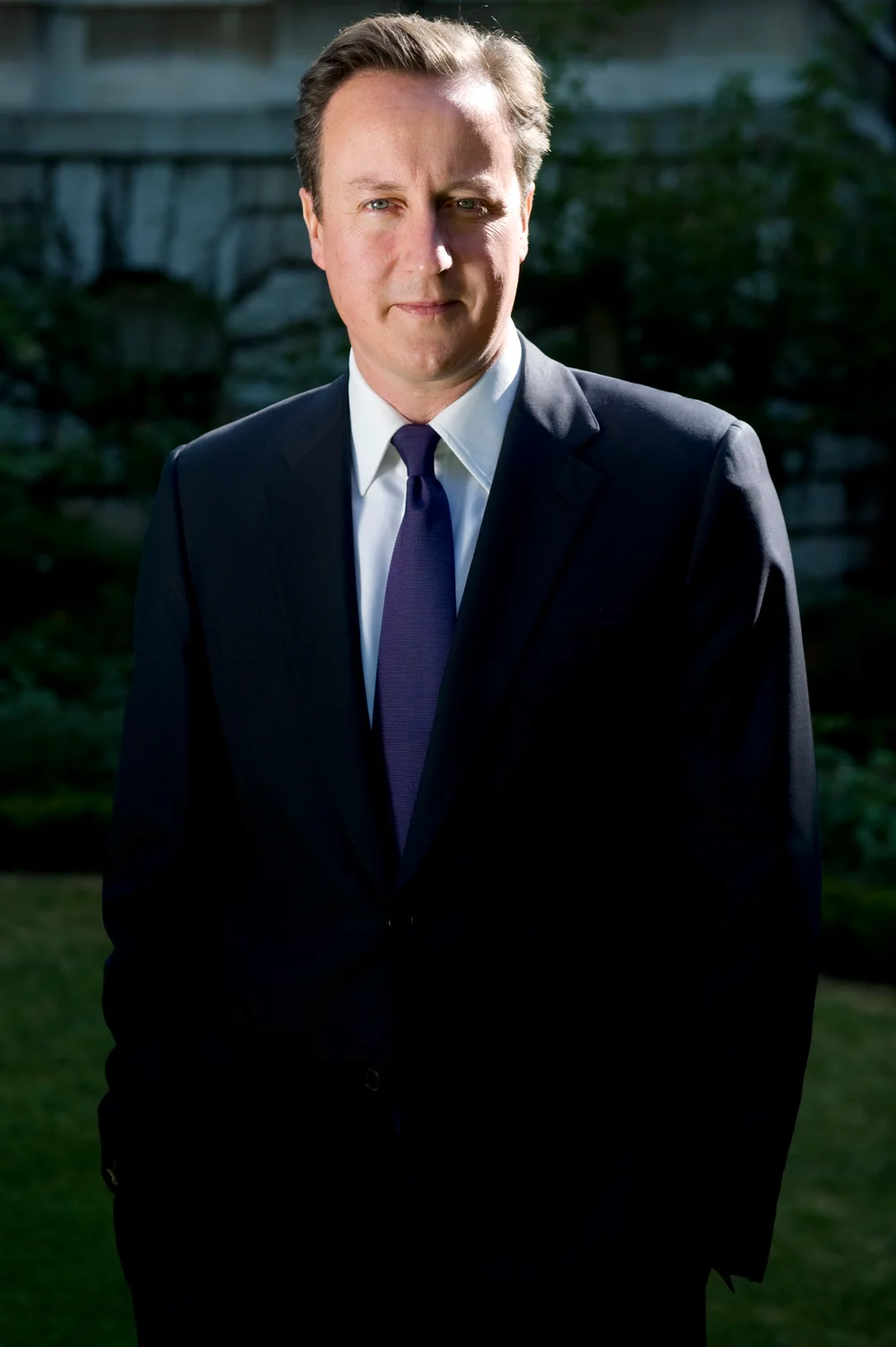
- 8. Wikimedia Commons / Number 10David Cameron: complete 2010 official photograph, CC BY 2.0 and history
- 9. Creative CommonsAttribution 2.0 Generic licence