
The short answer
The 1992 election completed the first regular presidential succession after People Power. Fidel V. Ramos won a seven-candidate race by plurality, while Miriam Defensor Santiago challenged the result before the Presidential Electoral Tribunal. The transfer succeeded constitutionally even as the unresolved protest exposed continuing doubts about election administration.
Chronology
A timeline of the turning points
The Constitution restores regular presidential terms
The new charter limited Corazon Aquino’s transitional presidency and scheduled the next national election for 1992.
Coalitions fragment before nominations
The administration coalition split, while parties and personal organisations produced seven presidential candidates.
Voters choose national and local officials
The first synchronised presidential election under the 1987 Constitution was conducted nationwide.
Congress proclaims Fidel V. Ramos
Ramos received 5,342,571 votes; Miriam Defensor Santiago placed second with 4,465,173.
Santiago files an election protest
She asked the Presidential Electoral Tribunal to review alleged fraud and misuse of government resources.
A regular transfer of presidential power occurs
Ramos succeeded Aquino, completing the first elected presidential handover after the fall of Marcos.
The tribunal closes the protest
A majority treated Santiago’s 1995 Senate candidacy and assumption of office as abandonment of her presidential protest.
Why was the 1992 election a democratic test?
The 1986 transition removed an authoritarian government, but Corazon Aquino took office through a revolutionary transfer rather than an election conducted under the new Constitution. The 1992 vote therefore tested whether the restored institutions could produce a peaceful, regular succession.
It was also the first election to combine national and local contests under the post-EDSA framework. Congress had to canvass the presidential and vice-presidential returns, while election disputes moved through the Commission on Elections and newly reconstituted electoral tribunals.
Why were there seven presidential candidates?
The broad coalition that had opposed Ferdinand Marcos fragmented once democratic competition returned. Administration figures divided over succession, established parties split, and candidates built alliances around regional networks and personal followings.
Ramos ran with the newly formed Lakas coalition after failing to secure the LDP nomination. Santiago presented herself as an anti-corruption outsider, while Eduardo Cojuangco Jr., Ramon Mitra, Imelda Marcos, Jovito Salonga and Salvador Laurel represented other political, regional and historical constituencies.
How did Ramos win with a plurality?
The Constitution requires the candidate with the highest number of votes to become president; it does not require an absolute majority or a second round. In a seven-candidate field, Ramos won with 5,342,571 votes—well below half of all votes cast but more than any rival.
The result demonstrated the power of coalition-building in a fragmented presidential system. It also left the new president needing legislative and local alliances beyond his original electoral base.
What happened to Miriam Defensor Santiago’s protest?
Santiago alleged widespread irregularities and misuse of state resources. The protest placed the accuracy and fairness of the count before the Presidential Electoral Tribunal, but the tribunal never issued a merits judgment determining that the alleged fraud changed the result.
After Santiago ran for and took a Senate seat in 1995, the tribunal majority dismissed the protest as abandoned. Dissenting justices argued that the public interest in resolving a presidential contest should survive a later candidacy. The case therefore remains important for election-protest procedure as well as political memory.
What did the election change?
The handover from Aquino to Ramos established that presidential authority could pass through the timetable and canvass set by the 1987 Constitution. That precedent mattered after the emergency politics and coup attempts of the preceding six years.
At the same time, the narrow plurality and unresolved suspicions showed that formal succession did not guarantee shared confidence in election administration. Electoral reform, counting technology and protest rules remained central political issues in later elections.
Continue the chronology
Related history guides
The 1987 Philippine Constitution
Read the rules for presidential elections, terms and congressional canvassing.
Read the timelineDec 1989The 1989 Coup Attempt
See the military instability that preceded the first post-EDSA succession.
Read the timeline1992–2016Democratic Consolidation and Crisis
Follow elections, institution-building, economic shock and accountability across six presidencies.
Read the timelineConnected biographies
Five candidates and political figures who shaped the first post-EDSA succession
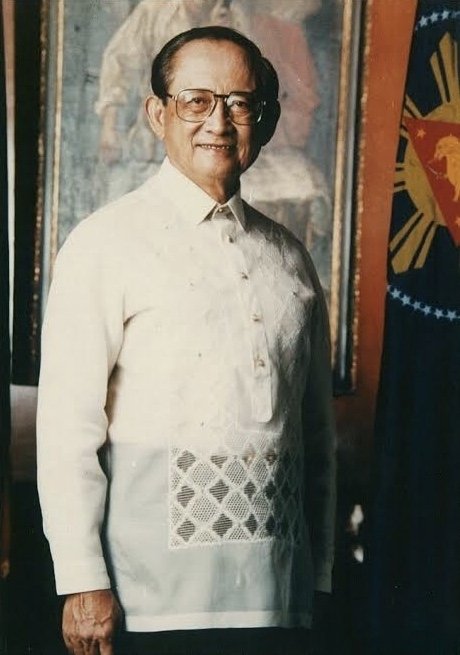
1928—2022
Fidel V. Ramos
President of the Philippines, 1992–1998The general who withdrew support from Ferdinand Marcos during People Power and later served as defence secretary and the Philippines’ twelfth president.Read biography
1945—2016
Miriam Defensor Santiago
Senator, judge and public administratorA lawyer, judge, cabinet official and senator whose sharp legal arguments and forceful public style made her one of the Philippines’ most recognisable political figures.Read biography
1920—2016
Jovito Salonga
Opposition senator and post-EDSA Senate presidentA Filipino lawyer, opposition leader and statesman who survived wartime imprisonment and the Plaza Miranda bombing before helping rebuild the Senate after EDSA.Read biography
1933—2019
Aquilino Pimentel Jr.
Lawyer, local-government reformer and Senate presidentA Mindanao lawyer, mayor and opposition leader who survived detention under martial law and made local autonomy a foundation of restored democracy.Read biography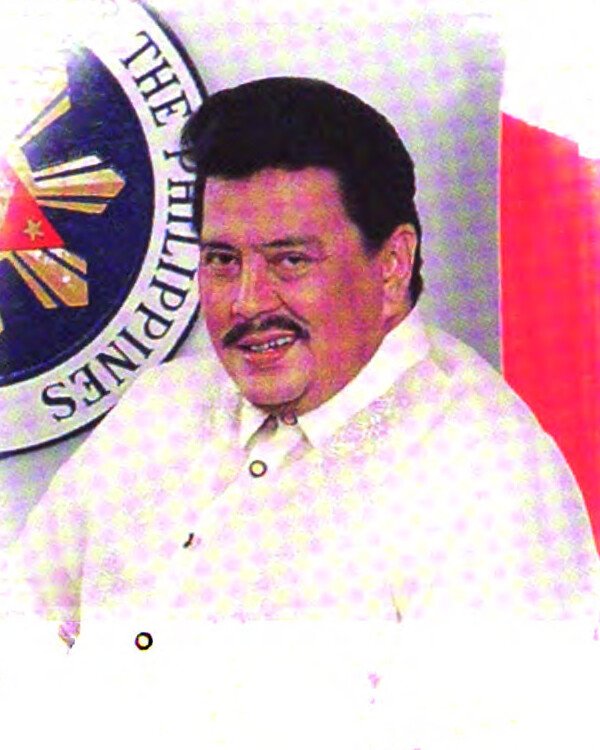
1937—
Joseph Estrada
President of the Philippines, 1998–2001The film star and populist politician who became president in 1998, left office amid impeachment and protest, and later returned as mayor of Manila.Read biographyQuick answers
Common questions
- Who won the 1992 Philippine presidential election?
- Fidel V. Ramos won with 5,342,571 votes and was proclaimed president by Congress.
- Who placed second in the 1992 election?
- Miriam Defensor Santiago placed second with 4,465,173 votes, a difference of 877,398 from Ramos.
- Did Ramos win a majority?
- No. He won a plurality in a field of seven presidential candidates. Philippine presidential elections do not use a runoff.
- Was Santiago’s election protest decided on the evidence?
- No final merits judgment determined whether alleged irregularities changed the outcome. The tribunal dismissed the case after treating her later Senate candidacy and service as abandonment.
- Why is the 1992 election historically important?
- It produced the first regular transfer between elected presidents after the 1986 democratic transition and tested the institutions created by the 1987 Constitution.
Primary and institutional sources
How this history was checked
Dates, legal milestones and historical claims are checked against the official and institutional records below. This article was reviewed on 9 September 2026.
- Presidential Electoral Tribunal via LawPhilDefensor-Santiago v. Ramos — official totals, protest and dismissal
- The LawPhil ProjectRepublic Act No. 7166 — synchronized elections and canvassing rules
- The LawPhil Project1987 Constitution — Article VII, executive department
- Wikimedia CommonsFidel V. Ramos portrait and licence record