
The short answer
Beginning on 1 December 1989, rebel military units mounted the gravest armed challenge to Corazon Aquino’s government. The failed coup exposed the fragility of civilian authority, damaged economic recovery and prompted a tightly bounded constitutional response to national emergency.
Chronology
A timeline of the turning points
Repeated military challenges follow EDSA
Mutinies and coup attempts tested the Aquino government while the constitution and elected Congress were being restored.
Rebellion begins
Rebel military personnel attacked or occupied installations and strategic sites in Metro Manila and elsewhere.
Fighting reaches the capital’s business district
Combat around Makati and military facilities disrupted civilian life, transport and economic activity.
Aquino declares a national emergency
Proclamation No. 503 cited deaths, property destruction and continuing destabilisation after the main rebellion was contained.
Organised resistance ends
The last major rebel positions surrendered, though participants and weapons remained outside government custody.
Congress grants limited emergency powers
Republic Act No. 6826 authorised temporary economic and administrative measures subject to reporting and constitutional safeguards.
Coup d’état is defined in the Penal Code
Republic Act No. 6968 created a distinct statutory offence focused on swift attacks intended to seize or diminish state power.
Why was the Aquino government vulnerable to coups?
The 1986 transition depended partly on military officers who withdrew support from Ferdinand Marcos, but that alliance did not produce a unified understanding of civilian authority. Reformist, loyalist and factional networks remained inside the armed forces while the new government reorganised institutions and addressed communist and separatist conflicts.
Several earlier plots had already tested the presidency. By December 1989, rebels could combine military access, political grievance and uncertainty about command, making the uprising a threat to both the government and the democratic succession created after People Power.
What happened in December 1989?
On 1 December, rebel forces launched coordinated attacks and occupied military and strategic sites. Fighting affected bases, government facilities and sections of Makati, bringing an attempt to seize state power into the country’s most important commercial centre.
Government forces retained the national chain of command and eventually retook the rebel positions. The rebellion ended militarily, but its participants, weapons and underlying conflicts did not disappear with the last surrender.
Emergency power after the fighting
Proclamation No. 503 declared a state of national emergency on 6 December. Congress then enacted Republic Act No. 6826, which described the rebellion as an emergency of national proportions and authorised limited measures to protect supplies, utilities, credit and economic recovery.
The statute matters because it shows the restored constitutional order responding through legislation rather than open-ended presidential decree. It required reports to Congress, preserved the Bill of Rights and placed an expiry date on delegated powers.
How the coup changed civil–military politics
The failed coup weakened economic confidence and demonstrated that elections and a new constitution had not by themselves secured civilian supremacy. It also strengthened the position of loyal commanders, including defence secretary Fidel V. Ramos, and made military stability a central test of presidential leadership.
In 1990, Republic Act No. 6968 added coup d’état as a defined offence in the Revised Penal Code. Later amnesties and political careers made accountability uneven, but the legal distinction clarified that a targeted attack by state personnel against institutions could be prosecuted separately from a broader rebellion.
Continue the chronology
Related history guides
The People Power Revolution
The military breakaway and civilian movement that created the transition government.
Read the timeline1986–1987The 1987 Philippine Constitution
The legal framework governing civilian authority and emergency power.
Read the timeline1986–2001Philippine Democratic Transition
The people and crises that tested the post-Marcos order.
Read the timelineConnected biographies
The civilian and military figures who shaped the post-EDSA order
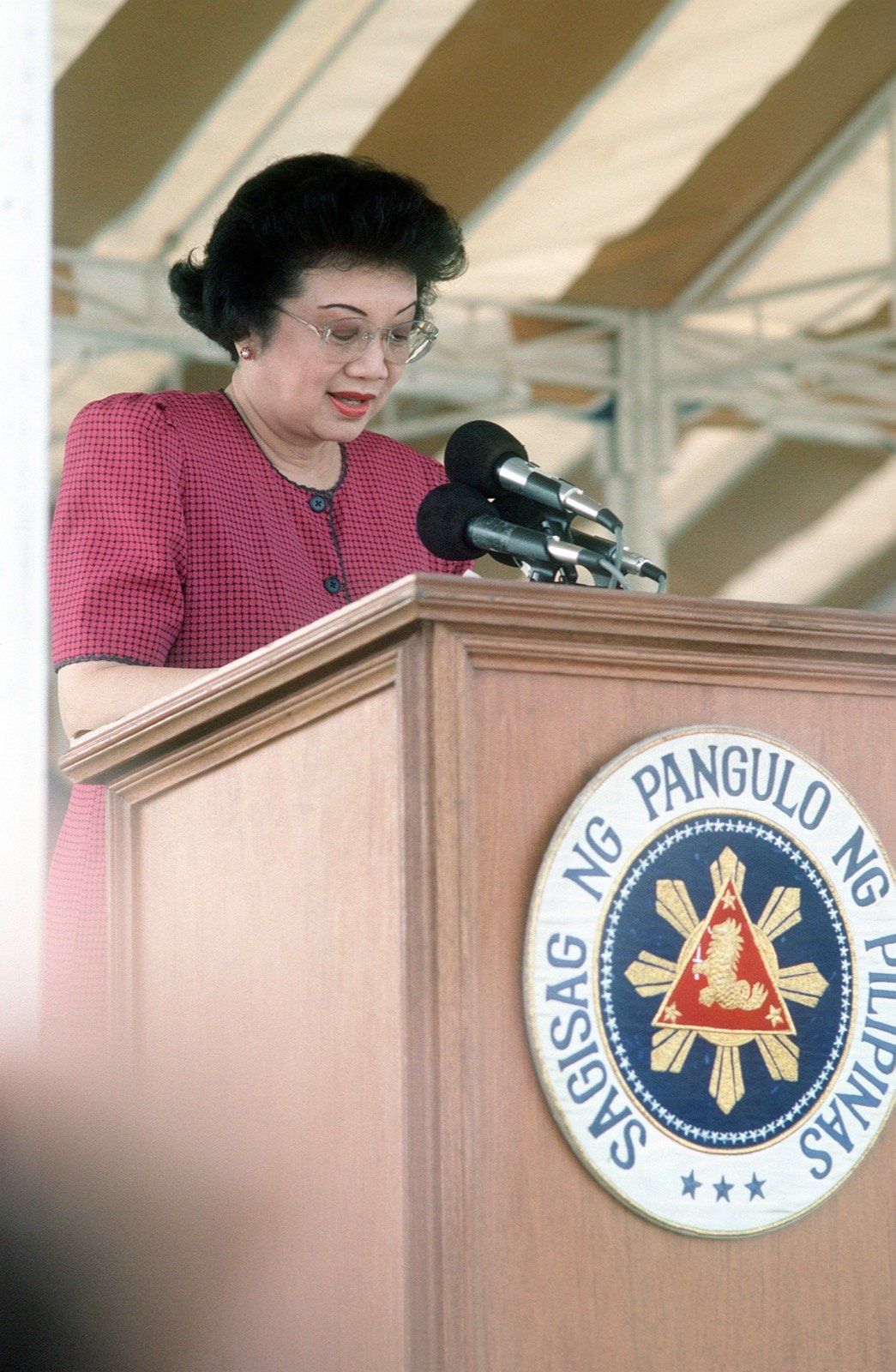
1933—2009
Corazon Aquino
President of the Philippines, 1986–1992The opposition leader who became president after People Power and restored constitutional government following the Marcos dictatorship.Read biography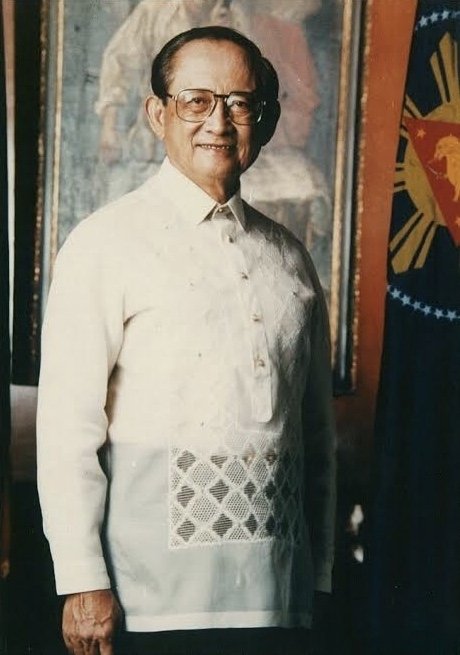
1928—2022
Fidel V. Ramos
President of the Philippines, 1992–1998The general who withdrew support from Ferdinand Marcos during People Power and later served as defence secretary and the Philippines’ twelfth president.Read biography
1924—2025
Juan Ponce Enrile
Defence minister and Senate presidentThe lawyer and defence minister whose career stretched from the declaration of martial law to the EDSA breakaway, four Senate terms and the Senate presidency.Read biography
1927—2015
Joker Arroyo
Human-rights lawyer, representative and senatorA human-rights lawyer who challenged martial-law abuses, became Corazon Aquino’s executive secretary and spent two decades in the restored Congress.Read biography
1945—2016
Miriam Defensor Santiago
Senator, judge and public administratorA lawyer, judge, cabinet official and senator whose sharp legal arguments and forceful public style made her one of the Philippines’ most recognisable political figures.Read biographyQuick answers
Common questions
- When did the 1989 Philippine coup attempt happen?
- The rebellion began on 1 December 1989 and the last major rebel positions surrendered on 9 December.
- Who was president during the coup attempt?
- Corazon Aquino was president. Her administration had faced several military challenges after the 1986 People Power transition.
- Was martial law declared?
- No. Aquino declared a state of national emergency under Proclamation No. 503, and Congress later delegated limited emergency powers through Republic Act No. 6826.
- What changed in the law afterward?
- Republic Act No. 6968, enacted in 1990, defined coup d’état as a distinct crime in the Revised Penal Code.
Primary and institutional sources
How this history was checked
Dates, legal milestones and historical claims are checked against the official and institutional records below. This article was reviewed on 9 September 2026.
- The LawPhil ProjectRepublic Act No. 6826 — national emergency and limited presidential powers
- The LawPhil ProjectProclamation No. 503 — declaration of a state of national emergency
- The LawPhil ProjectRepublic Act No. 6968 — defining and punishing coup d’état
- Wikimedia CommonsFidel V. Ramos portrait and licence record