
The short answer
The Huks began as an anti-Japanese peasant army and became the independent republic’s most serious early security challenge. Their rebellion cannot be reduced to Cold War ideology: it joined wartime legitimacy, disputed elections and violence to an older struggle over land and local power.
Chronology
A timeline of the turning points
The Hukbalahap is formed
Peasant organisers and communist cadres created an anti-Japanese army in Central Luzon, drawing on older tenant and labour movements.
Liberation produces a struggle over arms and authority
The restored government and U.S. forces did not recognise all Huk units equally, while landlords, veterans and local officials competed to recover power.
The Democratic Alliance wins seats
Six elected representatives were prevented from taking their House seats, deepening claims that the new republic excluded organised peasants and the left.
Quirino opens an amnesty negotiation
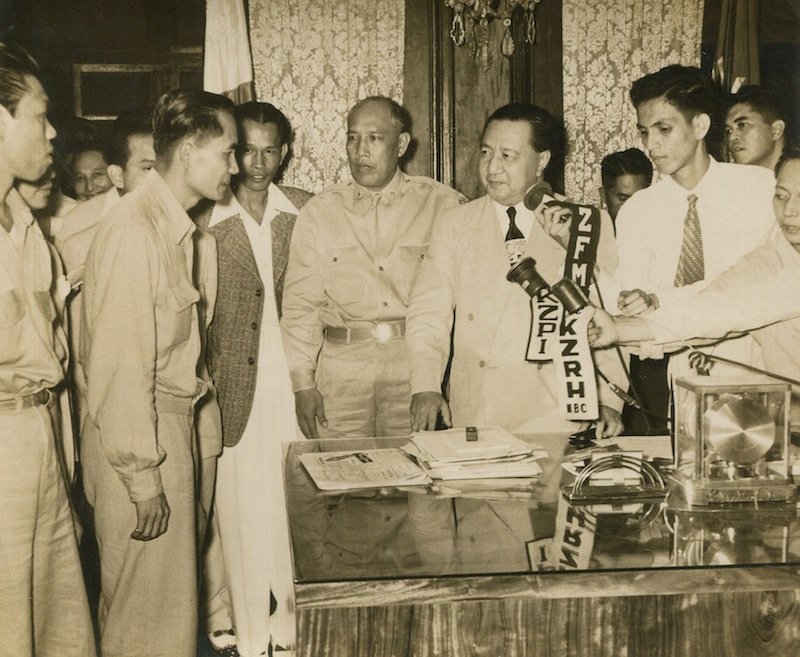
Luis Taruc and other Huk leaders met President Elpidio Quirino, but disagreements over disarmament and implementation quickly broke the settlement.
The movement adopts the HMB name
The Hukbong Mapagpalaya ng Bayan framed the struggle more explicitly as a revolutionary campaign against the republic.
Military and political pressure increases
Defence Secretary Ramon Magsaysay reorganised field operations, pursued abusive personnel and paired security measures with local government and resettlement programmes.
Luis Taruc surrenders
The movement’s best-known leader surrendered during Magsaysay’s presidency, marking the collapse of the rebellion as a national threat even though rural conflict continued.
What was the Hukbalahap?
Hukbalahap was shortened from Hukbo ng Bayan Laban sa Hapon—People’s Army Against Japan. It emerged in Central Luzon in 1942 from communist, socialist and peasant organisations that already had experience contesting rents, debt and landlord power.
The wartime army fought occupation forces, built local administrations and armed rural supporters. Liberation did not dissolve those networks. It changed their opponent and exposed unresolved arguments over recognition, weapons, land and political authority.
Why did an anti-Japanese movement fight the republic?
After liberation, many Huks believed the restored Commonwealth favoured landlords and rival guerrilla organisations. U.S. and Philippine authorities arrested some leaders, rejected or limited recognition claims, and sought to disarm units whose local influence challenged returning elites.
Land tenancy remained central. High rents, debt and coercive local politics had shaped Central Luzon before invasion and survived independence. The conflict therefore grew from both a wartime contest over legitimacy and a longer social struggle over who controlled land and government in the countryside.
The 1946 election intensified exclusion
The left-aligned Democratic Alliance won six House seats in the April 1946 election, including Luis Taruc. The representatives were denied their seats amid allegations of violence and fraud. Their exclusion also affected the vote on a constitutional parity amendment required by the U.S. trade settlement.
The episode convinced many supporters that electoral participation would not protect them. Violence between Huks, landlords’ armed groups, police and military forces expanded as the new republic prepared to take formal sovereignty.
Why did the 1948 amnesty fail?
President Elpidio Quirino attempted a negotiated settlement in 1948. Taruc entered Manila and met the president, and the government announced an amnesty tied to surrendering arms. The public ceremony suggested that parliamentary politics might replace armed conflict.
Implementation collapsed over the timetable, security guarantees and whether the Huks had actually surrendered the required weapons. Fighting resumed within months. Each side used the failure to justify a harder strategy, and the movement reorganised as the Hukbong Mapagpalaya ng Bayan.
Magsaysay changed counterinsurgency
As defence secretary from 1950, Ramon Magsaysay worked with the armed forces and U.S. adviser Edward Lansdale to improve intelligence, mobility and small-unit operations. He also acted against some abusive officers and cultivated direct access to complaints from rural communities.
Government policy combined force with civic projects, land-settlement opportunities and an effort to make local administration appear more responsive. These reforms had limits and did not settle structural land inequality, but they helped isolate guerrilla units while arrests and intelligence penetrations weakened the movement’s organisation.
Did the rebellion end in 1954 or 1955?
Taruc surrendered in May 1954, and the movement ceased to threaten national power at its earlier scale. U.S. Army histories often use 1946–1955 for the wider insurrection and counterinsurgency, reflecting the time required to reduce remaining armed bands and consolidate security.
Neither date means that rural injustice disappeared. Later peasant organising and renewed communist insurgency developed in different political contexts. The Huk story is best understood as a specific postwar conflict whose land, legitimacy and state-violence questions outlasted its military defeat.
Continue the chronology
Related history guides
Philippine Independence in 1946
Place the rebellion inside postwar reconstruction and the creation of the Third Republic.
Read the timeline1946–1947The Bell Trade Act and Parity Rights
Read the economic settlement and constitutional vote affected by the exclusion of six representatives.
Read the timeline1953–1957The Ramon Magsaysay Presidency
Continue through the reform politics and counterinsurgency associated with the rebellion’s defeat.
Read the timelineTwelve sourced livesPostwar Philippine Nation-Builders
Compare presidents, critics, educators, diplomats and armed actors in the early republic.
Read the timelineConnected biographies
Four lives across rebellion, negotiation and counterinsurgency
1913—2005
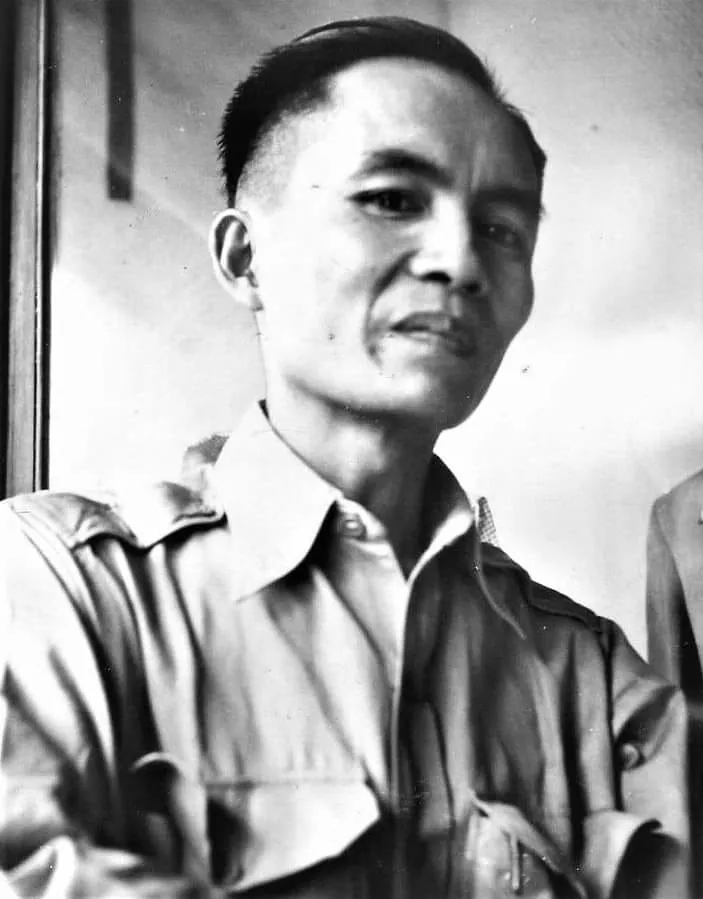
Luis Taruc
Peasant organiser and Hukbalahap leaderA peasant organiser who helped lead the Hukbalahap against Japanese occupation, was blocked from taking his elected seat in 1946 and later led an armed rebellion against the Philippine government.Read biography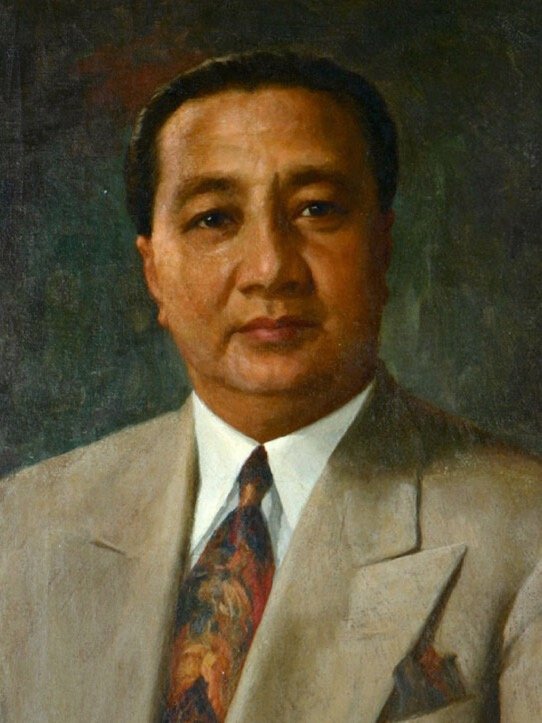
1890—1956
Elpidio Quirino
President of the Philippines, 1948–1953The Vigan-born president who signed the Central Bank Act, governed through postwar reconstruction and the Huk conflict, and supported reconciliation with Japan.Read biography
1907—1957
Ramon Magsaysay
President of the Philippines, 1953–1957A former guerrilla and defence secretary whose accessible governing style and anti-Huk campaign made him a postwar political icon.Read biography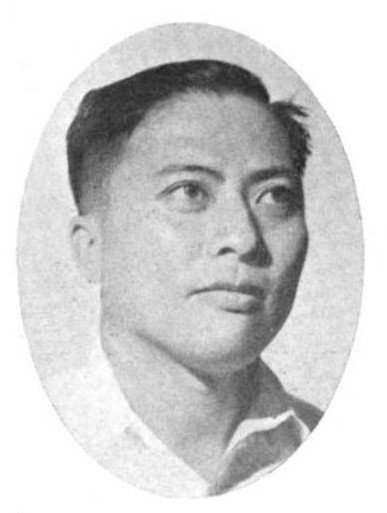
1911—1984
Alejo Santos
Guerrilla commander, governor and defence secretaryA teacher and Bataan veteran who survived the Death March, organised a large Bulacan guerrilla command and moved into postwar provincial and national government.Read biographyQuick answers
Common questions
- What does Hukbalahap mean?
- It abbreviates Hukbo ng Bayan Laban sa Hapon, usually translated as the People’s Army Against Japan. The organisation was formed in Central Luzon in 1942.
- Who led the Huk rebellion?
- Luis Taruc was its best-known public and military leader, but the Huk movement had collective political and regional leadership rather than one commander acting alone.
- What caused the Huk rebellion?
- It grew from unresolved land-tenancy conflict, disputed wartime recognition, attempts to disarm Huk units, political exclusion after the 1946 election and violence involving local elites and state forces.
- How did Ramon Magsaysay weaken the Huks?
- Magsaysay combined more mobile and intelligence-led military operations with discipline reforms, complaint channels, civic projects and resettlement programmes intended to reduce rural support for the guerrillas.
- When did the Huk rebellion end?
- Luis Taruc surrendered on 17 May 1954, the clearest symbolic endpoint. Some military histories extend the insurrection to 1955 because smaller armed groups and security operations continued.
Primary and institutional sources
How this history was checked
Dates, legal milestones and historical claims are checked against the official and institutional records below. This article was reviewed on 9 September 2026.
- U.S. Army Center of Military HistoryThe Hukbalahap Insurrection: A Case Study of a Successful Anti-Insurgency Operation
- National Historical Commission of the PhilippinesLuis Taruc, 1913–2005
- Official Gazette of the Republic of the PhilippinesPresident Elpidio Quirino and the Huk amnesty
- Wikimedia CommonsQuirino receiving Huk leaders in 1948 — photograph and licence