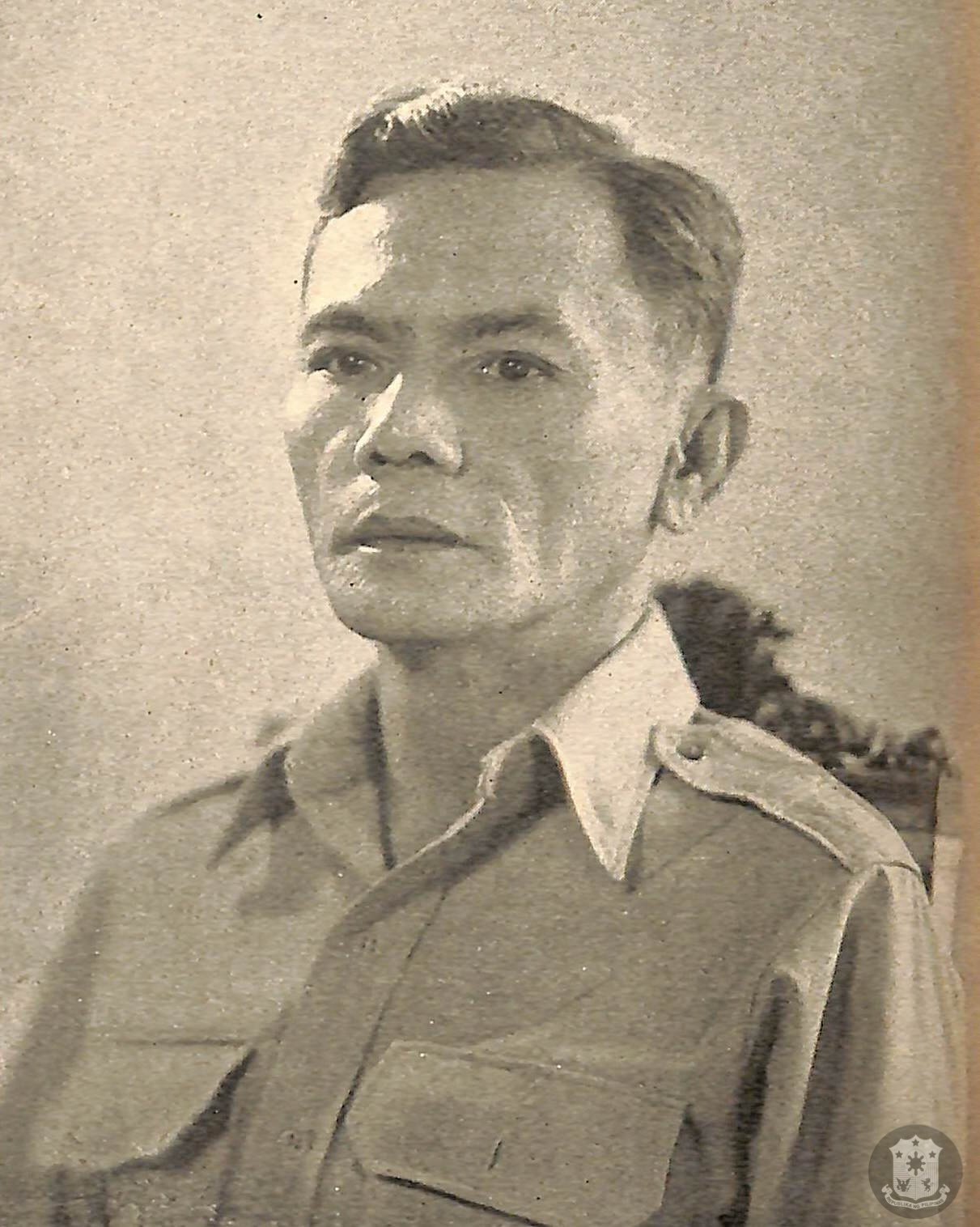
In this biography
Quick facts
- Born
- 17 July 1911
- Died
- 18 February 1984
- Birthplace
- Bustos, Bulacan, Philippines
- Country
- Philippines
- Nationality
- Filipino
- Known for
- Leading the Bulacan Military Area in wartime resistance and later serving as governor and national defence secretary
- Wartime experience
- Bataan veteran and Death March survivor
- Guerrilla command
- Bulacan Military Area
- Provincial office
- Governor of Bulacan, 1945 and 1951–1957
- Cabinet office
- Secretary of National Defense, 1959–1961
Why this life matters
Santos connects conventional defeat, local resistance and the state’s postwar security response—including negotiations with the Huk movement—inside one regional career.
Timeline
Key moments
Born in Bustos
Born in Bonga Menor, Bulacan, on 17 July.
Survived Bataan and the Death March
Fought the Japanese invasion, entered captivity and later escaped or was released into occupied Luzon.
Organised resistance in Bulacan
Founded the Philippine Legion and built it into the Bulacan Military Area.
Became governor
Entered provincial government as Commonwealth authority returned after occupation.
Led the defence department
Served as secretary of national defense under President Carlos P. Garcia.
Ran for president
Contested the election against Ferdinand Marcos as the Nacionalista candidate.
From teacher to Bataan soldier
Alejo Santos trained as a teacher and worked in Bulacan before the Pacific War. Mobilised for defence, he fought on Bataan and endured the Death March after the April 1942 surrender.
His transition from conventional soldier to guerrilla illustrates how military resistance changed after the organised campaign collapsed. Local knowledge, community networks and the ability to recruit outside a formal army became decisive.
The Bulacan Military Area
Santos founded the Philippine Legion in June 1942 and later commanded the Bulacan Military Area, a guerrilla organisation operating in Central Luzon. It gathered intelligence, fought occupation forces and prepared to support the return of Commonwealth and Allied authority.
Central Luzon also contained the Hukbalahap, whose peasant base and political leadership differed from Santos’s command. Those wartime distinctions mattered after liberation, when recognition, weapons, local power and land conflict fed confrontation between the Huks and the restored state.
Provincial power and national security
Santos served as Bulacan governor and as a member of the House of Representatives. The National Historical Commission records that he also assisted peace discussions between the government and the Hukbong Mapagpalaya ng Bayan, the postwar successor to the Huk wartime army.
President Carlos P. Garcia appointed him secretary of national defense in 1959. Santos later ran for president in the 1981 election under authoritarian rule. His career therefore spans resistance to foreign occupation, counterinsurgency, electoral office and participation in a tightly controlled late-martial-law contest.
Quick answers
Frequently asked questions about Alejo Santos
- Who was Alejo Santos?
- Alejo Santos was a guerrilla commander, governor and defence secretary. Santos connects conventional defeat, local resistance and the state’s postwar security response—including negotiations with the Huk movement—inside one regional career.
- What is Alejo Santos best known for?
- Alejo Santos is best known for leading the Bulacan Military Area in wartime resistance and later serving as governor and national defence secretary.
- When and where was Alejo Santos born?
- Alejo Santos was born on 17 July 1911 in Bustos, Bulacan, Philippines.
- When did Alejo Santos die?
- Alejo Santos died on 18 February 1984.
Sources and further reading
How this biography was checked
Core dates and offices are checked against the sources below. This profile was last reviewed on 9 September 2026.