
The short answer
The Brunei revolt was brief, but its political consequences were lasting. It ended the strongest mass-party challenge to royal government and altered negotiations over Malaysia. Brunei’s final choice to remain outside the federation, however, also reflected unresolved arguments about oil, finance, status and constitutional power.
Chronology
A timeline of the turning points
Brunei People’s Party founded
A. M. Azahari organised a mass nationalist party seeking representative government and independence.
Malaysia proposal debated
Plans to federate Malaya, Singapore and the Borneo territories intensified Brunei’s constitutional debate.
Party dominated local elections
The People’s Party won all contested district council seats, an indirect route toward the Legislative Council.
Armed revolt began
Rebels attacked police stations and government sites in Brunei and nearby areas of northern Borneo.
British forces intervened
Gurkha troops flown from Singapore helped restore government control within days.
Brunei stayed outside Malaysia
Negotiations did not produce agreement on revenue, political position and constitutional terms.
Malaysia formed without Brunei
Malaya, Sabah, Sarawak and Singapore formed the new federation.
What political conflict preceded the revolt?
The 1959 Constitution introduced new councils but left decisive authority with the sultan. The Brunei People’s Party, led by A. M. Azahari, demanded faster representative government and independence for Brunei, Sarawak and North Borneo in a northern Borneo federation.
The proposed Federation of Malaysia offered a rival future. Azahari’s party opposed entry on the negotiated terms, while the Brunei government explored membership with Malaya and the other territories.
What happened during the December 1962 revolt?
On 8 December, armed members of the North Kalimantan National Army attacked police stations and government positions. The insurgents hoped to seize control and block the Malaysia plan, but they failed to capture the sultan or secure a durable command structure.
British Gurkha units arrived rapidly from Singapore. Government control was restored in the capital and major centres within days, although operations against remaining rebels continued. Azahari, outside Brunei when the revolt began, spent the rest of his life in exile.
Did the revolt alone keep Brunei out of Malaysia?
No single cause explains the final decision. The revolt destroyed the People’s Party’s legal political path and reinforced security concerns, but negotiations with Malaya continued after December 1962.
Disagreement persisted over Brunei’s oil revenue, taxation, the sultan’s rank within the new federation and the timing and terms of entry. Historians also place the decision within wider pressure from Indonesia and the Philippines. The revolt was a major turning point, not a complete explanation by itself.
How did the crisis reshape Brunei?
Emergency powers suspended the normal development of electoral politics and the People’s Party was prohibited. The monarchy and appointed institutions became the centre of government as Brunei pursued sovereignty separately from Malaysia.
The outcome also linked Brunei’s domestic crisis to Konfrontasi and competing regional visions. Brunei remained under British protection until 1984, when it entered ASEAN and the United Nations as an independent state in its own right.
Continue the chronology
Related history guides
Connected biographies
Four lives behind competing visions of Brunei’s political future
 Brunei · Politics
1928—2002
A. M. Azahari
Nationalist and leader of the Brunei People’s PartyThe nationalist politician whose Brunei People’s Party won the 1962 district elections and pursued an alternative North Borneo federation before revolt ended its legal political path.Read biography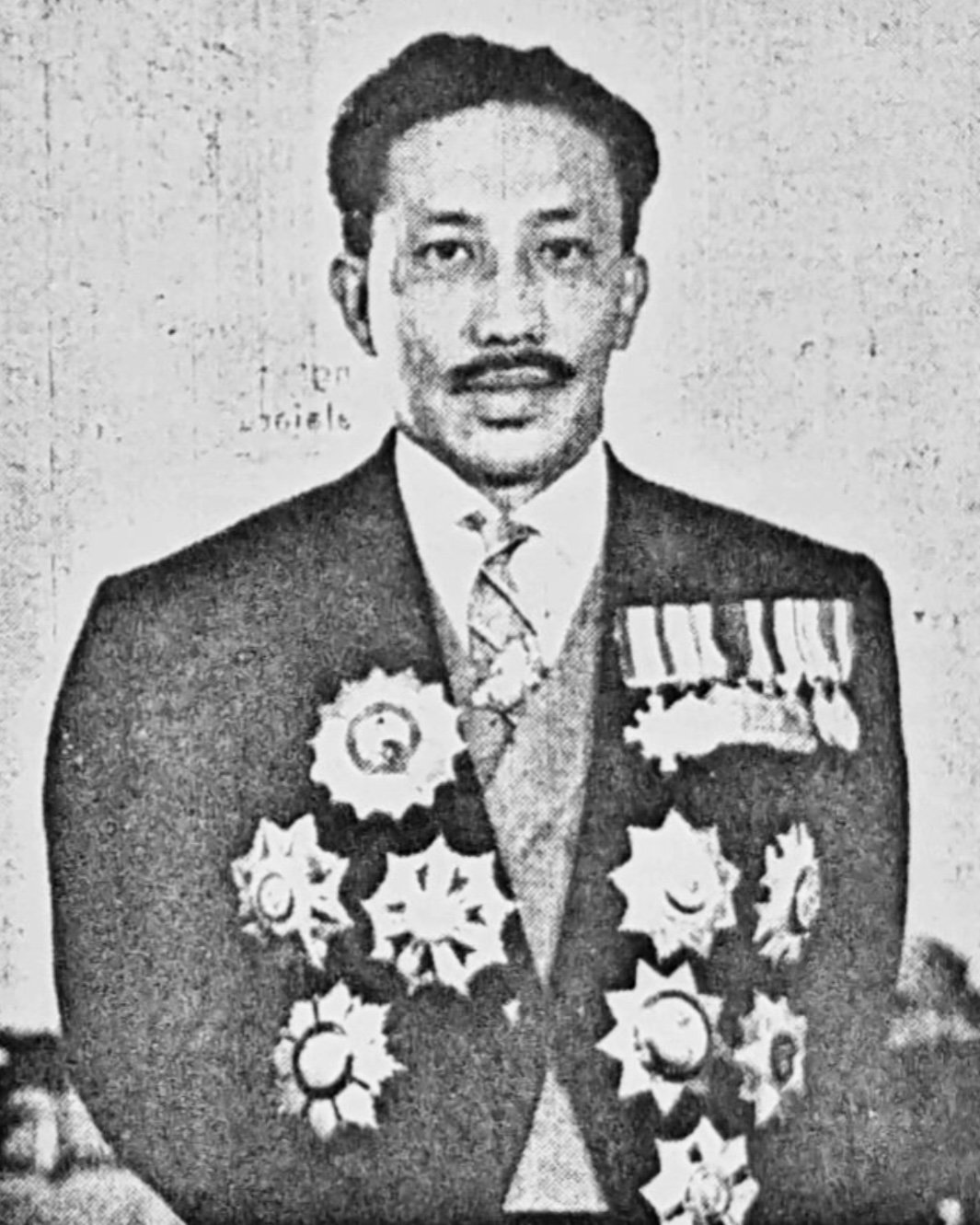 Brunei · Politics
1914—1986
Omar Ali Saifuddien III
28th Sultan of Brunei and architect of the modern stateThe 28th Sultan who used oil revenue for national development, promulgated Brunei’s written constitution and guided the state toward self-government.Read biography Brunei · Politics
1913—2000
Marsal Maun
Teacher, administrator and second chief minister of BruneiThe pioneering teacher and civil servant who joined Brunei’s constitutional negotiations and served as chief minister from 1962 to 1968.Read biography Brunei · Politics
1946—
Hassanal Bolkiah
29th Sultan and prime minister of BruneiThe 29th Sultan who led Brunei into full independence in 1984 and has combined the offices of monarch and prime minister.Read biographyQuick answers
Common questions
- Why did Brunei not join Malaysia?
- Negotiations failed over several issues, including oil revenue, taxation, constitutional terms and the sultan’s position. The 1962 revolt changed the political setting but was not the only cause.
- When was the Brunei revolt?
- The revolt began on 8 December 1962 and its main positions were overcome within days.
- Who led the Brunei revolt?
- The insurgent movement was associated with A. M. Azahari and the Brunei People’s Party, although Azahari was outside Brunei when fighting began.
- What was the proposed North Kalimantan federation?
- It was an alternative political project intended to unite Brunei, Sarawak and North Borneo rather than place them in the proposed Malaysian federation.
- Who stopped the 1962 revolt?
- Brunei police and British forces, including Gurkha troops flown from Singapore, restored government control.
Primary and institutional sources
How this history was checked
Dates, legal milestones and historical claims are checked against the official and institutional records below. This article was reviewed on 9 September 2026.