
The short answer
The discovery at Seria in 1929 did more than create an export industry. Petroleum revenue financed Brunei’s postwar institutions and public services, offshore gas enabled an early LNG trade and control of resource income shaped the country’s constitutional choices.
Chronology
A timeline of the turning points
Commercial oil found at Seria
Exploration produced Brunei’s first commercially significant field on the coast.
Exports expanded
Seria’s production placed petroleum at the centre of the protected state’s economy.
War disrupted production
Occupation, damage and Allied attacks interrupted the oil industry before postwar recovery.
National development plan began
The state channelled petroleum revenue into roads, education, health and public infrastructure.
Southwest Ampa discovered
The offshore field established a major gas resource as the industry moved beyond Seria.
First LNG cargo
Brunei LNG began exports from Lumut, opening a long-term gas trade with Asian markets.
Brunei LNG formally opened
The plant became an early large-scale liquefied natural gas operation in the Western Pacific.
Diversification remains central
Hydrocarbons still shape fiscal and export performance, sharpening the need for productivity and new industries.
Why was the Seria discovery transformative?
Earlier exploration in Brunei had found traces of oil but no comparable commercial field. The 1929 discovery at Seria created a durable export industry and gradually replaced the much smaller revenue base available to the protected state.
Production also made the coast strategically important. Japanese forces occupied Brunei during the Second World War, and wells and facilities were damaged before the industry was rebuilt after 1945.
How did petroleum revenue change public development?
Under Sultan Omar Ali Saifuddien III, the first five-year development plan began in 1953. Oil income helped finance roads, schools, healthcare, utilities and the administrative institutions of a more capable state.
This fiscal foundation shaped Brunei’s route to independence. The state could provide extensive public services without relying on the same tax bargain found in many larger countries, while control of revenue became a crucial issue in negotiations over Malaysia.
What did offshore gas and LNG add?
The discovery of Southwest Ampa in 1963 expanded the resource base offshore and supplied gas for liquefaction. Brunei LNG was formed to connect those reserves with long-term buyers in Japan.
The first cargo left in 1972 and the Lumut plant was formally opened in 1973. Brunei became one of the early large-scale LNG exporters in the Western Pacific, adding natural gas to an economy previously identified mainly with crude oil.
Why is diversification still difficult?
Oil and gas revenue helped create financial reserves, public employment and high living standards, but it also made national income sensitive to production levels and energy prices. Mature fields require investment and technical capacity to sustain output.
Current policy therefore emphasises human capital, downstream industry, services and private enterprise. Diversification is not simply replacing petroleum; it means building productive sectors able to generate exports, jobs and fiscal capacity alongside it.
Continue the chronology
Related history guides
The Brunei Revolt and Malaysia Decision
Understand why resource revenue mattered in the federation negotiations.
Read the timeline1959—1984Brunei’s Constitution and Independence
Connect fiscal capacity with institution-building and sovereign statehood.
Read the timeline2010—todayBrunei Food Security and Agritech
Follow one diversification challenge from imported staples to farm technology and regional trade.
Read the timelineBiography context
Explore Brunei through connected lives
Brunei Biographies
Explore 20 sourced lives across politics, business, sport and culture.
Explore the biographiesBusiness collectionBruneian Business Builders
Meet leaders working across business networks, industry and digital transformation.
Explore the biographiesPolitics collectionBruneian Political Leaders
Compare the rulers, administrators and diplomats who turned revenue into state capacity.
Explore the biographiesConnected biographies
Five lives connecting resource wealth, state-building and diversification
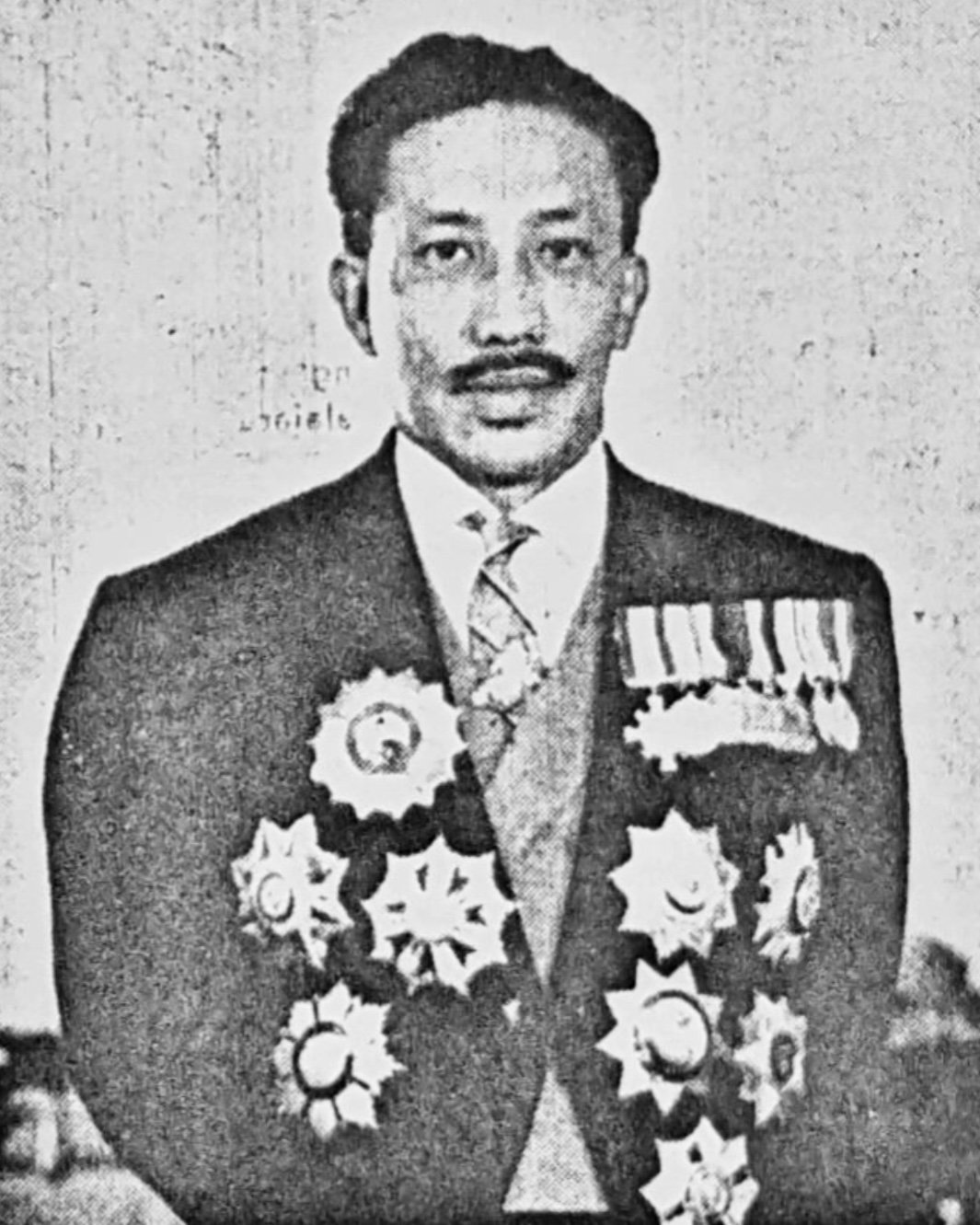
1914—1986
Omar Ali Saifuddien III
28th Sultan of Brunei and architect of the modern stateThe 28th Sultan who used oil revenue for national development, promulgated Brunei’s written constitution and guided the state toward self-government.Read biography
1946—
Hassanal Bolkiah
29th Sultan and prime minister of BruneiThe 29th Sultan who led Brunei into full independence in 1984 and has combined the offices of monarch and prime minister.Read biography
Contemporary
Timothy Ong
Business leader and founder of Asia Inc ForumThe Bruneian businessman who founded Asia Inc Forum and has connected corporate, government and civil-society leaders across the Asia-Pacific.Read biography
Contemporary
Hafimi Abdul Haadii
Executive director of LVK Group and regional business adviserThe third-generation Bruneian business leader whose work spans a family group, entrepreneur networks, competition policy and regional advisory councils.Read biography
Contemporary
Haslina Taib
Chief executive of Dynamik TechnologiesThe technology executive who returned to Brunei after an international career and led Dynamik Technologies through major national digital projects.Read biographyQuick answers
Common questions
- When was oil discovered in Brunei?
- Brunei’s first commercially important oil discovery was made at Seria in 1929.
- Where is Brunei’s main historic oil field?
- The Seria field lies on Brunei’s western coast in Belait District and became the foundation of the modern petroleum economy.
- When did Brunei begin exporting LNG?
- Brunei LNG shipped its first cargo in 1972 and the plant was formally opened in 1973.
- How did oil affect Brunei’s development?
- Petroleum revenue financed infrastructure and extensive public services while strengthening the fiscal capacity of the monarchy-centred state.
- Is Brunei still dependent on oil and gas?
- Yes. Hydrocarbons remain central to exports and government revenue, which is why economic diversification remains a major policy objective.
Primary and institutional sources
How this history was checked
Dates, legal milestones and historical claims are checked against the official and institutional records below. This article was reviewed on 2 October 2026.