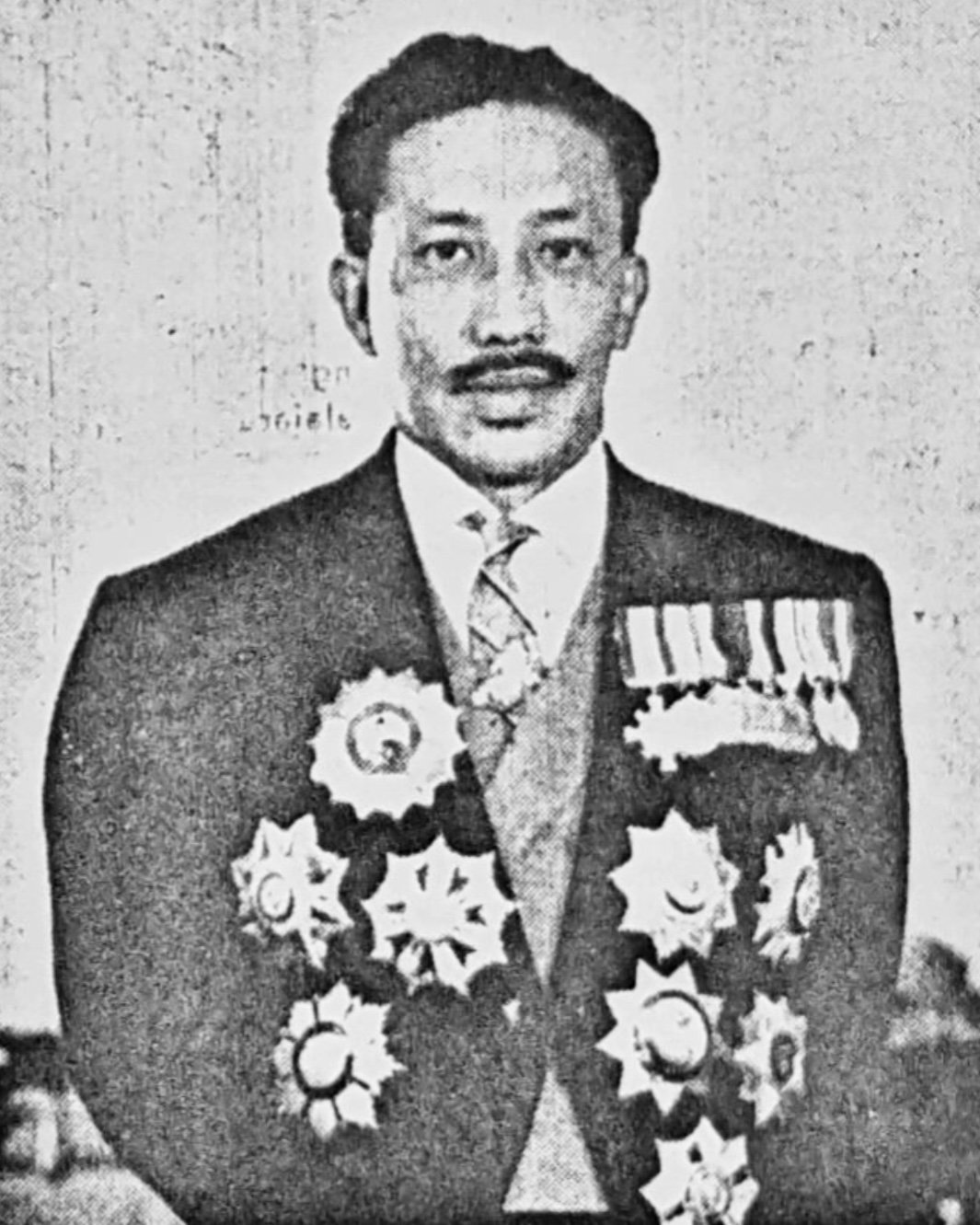
In this biography
Quick facts
- Born
- 8 November 1913
- Died
- 28 March 2000
- Birthplace
- Kampong Pintu Malim, Brunei Town
- Country
- Brunei
- Nationality
- Bruneian
- Known for
- Helping negotiate the 1959 Constitution and serving as chief minister during the 1962 revolt
- Training
- Sultan Idris Training College · 1930–1933
- Constitutional role
- Member of the 1959 London delegation
- Chief minister
- 1961–1968
- Earlier office
- Deputy state secretary · 1960–1961
Why this life matters
Marsal’s career shows how educators and senior civil servants built the administrative machinery of self-government beneath the monarchy.
Timeline
Key moments
Born in Brunei Town
Born in Kampong Pintu Malim on 8 November.
Qualified as a teacher
Returned from Sultan Idris Training College as one of Brunei’s first locally born trained teachers.
Helped establish Brunei scouting
Pelita Brunei credits him with founding the country’s scout movement at Pekan Malay School.
Joined constitutional negotiations
Accompanied the Sultan to London for talks on the new constitution.
Became acting chief minister
Moved from deputy state secretary into the government’s most senior administrative office.
Administration faced the revolt
Led the civil administration as armed rebellion, British intervention and emergency rule transformed political life.
Completed his tenure
Left the chief minister’s office after serving under two sultans and through the post-revolt emergency.
Education before high office
Marsal Maun was born on 8 November 1913 at Kampong Pulau Ambok, an area now associated with Kampong Pintu Malim in Brunei Town. He attended Jalan Pemancha Malay School, became a probationary teacher and travelled to Sultan Idris Training College in Tanjong Malim in 1930. When he qualified in 1933, he was among Brunei’s earliest locally born teachers to receive that training.
Education became the base of a wider public career. Marsal worked in Malay schooling and helped build civic organisations; a later Pelita Brunei history credits him with establishing Brunei’s scout movement at Pekan Malay School in January 1933. His generation of teachers supplied language skills, organisation and local administrative experience at a time when many senior posts were still held by outside officers.
Marsal later participated in the State Council and constitutional work. A February 1959 government report named him among the members of the delegation preparing to travel with Sultan Omar Ali Saifuddien III for constitutional talks in London. He was also listed among the witnesses when Brunei’s written constitution was proclaimed on 29 September 1959.
From deputy state secretary to chief minister
In 1960 Marsal moved from education into the post of deputy state secretary. A government announcement dated 2 August 1961 recorded his promotion to deputy chief minister from 1 August; contemporary Pelita Brunei reports were calling him Menteri Besar, or chief minister, by October. He later continued in the office after the transition from an acting appointment.
The timing placed him at the centre of two simultaneous processes: the localisation of the senior civil service and debate over whether Brunei should enter the proposed Federation of Malaysia. His administrative authority remained subordinate to the Sultan, but the office made him responsible for coordinating government business during an unusually unstable period.
The 1962 revolt and emergency administration
On 8 December 1962, forces associated with the Brunei People’s Party launched an uprising. British and Gurkha troops intervened, the revolt was defeated and emergency rule reshaped the political system. Marsal’s government then administered the state after an electoral opening had been interrupted and opposition leaders were detained or exiled.
Official coverage from 1964 shows Marsal visiting the Berakas detention camp and presenting negotiation and rehabilitation as the government’s preferred path. That report reflects the administration’s own position and should not be read as an independent account of detention conditions; it is useful evidence of how the post-revolt government publicly framed its policy.
Marsal remained chief minister until 1968, serving through the final years of Sultan Omar Ali Saifuddien III’s reign and the accession of Sultan Hassanal Bolkiah. His legacy therefore joins education and constitutional preparation to the consolidation of a much more restricted political order after 1962.
Quick answers
Frequently asked questions about Marsal Maun
- Who was Marsal Maun?
- Marsal Maun was a teacher, administrator and second chief minister of Brunei. Marsal’s career shows how educators and senior civil servants built the administrative machinery of self-government beneath the monarchy.
- What is Marsal Maun best known for?
- Marsal Maun is best known for helping negotiate the 1959 Constitution and serving as chief minister during the 1962 revolt.
- When and where was Marsal Maun born?
- Marsal Maun was born on 8 November 1913 in Kampong Pintu Malim, Brunei Town.
- When did Marsal Maun die?
- Marsal Maun died on 28 March 2000.
Sources and further reading
Explore the evidence
These references support the biography and offer further reading. Official records, first-person accounts and independent reporting provide different perspectives; image records document attribution and licensing.
- 1. Pelita BruneiFormer chief minister Marsal Maun — obituary and career record
- 2. Journal of Southeast Asian Studies · Cambridge University PressBrunei constitutional politics and the State Council
- 3. Pelita Brunei1959 constitutional delegation announced
- 4. Pelita Brunei1961 appointment of senior government officers
- 5. Pelita BruneiChief minister visits Berakas detention camp
- 6. Pelita BruneiHistory of the Brunei scout movement
- 7. Wikimedia Commons1964 portrait and public-domain record