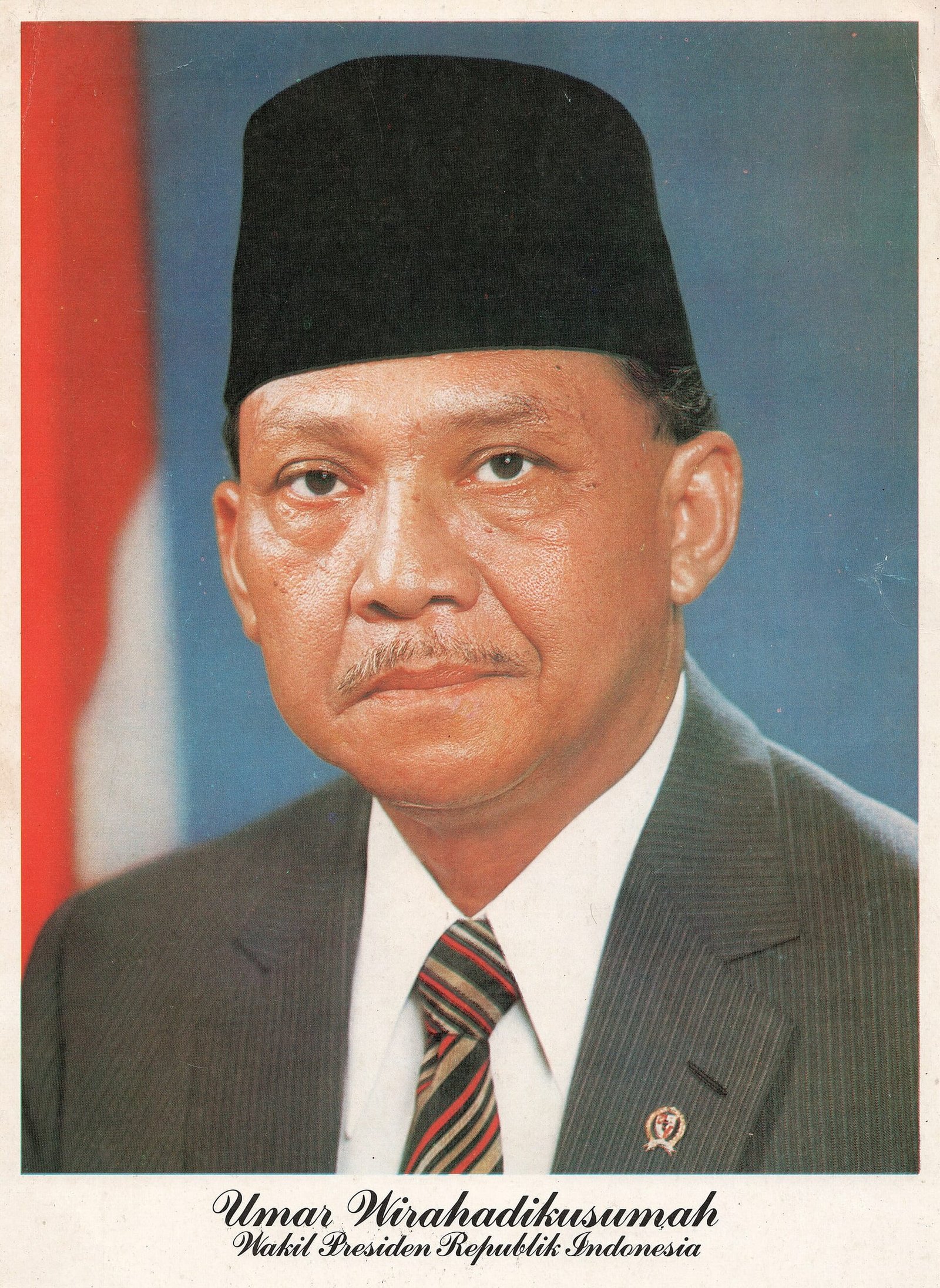
In this biography
Quick facts
- Born
- 10 October 1924
- Died
- 21 March 2003
- Birthplace
- Situraja, Sumedang, West Java
- Country
- Indonesia
- Nationality
- Indonesian
- Known for
- Moving from senior army command to a decade leading the Audit Board before serving as vice president from 1983 to 1988
- National office
- Vice president, 1983–1988
- Army command
- Chief of Staff of the Army, 1969–1973
- State oversight
- Chair of the Audit Board, 1973–1983
- Early service
- PETA training and the republican TKR
Why this life matters
Umar Wirahadikusumah’s career joined the military, fiscal oversight and executive office, illustrating how New Order leadership circulated among a narrow group of senior state institutions.
Timeline
Key moments
Joined the republican armed forces
Helped organise the People’s Security Army in West Java after Japanese surrender and Indonesian independence.
Moved from Jakarta command to Kostrad
Held senior commands during the political and military rupture that preceded the New Order.
Became army chief
Led the Indonesian Army until 1973 after serving as deputy chief.
Became chair of the Audit Board
Moved from military command to ten years at the constitutional state-audit institution.
Selected as vice president
Succeeded Adam Malik and served one five-year term beside President Suharto.
Died in Jakarta
Died at Gatot Soebroto Army Hospital at the age of seventy-eight.
From PETA training to the independence struggle
Umar Wirahadikusumah was born in Situraja, West Java, in 1924. During the Japanese occupation he received officer training in PETA, the locally recruited auxiliary force whose alumni later supplied many commanders to independent Indonesia. After the proclamation he helped organise republican security forces around Cicalengka.
His early career unfolded through revolution and the consolidation of a national army. He held territorial and staff appointments as the armed forces became both a defence institution and a powerful actor in government. That dual military-political role would shape the offices open to him later.
A senior commander in the New Order’s formation
By the early 1960s Umar commanded the Jakarta military region. He moved to lead the Army Strategic Reserve, Kostrad, after the 30 September Movement and Suharto’s rise. He later served as deputy army chief and then army chief from 1969 to 1973.
These posts place Umar inside the security structure through which the New Order displaced Sukarno’s Guided Democracy and consolidated power. His official biographies emphasise command continuity and state service; a complete reading must also situate that institutional ascent within the coercive political transition of 1965–1966 rather than treating it as a routine promotion sequence.
Ten years at the Audit Board
Umar left the army leadership in 1973 and became chair of the Audit Board of Indonesia, known as BPK. He remained there for a decade. The move was characteristic of the New Order, when retired senior officers frequently entered civilian or constitutional bodies, yet BPK’s formal duty of examining public finances gave the appointment a distinct oversight dimension.
The period also exposed a basic tension in New Order governance: the state promoted administrative order and development while executive dominance limited the independence and public reach of accountability institutions. Umar’s career connects military authority to that evolving system of financial supervision.
A restrained vice presidency
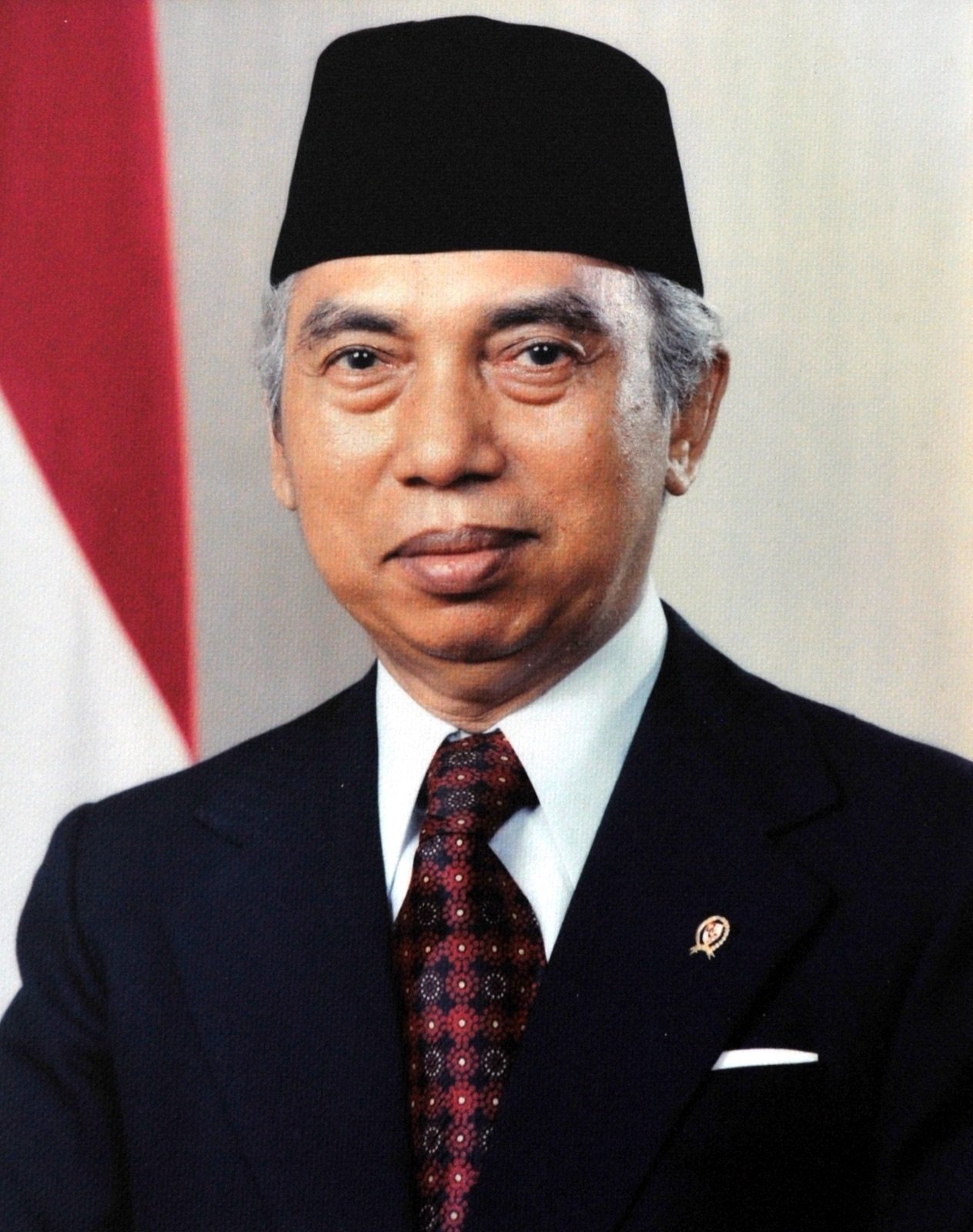
The People’s Consultative Assembly selected Umar as Indonesia’s fourth vice president in March 1983. He served beside Suharto until 1988. The vice presidency had constitutional importance as the line of succession, but day-to-day authority depended heavily on responsibilities delegated by a president whose control of the state was already deeply entrenched.
Umar was generally presented as disciplined, loyal and administratively focused. He left office after one term and largely withdrew from the centre of politics. He died on 21 March 2003. His biography is most useful when read across all three institutions he led: army, audit board and vice presidency.
Quick answers
Frequently asked questions about Umar Wirahadikusumah
- Who was Umar Wirahadikusumah?
- Umar Wirahadikusumah was an army general, state auditor and fourth Vice President of Indonesia. Umar Wirahadikusumah’s career joined the military, fiscal oversight and executive office, illustrating how New Order leadership circulated among a narrow group of senior state institutions.
- What is Umar Wirahadikusumah best known for?
- Umar Wirahadikusumah is best known for moving from senior army command to a decade leading the Audit Board before serving as vice president from 1983 to 1988.
- When and where was Umar Wirahadikusumah born?
- Umar Wirahadikusumah was born on 10 October 1924 in Situraja, Sumedang, West Java.
- When did Umar Wirahadikusumah die?
- Umar Wirahadikusumah died on 21 March 2003.
Sources and further reading
How this biography was checked
Core dates and offices are checked against the sources below. This profile was last reviewed on 3 October 2026.
- Secretariat of the Vice President of IndonesiaVice presidents of Indonesia from 1945 to the present
- Presidential Archives Study Centre, National Archives of IndonesiaPresidential archive for the Suharto era
- Audit Board of IndonesiaPilgrimage to the graves of former BPK leaders
- Wikimedia CommonsOfficial vice-presidential portrait and public-domain record