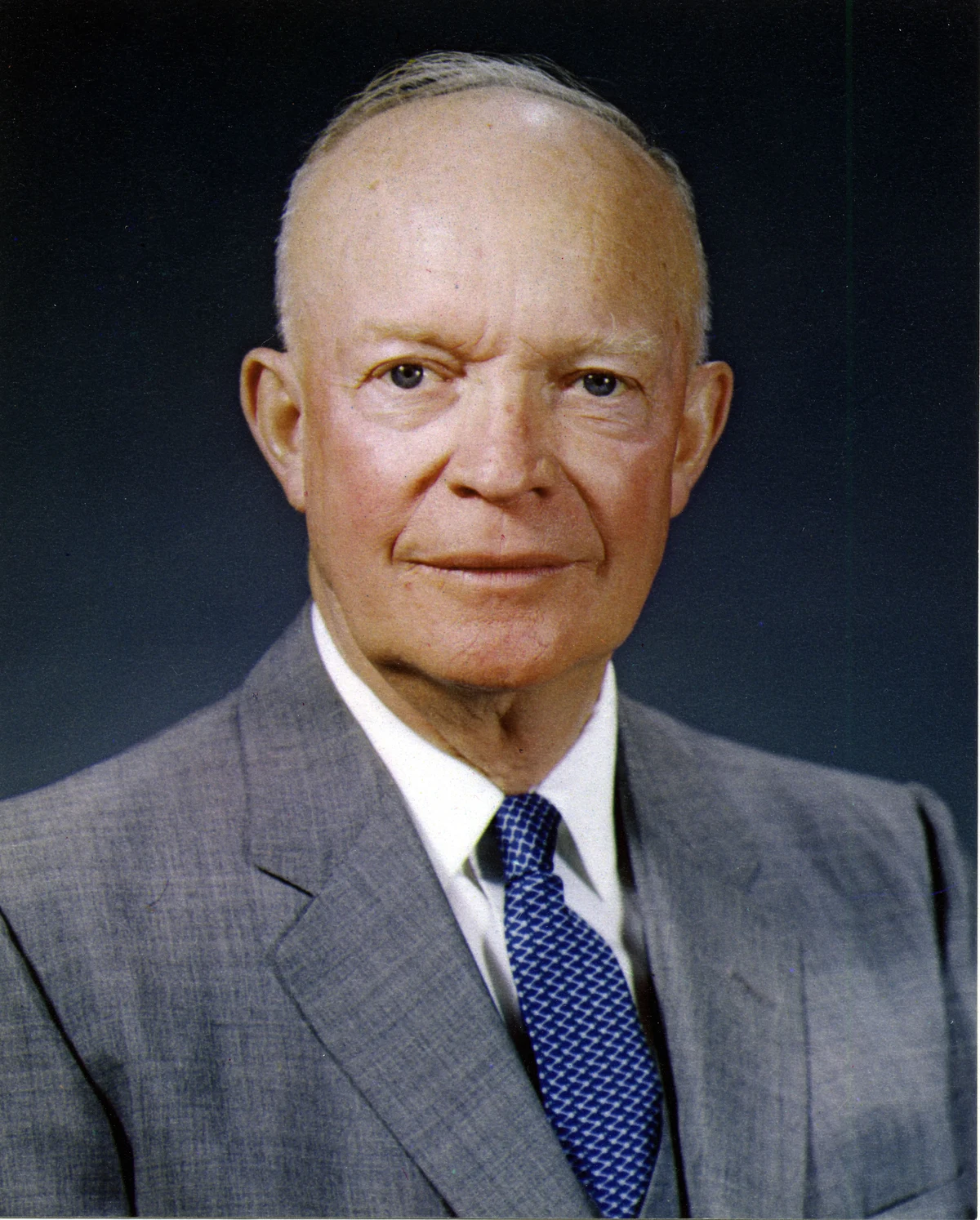
In this biography
Quick facts
- Born
- 27 October 1858
- Died
- 6 January 1919
- Birthplace
- New York City, New York, United States
- Country
- United States
- Nationality
- American
- Known for
- The Square Deal, federal conservation, business regulation and an assertive foreign policy
- New York governor
- 1899–1900
- U.S. president
- 14 September 1901–4 March 1909
- Age at accession
- 42; youngest person to become president
- Nobel Peace Prize
- 1906
- 1912 candidacy
- Progressive Party; second in the presidential election
Why this life matters
Roosevelt made the presidency a stronger instrument of economic regulation and resource conservation. His record also exposes the limits of Progressive reform: the Square Deal did not extend equal protection to everyone, and American power often came at other nations’ expense.
Timeline
Key moments
Born in New York City
Born on 27 October into the family of Theodore and Martha Bulloch Roosevelt.
Graduated and entered state politics
Graduated from Harvard in 1880 and served in the New York State Assembly in 1882–1884.
Loss, ranching and remarriage
His mother and first wife died on 14 February 1884. He spent extended periods ranching in Dakota Territory and married Edith Carow in 1886.
Worked on civil service and policing
Federal civil-service work preceded leadership of New York City’s police board and appointment as assistant secretary of the Navy.
War service and the governorship
Served with the Rough Riders in Cuba in 1898, then governed New York before election as William McKinley’s vice president.
Became president and won a term
Succeeded McKinley on 14 September 1901; his early presidency included the Northern Securities case and coal-strike mediation. Won the 1904 election.
Conservation, diplomacy and consumer laws
The Forest Service was established in 1905. In 1906 he signed the Antiquities Act and food legislation and received the Nobel Peace Prize.
Ordered the Brownsville dismissals
Approved the discharge without honor of Black soldiers after a shooting in Brownsville, despite the absence of individual findings of guilt.
Ran as a Progressive
Challenged Taft, survived being shot during the campaign and finished second to Woodrow Wilson.
Died at Sagamore Hill
Died on 6 January at his Oyster Bay home, aged 60.
A New York childhood joined books, illness and physical ambition
Theodore Roosevelt was born in New York City on 27 October 1858 to Theodore and Martha Bulloch Roosevelt. His family’s wealth gave him private tutoring, travel and access to influential circles. Severe asthma interrupted his childhood, while reading and collecting natural-history specimens became lasting interests. Encouraged by his father, he also pursued exercise with unusual determination.
He entered Harvard in 1876 and graduated in 1880. His interests eventually turned toward history, government and public service. After briefly studying law at Columbia, he pursued elected office, winning a New York State Assembly seat in 1881 and serving from 1882. Politics offered a way to act on his reform ambitions, although it also required working within a party organization he often challenged.
Family tragedy and western ranching preceded a series of public offices
On 14 February 1884, Roosevelt’s mother and his first wife, Alice Hathaway Lee, died within hours of each other, shortly after the birth of his daughter Alice. He subsequently spent extended periods in Dakota Territory, where he had already invested in ranching. Those experiences deepened his attachment to western landscapes, although harsh weather and cattle losses exposed the financial risks behind the frontier adventure.
He married Edith Carow in 1886, and Sagamore Hill at Oyster Bay became their family home. Federal Civil Service Commission work from 1889 to 1895 was followed by leadership of New York City’s police board. In 1897 he became assistant secretary of the Navy. Across these positions he pursued administrative reform and cultivated the public reputation that would support his rapid rise.
War celebrity helped bring him to the presidency at 42
Roosevelt left the Navy Department during the Spanish-American War of 1898 and helped organize the volunteer cavalry regiment known as the Rough Riders. His service in Cuba made him nationally famous. That fame helped carry him into the New York governorship, which he held in 1899–1900, and then onto William McKinley’s winning presidential ticket in 1900.
His vice presidency lasted only months. After McKinley was assassinated, Roosevelt took the presidential oath in Buffalo on 14 September 1901. At 42, he became the youngest person to hold the office. His national electoral mandate came later, when he won the 1904 election. His presidency treated federal executive leadership as an active means of responding to industrial society’s problems.
The Square Deal strengthened federal oversight of business
Roosevelt’s Square Deal placed the federal government more visibly between corporate interests and the public. His administration challenged the Northern Securities railroad combination, and he intervened to help resolve the anthracite coal strike of 1902. He favored stronger supervision of powerful businesses rather than treating every large company as something that must be dismantled.
The Justice Department opened its Standard Oil case on 15 November 1906. The Supreme Court’s decision sustaining dissolution came in 1911, after Roosevelt had left office and while William Howard Taft was president. Roosevelt deserves credit for the administration that began the suit, but the outcome also depended on government lawyers, lower-court proceedings and the justices. Presidential advocacy and a judicial decree were different stages of the antitrust process.
Consumer protection grew through legislation with practical limits
Roosevelt signed the Food and Drugs Act on 30 June 1906, alongside the period’s meat-inspection reforms. These measures followed decades of proposed legislation, scientific work by Harvey Wiley and public pressure sharpened by journalists and Upton Sinclair’s account of meatpacking. The president helped turn a broader reform campaign into federal law.
The food-and-drug measure prohibited adulteration and misleading labeling in interstate commerce. It did not establish the modern system of requiring proof of a drug’s safety and effectiveness before sale. Enforcement also generated disputes within the administration and in court. Its importance lies in expanding federal responsibility for consumer protection, with substantial gaps that later legislation would address.
Sources for this section: [6]
Conservation made a lasting change to federal land policy
Roosevelt used legislation and executive authority to protect wildlife, forests and significant landscapes. The Forest Service was established in 1905 within the Department of Agriculture. After signing the Antiquities Act in 1906, he used it to proclaim national monuments. The National Park Service estimates that approximately 230 million acres of public land received protection during his presidency.
These policies included different purposes and legal mechanisms. National forests were conserved for continuing use, while bird reserves protected wildlife and national parks required congressional action. Roosevelt’s support was consequential, but Congress, administrators and conservation advocates also shaped the results. The National Park Service itself was established in 1916, seven years after he left office.
Sources for this section: [7]
Diplomatic mediation accompanied coercive American power
Roosevelt helped broker the negotiations that produced the 1905 Treaty of Portsmouth ending the Russo-Japanese War, receiving the 1906 Nobel Peace Prize for his efforts. Russia’s and Japan’s military and financial pressures also made compromise possible. The agreement reflected strategic bargaining over East Asian territories and influence, rather than Roosevelt single-handedly imposing peace.
Elsewhere, his administration backed Panamanian independence from Colombia in 1903 and obtained extensive canal rights. American construction produced a waterway that opened in 1914, after his presidency. His 1904 corollary to the Monroe Doctrine asserted a U.S. role in intervening in the Western Hemisphere. These decisions advanced American strategic interests while giving Washington substantial power over other countries’ affairs, leaving a contested imperial legacy alongside the peace award.
Brownsville and the Progressive campaign reveal the limits of his reform record
The Square Deal’s promise of fairness was contradicted by the Brownsville affair. In November 1906 Roosevelt approved the discharge without honor of 167 Black infantrymen after a fatal shooting in Texas. Individual guilt had not been established. The published order also barred the dismissed men from reenlistment and federal civilian employment, making collective punishment a serious abuse of the power he exercised.
After leaving office in 1909, Roosevelt broke with Taft and ran for president as a Progressive in 1912. He survived being shot before a Milwaukee speech and finished second to Woodrow Wilson, ahead of Taft. He remained active as a writer and explorer before dying at Sagamore Hill on 6 January 1919. His career combines major reforms with decisions that denied others the fairness he claimed to champion.
Quick answers
Frequently asked questions about Theodore Roosevelt
- Was Theodore Roosevelt the youngest president elected?
- He was the youngest person to become president, taking office at 42 after McKinley’s death in 1901. His first presidential election victory came in 1904; the youngest-to-take-office distinction refers to his succession, not that election.
- Did Roosevelt create the National Park Service?
- No. He supported new national parks, established monuments and expanded federal conservation, but the National Park Service was created in 1916, after his 1901–1909 presidency.
- Did Roosevelt personally break up Standard Oil in 1911?
- His administration began the federal case in November 1906. The Supreme Court sustained dissolution in 1911 during Taft’s presidency, so the case spans two administrations and a separate judicial process.
- Why did Roosevelt receive the Nobel Peace Prize?
- He received the 1906 prize for helping mediate the end of the Russo-Japanese War through the 1905 Portsmouth negotiations. The award recognized that diplomatic contribution; it did not settle criticism of his broader military and imperial policies.
Keep exploring
Lives connected to this story
- John D. Rockefeller
Connect Roosevelt-era antitrust enforcement to Standard Oil’s growth and the later 1911 dissolution ruling.
- Franklin D. Roosevelt
Compare two different Roosevelt presidencies and their approaches to federal power and conservation.
Sources and further reading
Explore the evidence
These references support the biography and offer further reading. Official records, first-person accounts and independent reporting provide different perspectives; image records document attribution and licensing.
- 1. National Park Service, Theodore Roosevelt Inaugural National Historic SiteThe Life of Theodore Roosevelt
- 2. National Park Service, Theodore Roosevelt National ParkTheodore Roosevelt Timeline
Used for chronology with cross-checks. Its 1910 entry incorrectly calls the Nobel award a 1905 prize; the award was 1906. Conflicting honors and medical-cause details in NPS summaries are omitted.
- 3. National Park ServiceTheodore Roosevelt Biography
- 4. U.S. Department of Justice, Antitrust DivisionU.S. v. Standard Oil Company of New Jersey: case and judgment dates
- 5. U.S. Supreme Court, reproduced by Cornell Legal Information InstituteStandard Oil Co. of New Jersey v. United States, 221 U.S. 1 (1911)
- 6. U.S. Food and Drug AdministrationPart I: The 1906 Food and Drugs Act and Its Enforcement
- 7. National Park Service, Theodore Roosevelt National ParkTheodore Roosevelt and Conservation
- 8. U.S. Department of State, Office of the HistorianThe Treaty of Portsmouth and the Russo-Japanese War, 1904–1905
- 9. U.S. Department of State, Office of the HistorianBuilding the Panama Canal, 1903–1914
This historical Office of the Historian series is retired and no longer maintained. Used for events and treaty chronology, not its evaluative language or photograph date.
- 10. U.S. Department of State, Office of the HistorianRoosevelt Corollary to the Monroe Doctrine, 1904
- 11. U.S. Senate Committee on Military Affairs, via UNT Digital LibraryThe Brownsville Affray (1908), page 8: presidential and War Department orders
- 12. National Park Service, Presidio of San FranciscoPresidio Garrison: Buffalo Soldiers and the Brownsville dismissals
Used narrowly for the collective dismissal and lack of individual findings of guilt. The page’s dinner date and assertion identifying the shooters are not adopted; the 1906 order is also read as a primary document, not proof of the allegations it repeats.
- 13. Library of Congress; historical scan via Wikimedia CommonsPach Brothers’ 1904 Roosevelt photograph, LC-DIG-ppmsca-35950
- 14. Library of CongressRoosevelt portrait, LCCN 2009631526: item-specific rights available in indexed record; direct access restricted
Item-specific rights text was available in the search index, but direct catalog and tile requests returned 403. The complete matching scan was inspected through the dated Commons historical file; the current Commons image has an earlier cleanup history and is not used.