In this biography
Quick facts
- Born
- 30 January 1882
- Died
- 12 April 1945
- Birthplace
- Hyde Park, New York, United States
- Country
- United States
- Nationality
- American
- Known for
- The New Deal, four presidential election victories and United States leadership during World War II
- Birth
- 30 January 1882, Hyde Park, New York
- Early federal office
- Assistant secretary of the Navy, 1913–1920
- State leadership
- Elected governor of New York in 1928 and reelected in 1930
- Presidency
- 32nd president, 4 March 1933–12 April 1945
- Election victories
- Won presidential elections in 1932, 1936, 1940 and 1944
- Social Security Act
- Signed on 14 August 1935, after the initial Hundred Days
Why this life matters
Roosevelt built enduring economic institutions and an Allied coalition, while his presidency also demonstrated the dangers of executive power through Japanese American exclusion and incarceration.
Timeline
Key moments
Born at Hyde Park
Born into the Roosevelt family in New York’s Hudson Valley.
Built a public career and returned after illness
Won a state Senate election, served in the Navy Department, lived with paralysis after a 1921 polio diagnosis and won New York’s governorship in 1928.
Launched the New Deal
Took office during a banking crisis and worked with Congress on emergency banking, relief, conservation and recovery legislation.
Signed the Social Security Act
Approved a federal old-age benefits system and federal-state assistance and unemployment provisions.
Led a nation entering war
Supported Lend-Lease and Allied cooperation; his February 1942 exclusion order enabled mass Japanese American removal and incarceration.
Died before the war ended
Died at Warm Springs, Georgia, after the Yalta Conference and during the opening months of his fourth presidential term.
An established family and a political apprenticeship
Franklin Delano Roosevelt was born on 30 January 1882 in Hyde Park, New York. His privileged upbringing included private tutors, Groton and Harvard. After studying law at Columbia, he passed the bar in 1907 without completing a law degree. He had married Eleanor Roosevelt in 1905; their partnership eventually connected family life, electoral politics and a wide range of public causes.
Roosevelt won election to the New York Senate in 1910 and became assistant secretary of the Navy in 1913. After an unsuccessful vice-presidential campaign in 1920, he was diagnosed with polio in 1921 and lived with lasting paralysis. Rehabilitation at Warm Springs and support from Eleanor and adviser Louis Howe accompanied his return to politics. He won the New York governorship in 1928.
Emergency banking action opened the New Deal
Roosevelt defeated Herbert Hoover in 1932 as unemployment and financial collapse discredited the existing administration. By his inauguration on 4 March 1933, the banking crisis demanded immediate action. A national bank holiday, the Emergency Banking Act of 9 March and staged reopening of sound banks formed a coordinated attempt to halt panic. Roosevelt’s first fireside chat explained the process to depositors.
The celebrated Hundred Days were a special congressional session running from 9 March to 16 June. Congress and the administration enacted measures addressing relief, farm prices, conservation employment, regional development and industry. The effort drew on officials, legislators and earlier proposals as well as presidential initiative. It restored confidence and expanded federal action, but did not end the Depression within a few months.
Later reforms created lasting institutions and opposition
The New Deal continued well beyond 1933. Roosevelt signed the Social Security Act on 14 August 1935, establishing federal old-age benefits alongside unemployment and assistance provisions. Its mixture of national administration, payroll contributions and state programs changed expectations about economic security. These were later reforms, not agencies all created in the initial Hundred Days.
Large Democratic victories did not eliminate resistance. Courts struck down important measures, business and political critics challenged federal intervention, and Roosevelt’s 1937 proposal to enlarge the Supreme Court provoked opposition even within his coalition. The proposal failed. A recession during his second term also exposed the fragility of recovery. His administration’s record combined institutional innovation with uneven results and serious disputes over presidential power.
Allied leadership coexisted with a grave civil liberties failure
As war spread in Europe and Asia, Roosevelt moved from formal neutrality toward aid to countries resisting the Axis. Lend-Lease in March 1941 enlarged that support. Japan’s attack on Pearl Harbor in December brought the United States into the war, followed by war with Germany and Italy. Roosevelt coordinated military mobilization and worked with Allied leaders on strategy and a future international organization.
At home, he signed Executive Order 9066 on 19 February 1942. Its authorization of military exclusion enabled the forced removal and incarceration of Japanese Americans, including citizens, without individual criminal charges. Military implementation and congressional enforcement accompanied presidential authorization. This was a profound violation of civil liberties within a government publicly committed to defeating authoritarianism abroad.
A fourth election and an unfinished postwar settlement
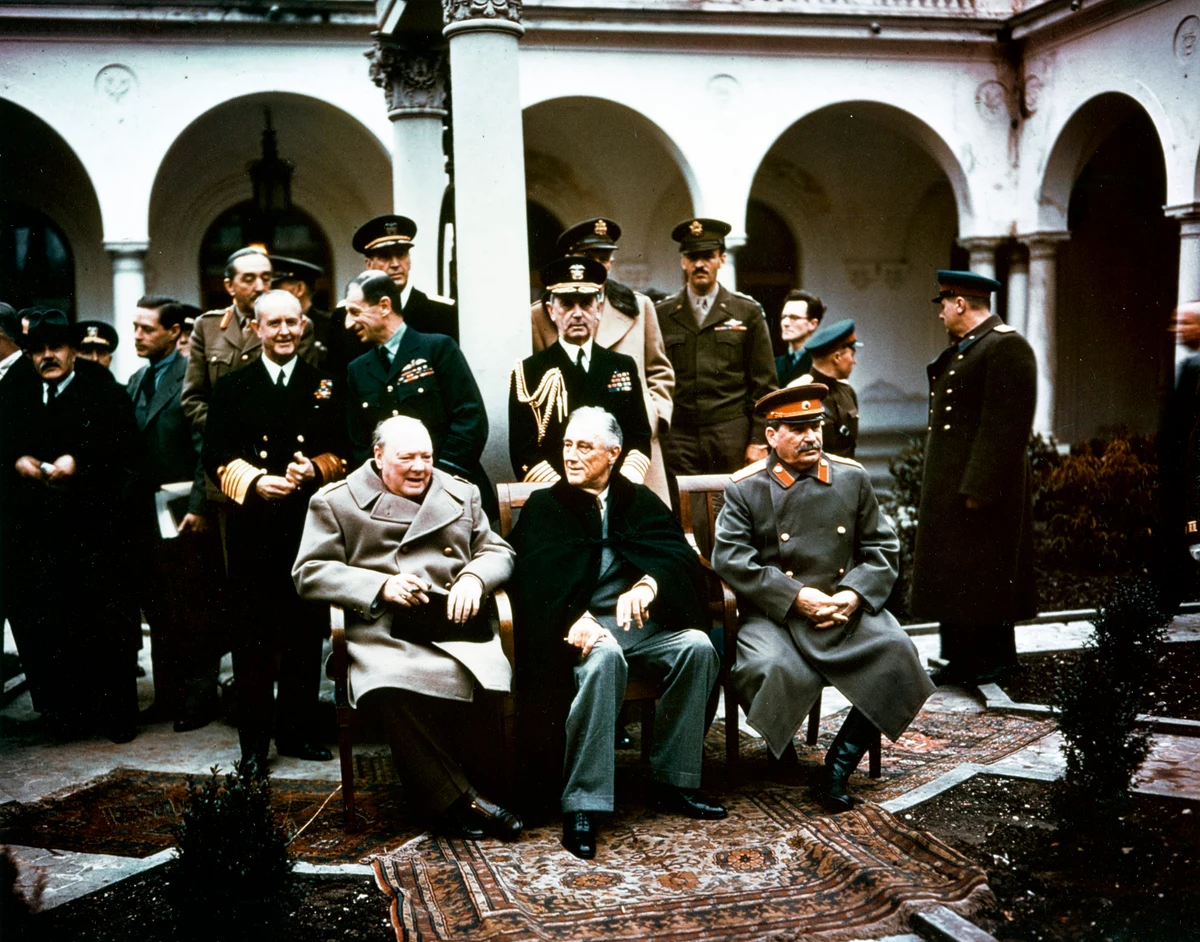
Roosevelt won a fourth presidential election in 1944, an unprecedented continuation in office. In February 1945 he met Winston Churchill and Joseph Stalin at Yalta as the Allies considered Germany’s defeat and the postwar order. His diplomacy depended on cooperation among powers whose interests and political systems differed sharply, making the future settlement uncertain even as military victory approached.
He died at Warm Springs, Georgia, on 12 April 1945, before victory in Europe or the Pacific. Harry Truman inherited the presidency and the decisions still ahead. Roosevelt’s lasting influence lies in both institutions and precedents: economic protection, a more active federal government and international cooperation, but also evidence that national emergency could be used to override the rights of vulnerable communities.
Quick answers
Frequently asked questions about Franklin D. Roosevelt
- When was Franklin D. Roosevelt president?
- Roosevelt served from 4 March 1933 until his death on 12 April 1945. He won four presidential elections but died early in his fourth term.
- Did the Hundred Days include all New Deal legislation?
- No. The label refers to the special congressional session of 9 March–16 June 1933. Major later measures included the Social Security Act and the Works Progress Administration in 1935.
- Did Roosevelt’s New Deal immediately end the Great Depression?
- No. It provided relief, revived confidence and created enduring institutions, but recovery remained uneven. The Depression’s effects did not fully abate until wartime mobilization.
- What was Roosevelt’s responsibility for Japanese American incarceration?
- He signed Executive Order 9066 in February 1942, authorizing military exclusion. Military orders and congressional enforcement then enabled mass forced removal and incarceration, including of American citizens.
Keep exploring
Lives connected to this story
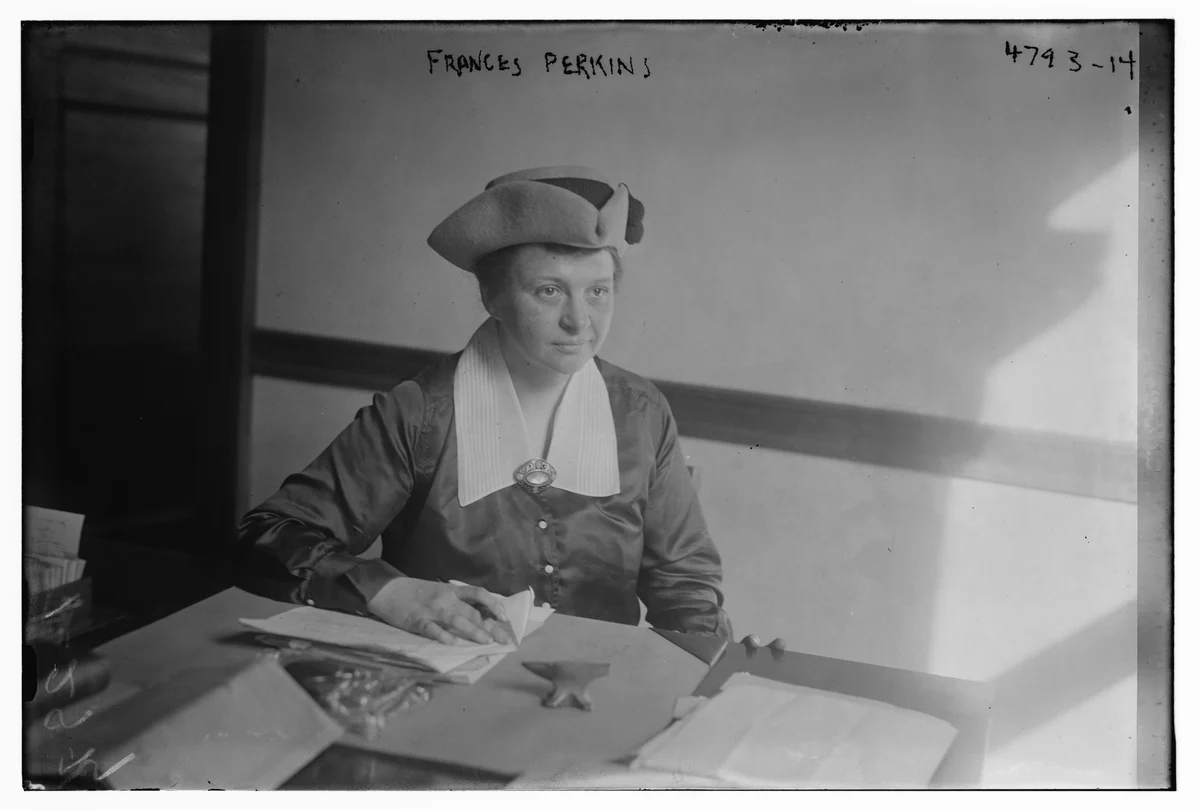
- Frances Perkins
Read about Roosevelt’s labor secretary and the administration’s later work on economic security and Social Security.
- Mary McLeod Bethune
Explore how a Black educator and organizer used New Deal appointments and alliances to press for opportunities within the administration.
- Norman Mineta
Follow the experience of a child incarcerated during Roosevelt’s presidency who later worked for federal acknowledgment and redress.
- A. Philip Randolph
Follow the career behind the linked directive study.
Sources and further reading
Explore the evidence
These references support the biography and offer further reading. Official records, first-person accounts and independent reporting provide different perspectives; image records document attribution and licensing.
- 1. Franklin D. Roosevelt Presidential Library and MuseumFDR Biography
Used the substantive biography for chronology and political context, not the appended timeline’s apparent error describing the December 1941 request as a declaration against Germany. No claim that all New Deal agencies began in 1933.
- 2. Franklin D. Roosevelt Presidential Library and MuseumFDR and Polio
- 3. Federal Reserve HistoryEmergency Banking Act of 1933
- 4. National Park ServiceTimeline of Franklin D. Roosevelt’s Life
- 5. Social Security AdministrationThe Social Security Act of 1935
Historical act text explicitly says approved 14 August 1935. Preferred over the National Archives explanatory page’s conflicting August 15 sentence.
- 6. National ArchivesNational Industrial Recovery Act (1933)
- 7. National ArchivesExecutive Order 9066: Resulting in Japanese-American Incarceration (1942)
Distinguishes broad exclusion authorization from subsequent military implementation; the order did not name an ethnic group in its text. No unsupported claim of individual criminal charges.
- 8. Naval History and Heritage CommandUSA C-543: Yalta Conference, February 1945