In this biography
Quick facts
- Born
- 1925
- Died
- 2017
- Birthplace
- Halifax, United Kingdom
- Country
- United Kingdom
- Nationality
- Not independently established
- Known for
- Homologous-recombination approaches to specific mammalian gene modification
Why this life matters
The contribution also explains why target verification is indispensable: foreign DNA entering a cell and foreign DNA reaching the intended locus are different observations, even when both can be described loosely as successful introduction.
Timeline
Key moments
Birth
Born in Halifax, United Kingdom.
Nobel recognition
Received the Nobel Prize in Physiology or Medicine.
A bench scientist with structural questions
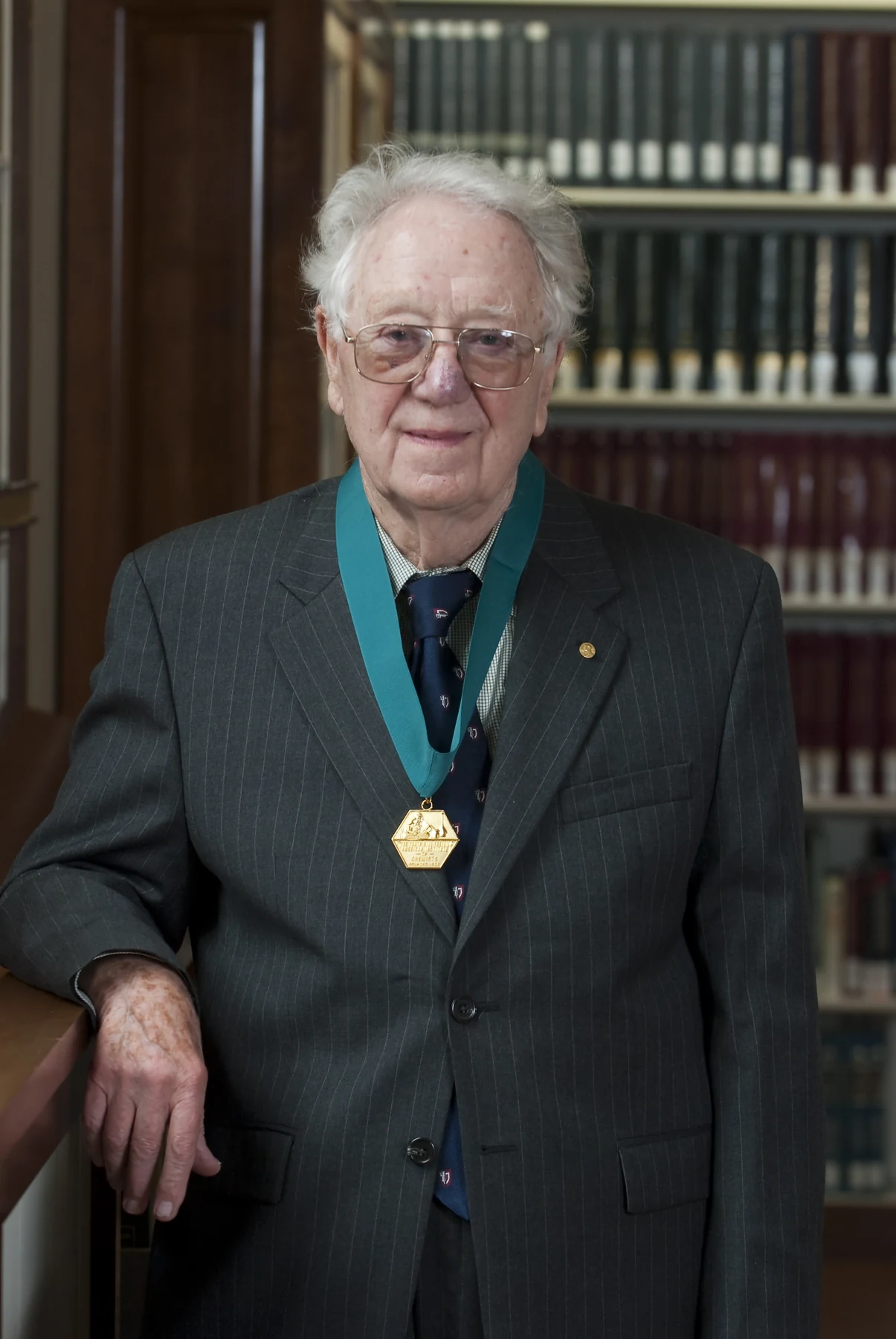
Oliver Smithies was born in Halifax, England, in 1925. His Nobel autobiography describes early practical inventiveness and a career in which protein analysis gradually led into molecular genetics. Work in Toronto and Wisconsin connected differences in plasma proteins with inherited variation. The arrival of DNA cloning opened another experimental direction. Smithies chose to remain a bench researcher rather than take several offered chairmanships, preserving time for the late-starting gene-targeting experiments central to his later recognition.
A planned modification in a human locus
A 1985 paper by Smithies, Richard Gregg, Stephen Boggs, Michael Koralewski and Raju Kucherlapati reported insertion into the human beta-globin locus through homologous recombination. The work used a plasmid carrying matching globin sequences and distinguished the planned event among transformed cells. This was a result in mammalian cells, not yet the claim that an entire mouse had been generated from that experiment. Its significance lay in showing that deliberate sequence relationships could be used to direct and identify a particular genomic alteration.
Sources for this section: [4]
A route to specific mouse genetics
Smithies shared the 2007 medicine prize with Capecchi and Evans for principles of specific gene modification in mice using embryonic stem cells. He died in 2017. His lecture's dated notebook pages and experiments emphasise the protracted construction of a method, rather than a single diagram suddenly becoming a practical technique. The contribution also explains why target verification is indispensable: foreign DNA entering a cell and foreign DNA reaching the intended locus are different observations, even when both can be described loosely as successful introduction.
Quick answers
Frequently asked questions about Oliver Smithies
- What is Oliver Smithies known for?
- Homologous-recombination approaches to specific mammalian gene modification.
Keep exploring
Lives connected to this story
- Mario R. Capecchi
Compare the related experimental question and research career.
- Richard J. Roberts
Compare the related experimental question and research career.
Sources and further reading
Explore the evidence
These references support the biography and offer further reading. Official records, first-person accounts and independent reporting provide different perspectives; image records document attribution and licensing.
- 1. Nobel Prize OutreachOliver Smithies — Facts
Source scope: Birth/death and award metadata; short official work summary.
- 2. Nobel FoundationOliver Smithies — Biographical
Source scope: Selected historical passages, as recorded in the research evidence ledger; not a full-document reading claim.
- 3. Nobel FoundationOliver Smithies — Nobel lecture
Source scope: Selected historical passages, as recorded in the research evidence ledger; not a full-document reading claim.
- 4. Smithies and colleagues / NatureInsertion of DNA sequences into the human chromosomal beta-globin locus by homologous recombination
Source scope: Complete indexed abstract and author list; planned beta-globin modification in transformed mammalian cells, not a claim of a completed mouse in 1985.