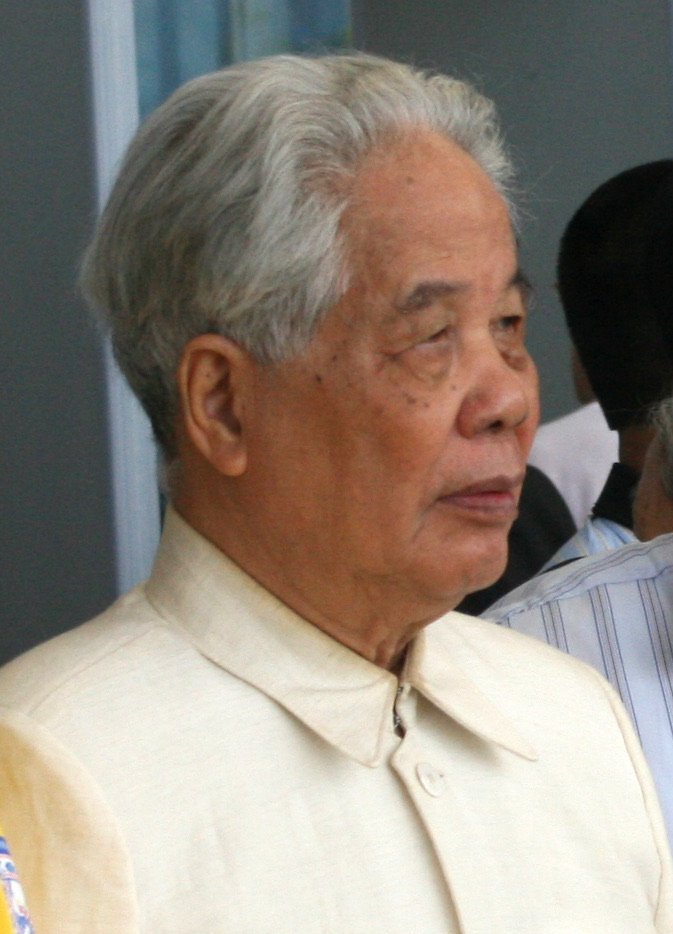
In this biography
Quick facts
- Born
- 27 December 1931
- Died
- 7 August 2020
- Birthplace
- Đông Khê, Thanh Hóa, French Indochina
- Country
- Vietnam
- Nationality
- Vietnamese
- Known for
- Leading the Communist Party from 1997 to 2001 during a cautious phase of Đổi Mới
- Party office
- General secretary, 1997–2001
- Military rank
- Senior lieutenant general
- Senior army office
- Director of the General Political Department
- National Assembly
- Deputy in the ninth and tenth tenures
Why this life matters
Lê Khả Phiêu’s short tenure showed the tension between economic opening and party control after the Asian financial crisis, while Vietnam continued diplomatic negotiation and a gradual path toward global trade integration.
Timeline
Key moments
Born in Đông Khê
Born on 27 December in Thanh Hóa.
Literacy work, party and army
Taught literacy, joined the party in 1949 and entered the army in May 1950.
Military political work
Held roles on the Trị Thiên front, in Military Zone 9 and at High Command 719.
Central military and party posts
Led the General Political Department, became senior lieutenant general in 1992 and joined the Politburo in 1994.
General secretary
Led the party during part of its eighth tenure, before Nông Đức Mạnh.
Formal retirement
The official chronology records retirement in October, separately from the 2001 succession.
Death and national mourning
Died on 7 August; national mourning took place on 14–15 August.
Literacy teaching and entry into the army
Lê Khả Phiêu was born on 27 December 1931 in Đông Khê, Thanh Hóa. The official national-mourning communiqué records literacy teaching in his home commune before he joined the Communist Party in June 1949 and entered the army in May 1950. His early career joined education and political organisation before full-time military service.
The party’s personnel chronology describes assignments within the 304th formation, political schooling and responsibility for organisation and personnel. Political work in this context concerned the party’s authority inside the armed forces, not campaigning for a parliamentary seat. That distinction helps explain how an officer could rise toward national party leadership through positions that were not primarily battlefield commands.
The political officer’s route to the central leadership
Phiêu served on the Trị Thiên front from 1967 and later held senior political posts in Military Zone 9 and High Command 719. The latter assignments belong to the period of Vietnam’s military presence in Cambodia. They should not be conflated with a Cambodian government office or the command of every Vietnamese operation there.
He became head of the army’s General Political Department in 1991, entered the Central Committee and then the Secretariat, and joined the Politburo in 1994. Promotion to senior lieutenant general came in 1992. The sequence shows party and military authority advancing together, while keeping military rank separate from membership of the party’s successive leadership bodies.
General secretary from December 1997 to April 2001
The Central Committee elected Phiêu general secretary on 26 December 1997, during its eighth tenure. His term ended in April 2001, when Nông Đức Mạnh succeeded him. This was a change within the Communist Party’s leadership system, not a nationwide presidential election or the start of a new military government.
A retrospective in Nhân Dân emphasises party-building, discipline and collective leadership during his tenure. It is an account from the party newspaper, and its positive assessment should be read as such rather than adopted as an independent audit. His office was politically central, but the presidency, premiership, National Assembly and party organisations remained distinct institutions with their own personnel.
Diplomacy during a continuing economic opening
Phiêu’s tenure included efforts to develop relations with neighbouring countries and Western partners. A Chinese foreign-ministry account records his meeting with Tang Jiaxuan on 31 December 1999, following the land-border treaty signed by the two countries. It describes his welcome for the agreement, not his personal signature as the foreign minister.
The United States and Vietnam signed a bilateral trade agreement in July 2000, another important event within this period. These agreements show diplomatic and economic engagement continuing under party rule. Signing, ratification, entry into force and later implementation are different stages; neither a border agreement nor a trade signature proves that every subsequent dispute had been resolved or that one leader alone produced the outcome.
Succession, retirement and the 2020 commemoration
Leaving the general-secretary post in 2001 was not the same event as his formal retirement, which the official chronology places in October 2006. He remained part of the elder leadership generation whose careers spanned war, reunification and the reform era. The different dates should not be compressed into a single disappearance from public life.
Phiêu died in Hanoi on 7 August 2020. The joint official communiqué announced national mourning for 14–15 August and burial at Mai Dịch Cemetery. These records establish death and funeral arrangements while also expressing the state’s commemorative judgment. They do not remove the need to distinguish a documented career from the praise attached to an official funeral.
Sources for this section: [5]
Quick answers
Frequently asked questions about Lê Khả Phiêu
- When did Lê Khả Phiêu lead Vietnam’s Communist Party?
- From 26 December 1997 to April 2001. Nông Đức Mạnh succeeded him; the general-secretary post is distinct from the presidency and premiership.
- What was his senior army position?
- He headed the General Political Department from 1991 and held the rank of senior lieutenant general from 1992. Rank and party office are different parts of his career.
- Did he personally sign the 1999 China–Vietnam land-border treaty?
- The cited account records his welcome for the treaty and meeting with China’s foreign minister, not his signature as a treaty signatory.
- Did his retirement and death occur in 2001?
- No. He left the top party office in 2001, formally retired in October 2006 and died on 7 August 2020. National mourning followed on 14–15 August.
Keep exploring
Lives connected to this story
- Đỗ Mười
Read about the general secretary who preceded Phiêu.
- Nông Đức Mạnh
Follow the party leadership after the April 2001 succession.
- Nguyễn Phú Trọng
Compare a later period of party leadership and institutional discipline.
Sources and further reading
Explore the evidence
These references support the biography and offer further reading. Official records, first-person accounts and independent reporting provide different perspectives; image records document attribution and licensing.
- 1. National Party Congress of VietnamLê Khả Phiêu: Party General Secretary from 1997 to 2001
The chronology separates the 1991 political-department appointment, 1992 military rank, December 1997 election and October 2006 retirement.
- 2. Government NewsVietnam holds national mourning for Lê Khả Phiêu
- 3. Vietnam NewsFormer leader Lê Khả Phiêu dies at 89
- 4. Wikimedia CommonsPortrait and CC BY-SA 4.0 record
- 5. Vietnam News AgencyJoint communiqué and official career chronology, 10 August 2020
The joint communiqué is both a career/death record and official commemoration. Its praise is not presented as an independent evaluation.
- 6. Nhân DânParty newspaper retrospective on his leadership, 2020
- 7. Chinese Ministry of Foreign AffairsMeeting with Tang Jiaxuan on 31 December 1999
The historical meeting date is 31 December 1999; the archive’s 2024 URL path is not the date of the event.
- 8. US Department of State archive13 July 2000 bilateral trade agreement fact sheet
The indexed official fact sheet verifies the July 2000 signing. The archive returned a technical-error page directly; full-text access and contemporaneous entry into force are not claimed.