In this biography
Quick facts
- Born
- 10 March 1947
- Birthplace
- Port Alberni, British Columbia, Canada
- Country
- Canada
- Nationality
- Not independently established
- Known for
- The 1993 premiership, justice and defence portfolios, and later leadership education
- Prime minister
- 25 June–4 November 1993
- Political distinction
- Canada’s first woman prime minister
- Federal constituency
- Vancouver Centre, 1988–1993
- Earlier portfolios
- Justice, national defence and veterans affairs
Why this life matters
Campbell’s career separates a breakthrough in political representation from the electoral strength needed to sustain a government. Her record includes major cabinet responsibilities before 1993 and an international career afterward, neither of which is adequately explained by the two-seat election result alone.
Timeline
Key moments
Born in British Columbia
Born on 10 March in Port Alberni.
School-board service
Serves on the Vancouver School Board, including as chair in 1983.
Federal election
Enters the House of Commons for Vancouver Centre.
Cabinet responsibilities
Serves as justice minister, then holds national defence and veterans affairs.
Party leadership and premiership
Wins the party leadership on 13 June and becomes prime minister on 25 June.
Defeat and transition
The Conservatives win two seats on 25 October; Chrétien becomes prime minister on 4 November.
Consul general
Serves Canada in Los Angeles after the end of her elected career.
Leadership education
Serves as founding principal of the University of Alberta’s Peter Lougheed Leadership College.
Education and local office preceded national prominence
Campbell was born in Port Alberni on 10 March 1947. She studied political science and law at the University of British Columbia and undertook postgraduate work abroad. Teaching and legal practice preceded her rise in federal politics, giving her professional experience outside a party organization.
She served as a Vancouver school trustee from 1980 to 1984 and chaired the board in 1983. Her political path also included British Columbia’s provincial arena before she won Vancouver Centre as a Progressive Conservative in the 1988 federal election. The premiership was therefore not her first experience of elected responsibility.
Justice and defence placed her in senior cabinet roles
Under Brian Mulroney, Campbell became minister of justice and attorney general in 1990. Her responsibilities included firearms legislation and criminal-law reform. She subsequently became minister of national defence and veterans affairs in 1993.
These appointments broke gender barriers in portfolios long associated with male political leadership. Their significance is not the same as saying that cabinet responsibility guaranteed public support for every measure. Her later campaign inherited the record of a government in which she had been a senior participant, even though she had not led it for most of its nine years in office.
Winning the party leadership made her prime minister
Mulroney’s departure opened the Progressive Conservative leadership contest. Campbell won on 13 June 1993 and became prime minister on 25 June. She was Canada’s first woman to hold the office.
In the Canadian parliamentary system, a new governing-party leader can become prime minister without a simultaneous general election. This explains why Campbell’s June accession and the October vote must be distinguished. She inherited an existing House of Commons and cabinet machinery; she had not yet obtained a new electoral mandate as party leader.
The election combined an unpopular record with a fragmented electorate
The 25 October 1993 election focused on employment, public finances and social programmes. The Progressive Conservatives faced accumulated dissatisfaction after nine years in government. Reform challenged them particularly in the West, while the Bloc Québécois reshaped competition in Quebec.
Chrétien’s Liberals won 177 seats. The Progressive Conservatives won two, behind the Bloc’s 54 and Reform’s 52. The result was not simply a national vote on whether a woman could govern, nor can it be explained by one campaign incident. Leadership, inherited policy burdens and the regional distribution of opposition all contributed to the defeat.
Sources for this section: [5]
A short tenure ended, but not every part of her public career
Campbell remained prime minister through the transition after election day, leaving office when Chrétien was sworn in on 4 November 1993. This is why an account ending her premiership on 25 October confuses a vote with the subsequent transfer of government.
She later served as Canada’s consul general in Los Angeles from 1996 to 2000 and taught at Harvard. Her own chronological record documents those positions, while her work with organizations of former leaders and women leaders developed a public identity beyond the 1993 campaign. These later roles should be dated rather than described as permanent current appointments.
Leadership education broadened the later record
From 2014 to 2018 Campbell served as founding principal of the University of Alberta’s Peter Lougheed Leadership College. She also chaired the independent advisory board for Supreme Court appointments beginning in 2016. These were different forms of public participation from holding a parliamentary seat or executive office.
Her career invites two equally necessary perspectives. Becoming the first woman prime minister was a consequential institutional milestone. The magnitude of the 1993 defeat was also real. Treating either fact as the whole biography would obscure her earlier cabinet authority and the diplomatic, educational and civic work that followed.
Quick answers
Frequently asked questions about Kim Campbell
- Was Kim Campbell Canada’s first woman prime minister?
- Yes. She became prime minister on 25 June 1993 after winning the governing Progressive Conservative Party’s leadership.
- How long was Kim Campbell prime minister?
- Her premiership ran from 25 June to 4 November 1993. The general election took place on 25 October, before the transfer of office.
- How many seats did her party win in 1993?
- The Progressive Conservatives won two seats. Chrétien’s Liberals won 177 of the 295 seats.
- What did Campbell do after politics?
- Her later roles included consul general in Los Angeles, teaching at Harvard and founding principal of the Peter Lougheed Leadership College.
Keep exploring
Lives connected to this story
- Jean Chrétien
Read about the Liberal leader who won the 1993 election and succeeded Campbell as prime minister.
- Pierre Trudeau
Compare another leader who first became prime minister through governing-party succession before a general election.
Sources and further reading
Explore the evidence
These references support the biography and offer further reading. Official records, first-person accounts and independent reporting provide different perspectives; image records document attribution and licensing.
- 1. Library and Archives Canada, archived prime ministers collectionKim Campbell: biography, portfolios and 1993 premiership
The archived page’s political-power heading uses party-leadership and election dates. Its explicit premiership entry, corroborated by the transition record, gives 25 June–4 November 1993.
- 2. Kim CampbellBiography and chronological career record
The participant’s website is used for dated education and later-career entries, not its promotional testimonials or a claim that every listed position remains current.
- 3. Women and Gender Equality CanadaWomen of Impact in Canada: Kim Campbell
- 4. House of Commons of CanadaGovernment Ministries and Prime Ministers of Canada Since 1867
- 5. Inter-Parliamentary UnionCanada: House of Commons election, 25 October 1993
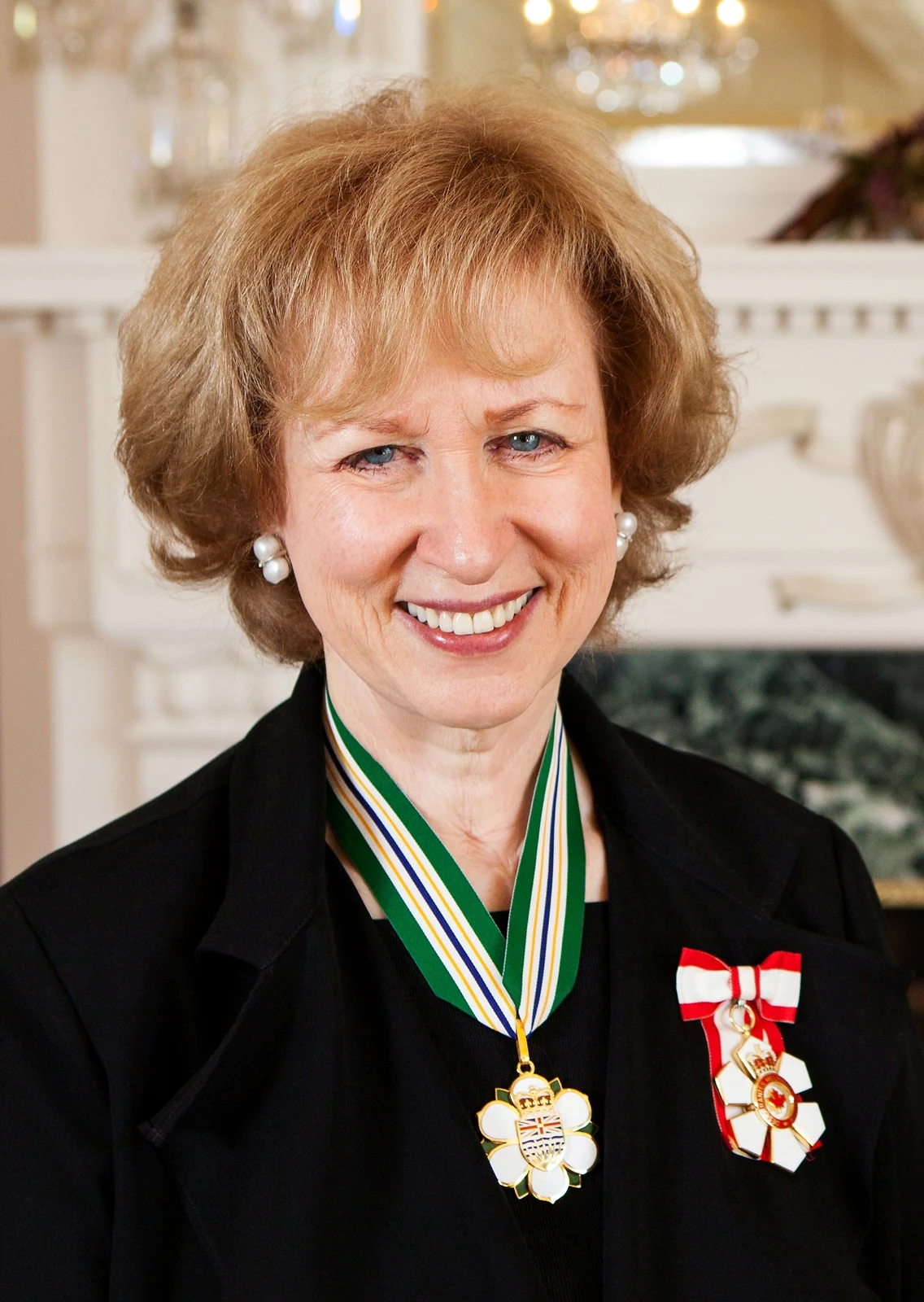
- 6. Gunnar Freyr Steinsson / SFU Communications & MarketingKim Campbell, 6 September 2012: photograph released under CC BY 2.0
- 7. Wikimedia CommonsKim Campbell: supplied photograph, EXIF credit and Flickr licence review
The supplied portrait already has its published composition. The original Flickr grant and the EXIF photographer credit were checked; no further cropping was performed.