
The short answer
Kim Campbell’s accession in June 1993 and the Progressive Conservatives’ defeat in October were distinct political events. The first made her Canada’s first woman prime minister; the second transformed the House of Commons. Understanding the interval requires looking beyond one leader to the inherited government record, regional challengers and the electoral system.
Seats after 25 October
The House of Commons changed shape
The 295-seat result was more than an exchange between two established parties.
| Country | Seats | Parliamentary position |
|---|---|---|
| Liberal Party | 177 | Majority government |
| Bloc Québécois | 54 | Official Opposition |
| Reform Party | 52 | Major new opposition force |
| New Democratic Party | 9 | Below recognized-party threshold |
| Progressive Conservatives | 2 | Governing party reduced to two seats |
| Independent | 1 | Outside the party totals |
Chronology
A timeline of the turning points
Party leadership
Campbell wins the Progressive Conservative leadership contest.
New prime minister
She succeeds Brian Mulroney without a simultaneous general election.
Campaign begins
The general-election campaign focuses heavily on jobs, public finances and social programmes.
Election
The Liberals win 177 seats, the Bloc 54, Reform 52, the NDP nine and the Conservatives two; one independent is elected.
Government transition
Chrétien is sworn in, ending Campbell’s premiership.
A party contest changed the prime minister before the election
Brian Mulroney’s departure led to a contest inside the governing Progressive Conservative Party. Campbell won the leadership on 13 June and became prime minister on 25 June. Her first-woman milestone therefore occurred before the country voted in October.
Canada does not directly elect a prime minister through a separate nationwide presidential ballot. A governing-party succession can produce a new head of government within the existing Parliament. Describing Campbell as unelected in every sense would ignore her parliamentary seat; describing June as a fresh general-election victory would be equally incorrect.
A new leader inherited nine years of governing history
The Conservatives had governed since 1984. By 1993 public dissatisfaction had accumulated, and the campaign took place amid concerns about employment, debt, deficits and social programmes. Campbell had held senior portfolios, but she had led the government only since June.
That distinction explains both her limited time to reshape its reputation and why voters could still hold the governing party accountable. A leadership change did not erase the preceding administration. It also did not make every earlier decision Campbell’s personal act. The Inter-Parliamentary Union’s contemporary summary emphasizes both the inherited burden and the Liberals’ disciplined economic campaign.
Reform and the Bloc changed the geography of competition
Reform, led by Preston Manning, challenged the Conservatives strongly in western Canada. The Bloc Québécois, led by Lucien Bouchard, promoted Quebec interests and sovereignty at the federal level. The two parties did not represent the same political project, even though both weakened the established governing coalition.
In some ridings divided conservative support helped Liberal candidates win. In Quebec the Bloc won enough seats to become the Official Opposition. The national result therefore cannot be read as a simple two-party swing or as one uniform electorate deciding the same issue in every region.
Votes and seats told different parts of the story
The Liberals won 177 of 295 seats. The Bloc took 54, Reform 52, the NDP nine and the Progressive Conservatives two, with one independent. The Conservatives’ two seats represented institutional devastation, but not the disappearance of every Conservative voter.
The IPU records a Conservative vote share of 16.04 per cent. Under constituency-based plurality elections, a geographically dispersed vote can produce far fewer seats than a more concentrated one. The Bloc’s 54 seats made it the second-largest parliamentary group even though Reform had more votes nationally. Seat totals and national vote totals answer related but different questions.
Sources for this section: [1]
The transfer of office happened after election day
Voting occurred on 25 October. Chrétien was sworn in on 4 November, so Campbell remained prime minister during the intervening transition. A timeline ending her tenure on election night would confuse the electoral result with the formal change of government.
This short interval is useful for understanding parliamentary continuity: an incumbent government does not simply disappear when the count establishes its defeat. The result determines the political transition, while the transfer of office follows through constitutional practice. Campbell’s premiership is accordingly dated from 25 June to 4 November 1993.
The result was a realignment, not the complete end of a career
The election began Chrétien’s decade in office and remade the opposition benches. It also left the Progressive Conservatives below the threshold used for recognized party status in the Commons. Those institutional consequences were more durable than a single campaign headline.
Campbell later served in diplomacy and leadership education. These roles do not reverse the defeat, but they prevent it from swallowing the whole account of her public life. A balanced interpretation can recognize the gender breakthrough, the scale of the party’s collapse and the wider forces reshaping Canadian politics without treating any one as a substitute for the others.
Continue the chronology
Related history guides
Biography context
Explore Canada through connected lives
Connected biographies
The outgoing and incoming prime ministers
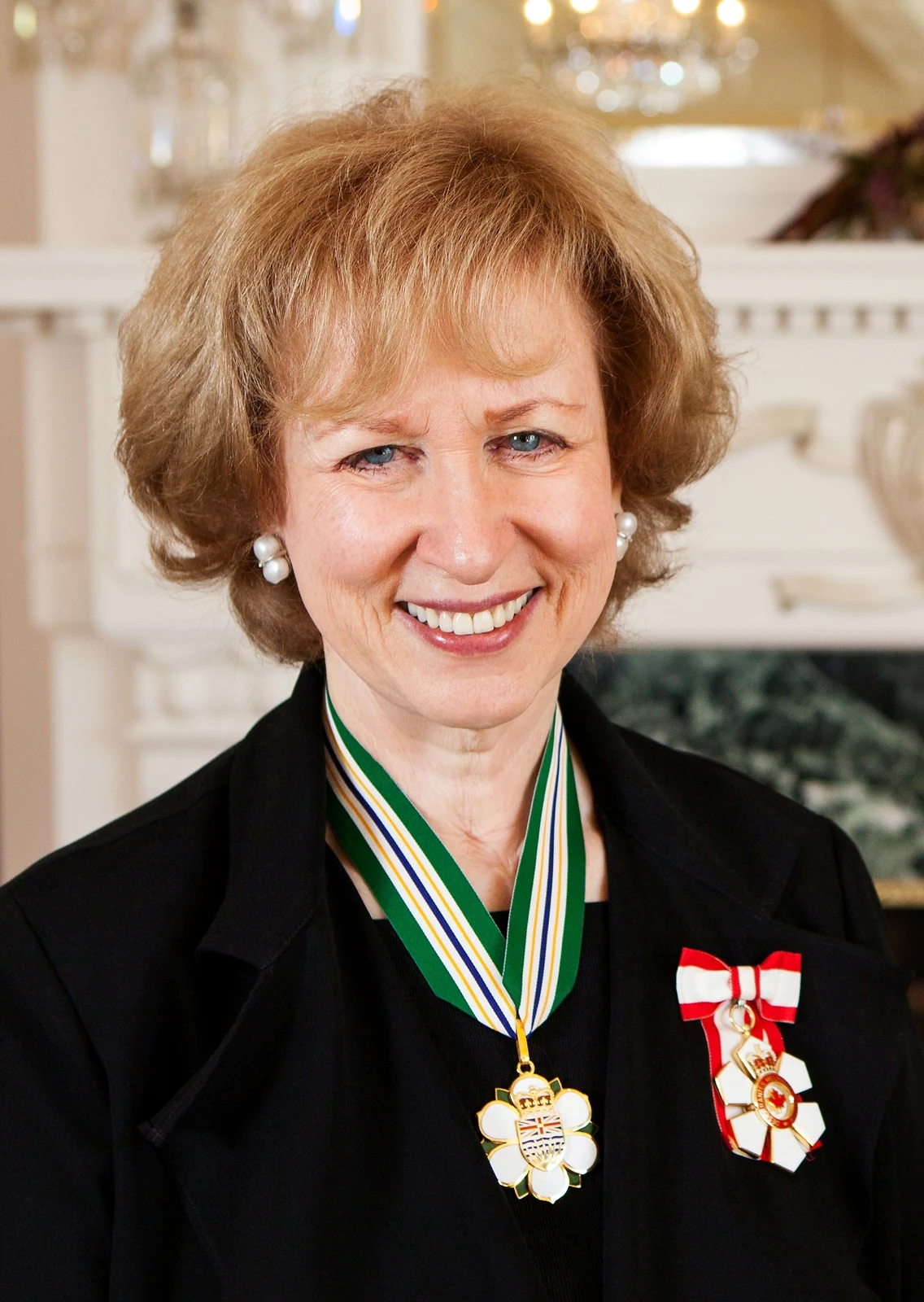
1947–
Kim Campbell
Lawyer, Progressive Conservative leader and Canada’s first woman prime ministerKim Campbell became Canada’s first woman prime minister in June 1993 after winning the Progressive Conservative leadership. A former teacher and lawyer, she had held justice and defence portfolios. Her short premiership ended after the Conservatives’ historic election defeat, but her public career continued in diplomacy and leadership education.Read biography
1934–
Jean Chrétien
Lawyer, Liberal cabinet minister and prime minister of CanadaJean Chrétien was Canada’s prime minister from 1993 to 2003 after a long career in Liberal cabinets. He helped negotiate the 1982 constitutional settlement, led the government through the 1995 Quebec referendum and backed the Clarity Act. His record also includes the rejected 1969 White Paper, fiscal restraint and the sponsorship scandal.Read biographyQuick answers
Common questions
- Did Kim Campbell win a general election as prime minister?
- No. She became prime minister through governing-party succession in June 1993; her party was defeated in the October general election.
- What share of the vote did the Progressive Conservatives win?
- They received 16.04 per cent nationally. That geographically dispersed support translated into only two constituency victories, because votes and seats were counted through individual ridings.
- Who became the Official Opposition?
- The Bloc Québécois, with 54 seats, became the second-largest parliamentary group and Official Opposition.
- When did Campbell actually leave the premiership?
- On 4 November 1993, when Jean Chrétien was sworn in, rather than on the 25 October election date.
Primary and institutional sources
How this history was checked
The IPU’s contemporary result table supplies votes and seats; archival biographical records distinguish party leadership, election day and the transfer of the premiership. The 2012 portrait is not a campaign photograph. This article was reviewed on 23 October 2026.
- Inter-Parliamentary UnionCanada: House of Commons election, 25 October 1993
- Library and Archives Canada, archived prime ministers collectionKim Campbell: biography, portfolios and 1993 premiership
- Kim CampbellBiography and chronological career record
- Women and Gender Equality CanadaWomen of Impact in Canada: Kim Campbell
- House of Commons of CanadaGovernment Ministries and Prime Ministers of Canada Since 1867
- Canadian Museum of HistoryPortrait of a prime minister: Jean
- Gunnar Freyr Steinsson / SFU Communications & MarketingKim Campbell, 6 September 2012: photograph released under CC BY 2.0
- Wikimedia CommonsKim Campbell: supplied photograph, EXIF credit and Flickr licence review