
The short answer
Canada’s federal Goods and Services Tax began on 1 January 1991 at 7 per cent. It replaced an existing manufacturers’ sales tax rather than creating the country’s first sales tax. Its economic design and the bitter parliamentary struggle over enactment explain different parts of the reform.
Chronology
A timeline of the turning points
Tax-reform proposals
The government advances reform of the existing federal sales-tax system.
Design and legislation
The proposed replacement tax moves through revisions and parliamentary debate.
Additional senators
The government invokes the constitutional mechanism for eight additional Senate appointments.
GST introduced
The new federal value-added tax begins at 7 per cent.
Later harmonization
The HST begins in three Atlantic provinces, a separate stage from the GST’s original launch.
Later rate cuts
The federal GST rate is reduced first to 6 per cent and then to 5 per cent.
The old manufacturers’ tax was already in prices
Before the GST, the federal government collected a manufacturers’ sales tax. It was levied earlier in the production chain and could become embedded in prices. The Library of Parliament’s retrospective identifies a narrow base, uneven treatment and accumulated distortions as major reasons for seeking a replacement.
The reform was therefore not a choice between sales taxation and no sales taxation. It changed the base, collection method and visibility of an existing source of federal revenue. That distinction is important when comparing the tax appearing on a receipt with costs previously incorporated less visibly in the purchase price.
Sources for this section: [1]
Value added and input credits changed how tax moved through production
The GST used a value-added structure. Registered businesses generally charged tax on taxable sales and claimed credits for qualifying tax paid on business inputs. The intended result was to collect tax on final consumption without repeatedly taxing the same production inputs at successive stages.
That mechanism did not mean every business or transaction had identical treatment. It also created registration, record-keeping and collection responsibilities. The technical case for reducing tax cascading could coexist with concern about compliance costs and the way consumers experienced the new charge.
Zero-rating, exemptions and credits addressed different problems
In the original design, zero-rated supplies and exempt supplies did not have the same treatment for input credits. A zero rate could preserve input-tax recovery while charging no tax to the buyer; exemption operated differently. Calling both simply “untaxed” obscures an important feature of value-added taxation.
The GST credit was designed to offset burdens for lower- and modest-income households. Such mitigation did not end arguments about distribution or compensate every person in the same way. This is an account of the historical design, not current advice about eligibility or the treatment of a particular purchase.
The Senate fight was about authority as well as tax design
The elected House of Commons passed the legislation, but opposition in the Senate delayed it. In 1990 Mulroney’s government used section 26 of the Constitution Act, 1867 to obtain eight additional senators. The mechanism required the constitutional appointment process; it was not an ordinary power to add any number of seats.
The contemporary Senate report describes prolonged divisions, adjournments, disputed procedure and negotiated debate limits. Opponents contested both the tax and the means used to overcome resistance. The Library of Parliament’s analysis explains the deadlock provision’s history and restrictions, which are separate from whether the economic reform was desirable.
Launch, harmonization and later rate cuts
The GST took effect on 1 January 1991 at 7 per cent. Later federal rate changes reduced it to 6 per cent in 2006 and 5 per cent in 2008. Those later figures should not be projected backwards onto the reform’s launch.
Harmonized sales taxes were also a later development. The HST began in three Atlantic provinces in 1997, not in every province when the original GST began. Keeping federal tax introduction, later harmonization and later rate changes separate prevents a confusing national timeline.
A durable tax can still have a contested political origin
The GST became a lasting part of federal revenue collection, but durability alone does not settle whether its initial distribution or enactment was justified. Likewise, public anger does not explain the technical workings of input credits or the drawbacks of the manufacturers’ tax.
The reform is best understood through both records: the fiscal analysis of what changed, and the parliamentary account of how the government secured passage. Mulroney’s policy legacy includes that combination of structural economic change and considerable political cost.
Continue the chronology
Related history guides
Biography context
Explore Canada through connected lives
Brian Mulroney
Read the wider trade, tax and constitutional record of the government that introduced the GST.
Explore the biographies1993 successionKim Campbell
Follow the governing-party transition before the 1993 election.
Explore the biographiesLater governmentJean Chrétien
Continue into the Liberal government that followed.
Explore the biographiesConnected biographies
The government of introduction and its successors
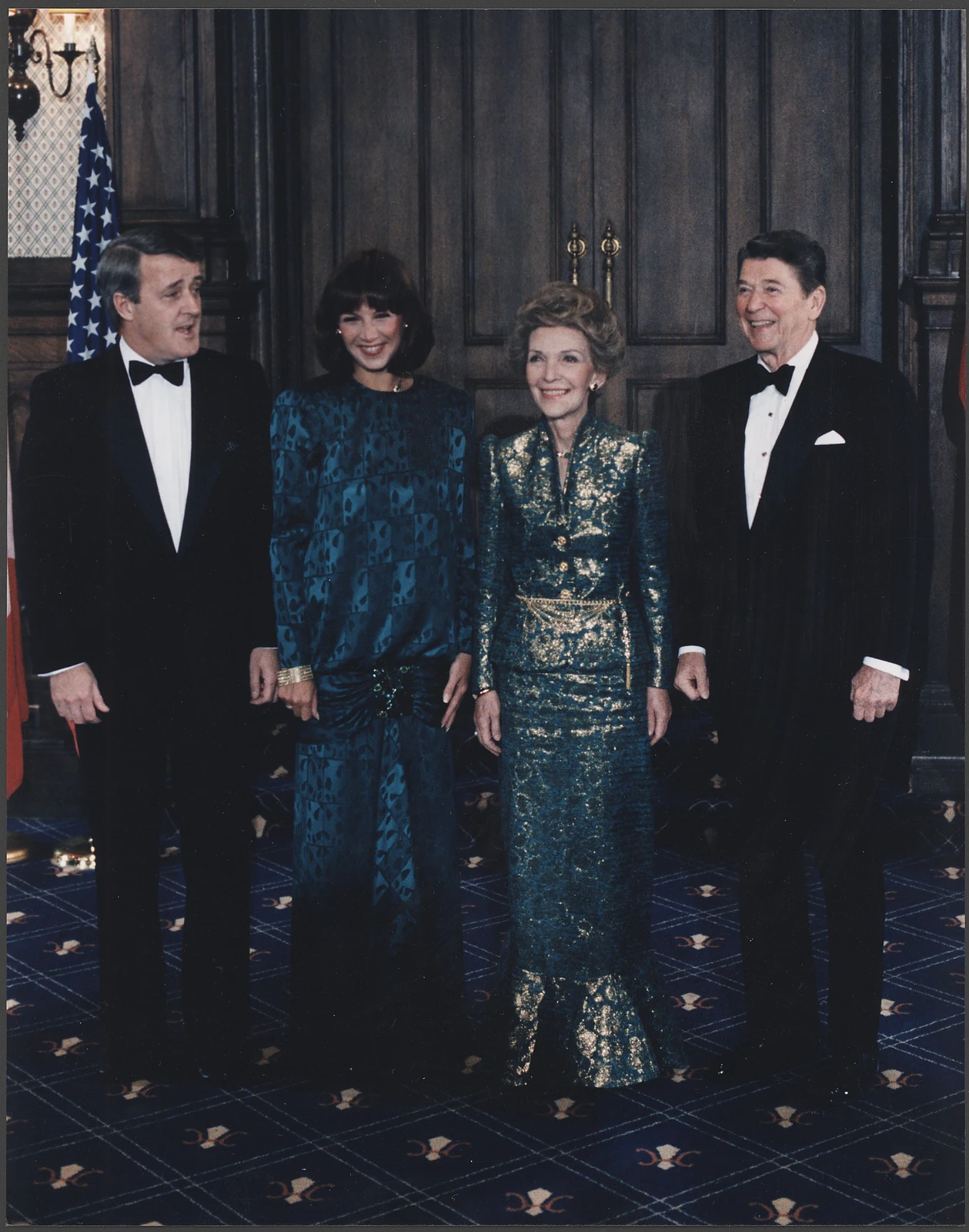
1939–2024
Brian Mulroney
Lawyer, Progressive Conservative leader and prime minister of CanadaBrian Mulroney was Canada’s prime minister from 1984 to 1993. His governments negotiated bilateral free trade with the United States, introduced the GST and pursued constitutional reconciliation with Quebec. His legacy also includes environmental and anti-apartheid diplomacy, failed constitutional accords and an inquiry’s findings about inappropriate financial dealings after he left office.Read biography
1947–
Kim Campbell
Lawyer, Progressive Conservative leader and Canada’s first woman prime ministerKim Campbell became Canada’s first woman prime minister in June 1993 after winning the Progressive Conservative leadership. A former teacher and lawyer, she had held justice and defence portfolios. Her short premiership ended after the Conservatives’ historic election defeat, but her public career continued in diplomacy and leadership education.Read biography
1934–
Jean Chrétien
Lawyer, Liberal cabinet minister and prime minister of CanadaJean Chrétien was Canada’s prime minister from 1993 to 2003 after a long career in Liberal cabinets. He helped negotiate the 1982 constitutional settlement, led the government through the 1995 Quebec referendum and backed the Clarity Act. His record also includes the rejected 1969 White Paper, fiscal restraint and the sponsorship scandal.Read biographyQuick answers
Common questions
- When did the GST start in Canada?
- On 1 January 1991, at a federal rate of 7 per cent.
- Was it Canada’s first sales tax?
- No. It replaced the federal manufacturers’ sales tax with a broader value-added structure.
- Why were eight additional senators appointed in 1990?
- The government used the constitutional deadlock mechanism while trying to overcome Senate resistance to the GST legislation.
- Did the GST and HST begin at the same time?
- No. The GST began in 1991; HST implementation in three Atlantic provinces followed in 1997.
Primary and institutional sources
How this history was checked
The Library of Parliament study is a retrospective published in 2000, not current tax guidance. Finance’s December 1989 proposals corroborate the design, not final enactment. Revenu Québec confirms historical rates; the contemporary Senate account describes the political struggle. The 1985 image is not a GST announcement scene. This article was reviewed on 23 October 2026.
- Richard Domingue and Jean Soucy / Library of ParliamentThe Goods and Services Tax: Ten Years Later, 15 June 2000
- Department of Finance Canada / Michael H. WilsonGoods and Services Tax: revised proposals and technical notes, 19 December 1989
- Revenu QuébecTables of historical GST and QST rates
- Blair Armitage, Senate committee clerk / Canadian Parliamentary ReviewLegislative Reports, 1990, volume 13 number 4: the Senate and the GST
- Mollie Dunsmuir / Library of ParliamentThe Senate: Appointments under Section 26 of the Constitution Act, 1867
- Canadian HeritageAbout the Right Honourable Brian Mulroney
- White House Photographic Office / NARA / Wikimedia CommonsThe Reagans and Mulroneys in Quebec, 18 March 1985, NARA 198561