In this biography
Quick facts
- Born
- 24 June 1958
- Birthplace
- Sherbrooke, Quebec
- Country
- Canada
- Nationality
- Canadian
- Known for
- Quebec’s 2003–2012 premiership, federal Progressive Conservative leadership and the 1995 No campaign
- Legal education
- Université de Sherbrooke, 1980
- Federal cabinet
- 1986–1990 and 1991–1993
- Premier of Quebec
- 29 April 2003–19 September 2012
- Later practice
- Therrien Couture Joli-Cœur from 2024
Why this life matters
Charest’s career spans Canadian federalism, the movement between distinct federal and provincial parties, economic development and deep disputes over government authority and public trust.
Timeline
Key moments
Sherbrooke law and federal election
Born in Sherbrooke; earns a law degree in 1980, enters the Quebec bar in 1981 and wins a federal seat in 1984.
Federal cabinet
Holds youth and sport portfolios, resigns in 1990 and returns as environment minister in 1991; briefly serves as deputy prime minister in 1993.
Federal party and referendum leadership
Takes over the weakened Progressive Conservatives and helps lead the 1995 No campaign.
Quebec Liberal leadership
Moves to the provincial party in 1998 and leads governments following the 2003, 2007 and 2008 elections.
Student conflict and defeat
The tuition dispute and special legislation provoke sustained protests; Charest loses his seat as the government is defeated.
Law and another leadership campaign
Returns to private practice, unsuccessfully contests the 2022 federal Conservative leadership and joins TCJ in 2024.
Sherbrooke supplied the foundation for law and electoral politics
Jean Charest was born in Sherbrooke, Quebec, on 24 June 1958. He attended local schools and completed a law degree at Université de Sherbrooke in 1980. After legal-aid training and admission to the Quebec bar in 1981, he practised with Beauchemin, Dussault in his home city.
Federal politics arrived early. In 1984, at twenty-six, he won Sherbrooke for Brian Mulroney’s Progressive Conservatives. His legal practice had lasted only a few years, but the constituency became the base from which he would hold federal and later provincial office. His career crossed those two political systems without making their parties interchangeable.
Early cabinet promotion was followed by a serious setback
Charest became minister of state for youth in 1986, then added responsibilities for fitness and amateur sport. The Canadian Press describes him as the youngest cabinet minister at the time of his appointment, aged twenty-eight. In 1990 he resigned amid controversy over judicial interference, interrupting a rapid rise through the government. A contemporary wire report described attempted contact with an athlete’s judge; Charest denied trying to influence the decision.
He returned to cabinet in 1991 as environment minister. In the 1993 Progressive Conservative leadership contest he finished behind Kim Campbell and then briefly served as her deputy prime minister and industry minister. Promotion and resignation both belong in the account: the later premiership did not erase the controversy of his early federal career.
Federal party survival preceded a move into Quebec politics
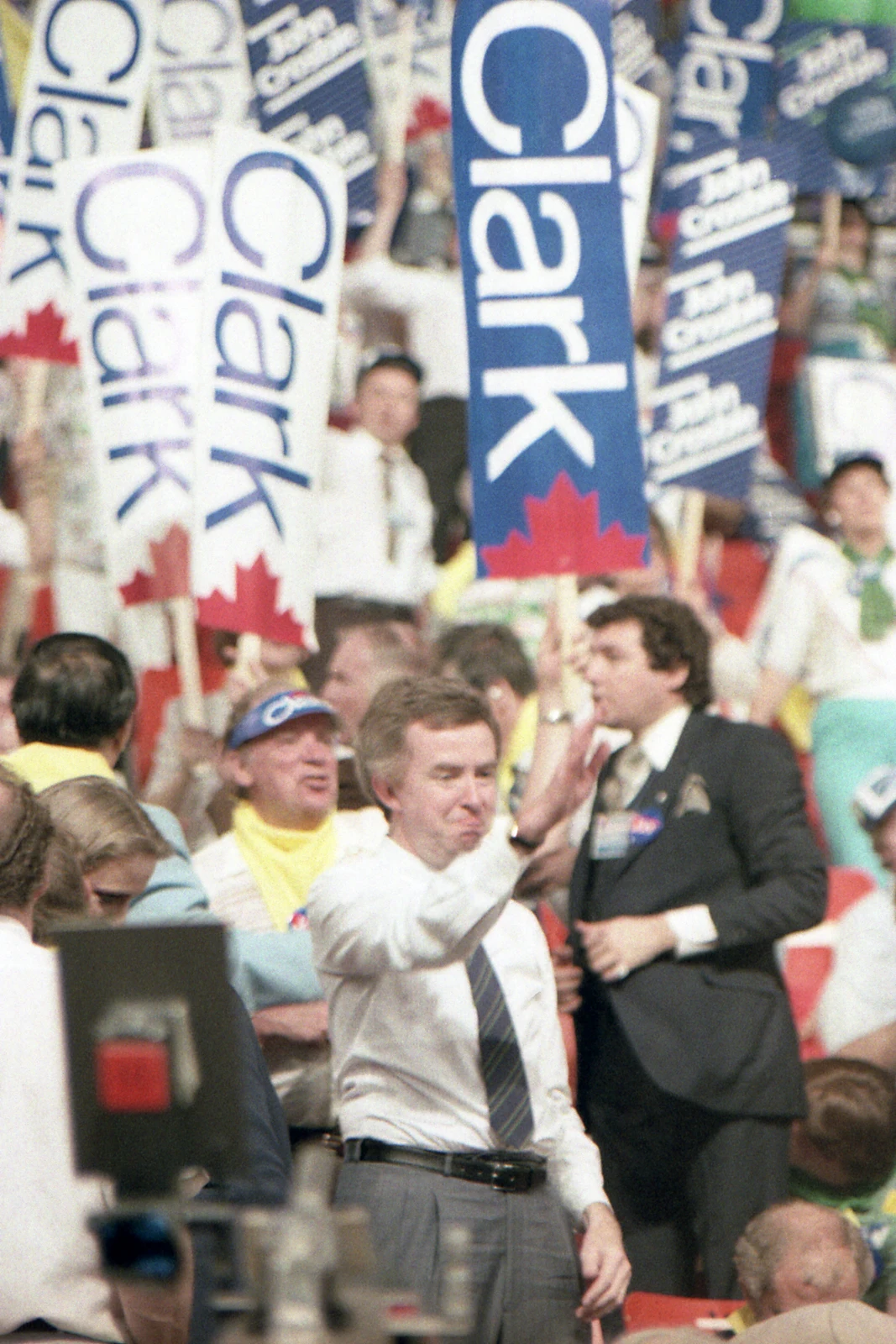
After the Conservatives’ devastating 1993 election defeat, Charest took over a severely weakened party, initially as interim leader. The mid-1990s also brought the sovereignty referendum in Quebec. As a senior figure in the No campaign, he argued for the province’s continued place in Canada during the closely contested 1995 vote.
In 1998 he left federal Progressive Conservative leadership and his Commons seat to lead the Quebec Liberal Party. These were distinct organizations, not two branches of one party. He first became provincial opposition leader, then led the Liberals into government in 2003. Federalist advocacy connected the two phases, but the move changed his electorate and the responsibilities he sought.
The premiership combined economic projects with political conflict
Charest was premier from 29 April 2003 to 19 September 2012. Election victories in 2003, 2007 and 2008 sustained his leadership through both majority and minority government. His economic agenda included the Plan Nord, a labour-mobility arrangement with France and advocacy for the Canada–European Union trade agreement that became CETA.
Those projects form only part of the governing record. In 2012 a planned tuition increase produced a prolonged student strike. His government’s special legislation intensified arguments over access to classes, the freedom to demonstrate and the legitimacy of its response. The Liberals lost government that September, and Charest also lost his own seat.
Fundraising investigations required a distinction between suspicion and charges
Corruption controversies surrounding the governing party continued to shape assessments of Charest after he left office. The Mâchurer investigation, launched in 2014, examined allegations concerning Quebec Liberal fundraising activities from 2001 to 2012. Its existence prolonged scrutiny of the period when he had been party leader and premier.
In February 2022 UPAC and the provincial prosecution service announced that the investigation had ended. No one had been charged in connection with it. That outcome must accompany any reference to the probe. Investigation, accusation and conviction are different states; the fact that political controversy persisted does not establish criminal wrongdoing by Charest or anyone else investigated.
Private practice and a later leadership bid continued public engagement
Charest joined McCarthy Tétrault in 2013, advising clients after nearly three decades in public office. His private-sector work included consulting for Huawei, a relationship reported during his 2022 campaign for the federal Conservative leadership. That unsuccessful bid brought him back to a party landscape very different from the Progressive Conservatives he had once led.
He left McCarthy in January 2024 rather than ending legal practice. The firm’s announcement said he wished to continue as a partner beyond its mandatory retirement age. He joined Therrien Couture Joli-Cœur, where Global Affairs Canada’s June 2026 biography identifies him as a partner and strategic adviser. A former premier’s continuing professional role is therefore distinct from a current elected office.
Quick answers
Frequently asked questions about Jean Charest
- When was Jean Charest premier of Quebec?
- The National Assembly records his premiership from 29 April 2003 to 19 September 2012, following three provincial election victories.
- Was the Quebec Liberal Party his original federal party?
- No. He represented and led the federal Progressive Conservatives before moving to the distinct Quebec Liberal Party in 1998.
- Did the Mâchurer investigation result in charges against him?
- The investigation ended in 2022 without anyone being charged in connection with it. Its existence should not be described as a conviction.
- Did leaving McCarthy Tétrault mean he retired from law?
- No. He left that partnership in January 2024 and joined Therrien Couture Joli-Cœur. A June 2026 Global Affairs biography identifies his continuing partner and adviser role.
Keep exploring
Lives connected to this story
- Brian Mulroney
Read about the prime minister whose cabinet gave Charest his first federal executive responsibilities.
- Kim Campbell
Follow the 1993 leader under whom Charest briefly served as deputy prime minister.
- Jean Chrétien
Compare another federalist leader’s role in the 1995 referendum and its constitutional aftermath.
Sources and further reading
Explore the evidence
These references support the biography and offer further reading. Official records, first-person accounts and independent reporting provide different perspectives; image records document attribution and licensing.
- 1. National Assembly of QuebecJean Charest: official parliamentary biography, updated January 2024
Actual French biography read. It distinguishes interim party leadership from the later formal leadership period; the draft avoids selecting an inconsistent simplified 1994 leadership date found elsewhere.
- 2. The Canadian Press / CityNewsMarie-Danielle Smith: Jean Charest, quick facts about the Conservative leadership candidate, 4 September 2022
The actual dated Canadian Press article was read for birth, early controversy, federalism and Huawei work. Its then-current McCarthy description is superseded by the firm’s 2024 announcement and the June 2026 Global Affairs biography.
- 3. Los Angeles Times / wire reportContemporaneous wire report, 24 January 1990
Indexed wire body read.
- 4. Global Affairs CanadaThe Honourable Jean Charest: advisory committee biography, modified 23 June 2026
- 5. McCarthy TétraultJean Charest retirement announcement, 17 January 2024
- 6. CityNews MontrealUPAC ends investigation into Quebec Liberal Party fundraising, 28 February 2022
Actual 2022 report documents the closure and absence of charges. Neither the investigation nor its closure is represented as a court judgment deciding every historical allegation.
- 7. National Assembly of QuebecBill 78: legislative stages, adoption and assent, 18 May 2012; 2012 chapter 12
- 8. Socius / SAGEEllen Berrey, Alex Hanna, Nathan Kim and Kristen Bass: U.S. and Canadian Higher Education Protests, 2024; selected Quebec 2012 case study
Selected Quebec case-study passages were read, not the full comparative dataset or all the long article. The strike is not asserted to be the sole cause of the 2012 election result.
- 9. Wikimedia Commons / Martin SauvageauJean Charest a Saint-Tite: original 12 December 2009 version before levels adjustment
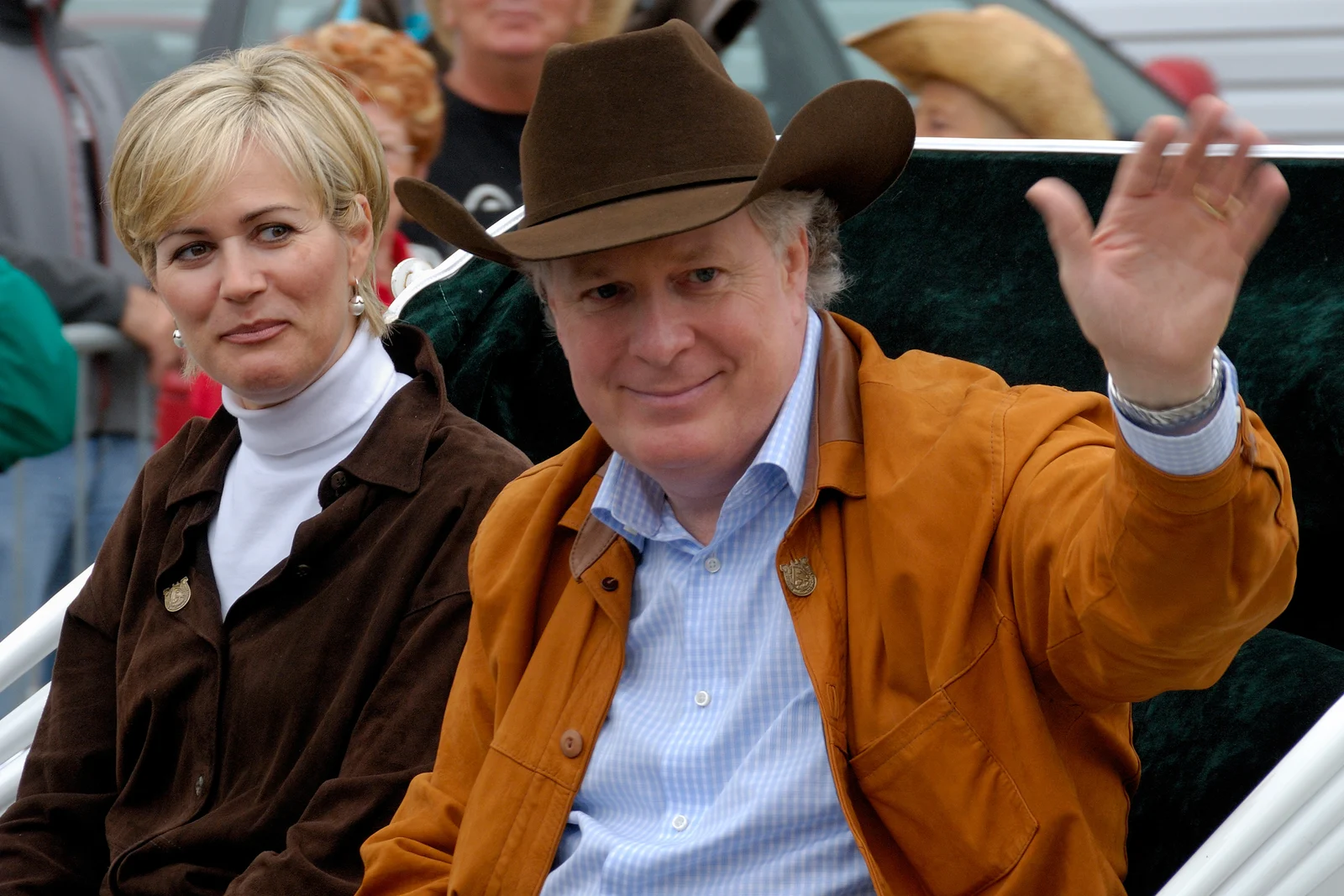
The current 2020 file is explicitly marked selectively adjusted levels. The observed archived 12 December 2009 original was used instead, retaining the full carriage frame and Michèle Dionne at left. The separate Jean Charest.jpg extraction was not acquired.
- 10. Flickr / Martin SauvageauLe grand défilé Loto-Québec de St-Tite 2008, photo 12: publisher’s CC BY 2.0 grant