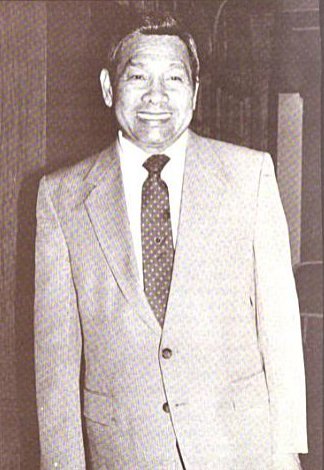
In this biography
Quick facts
- Born
- 26 March 1935
- Died
- 20 June 2016
- Birthplace
- Pagsanjan, Laguna, Philippines
- Country
- Philippines
- Nationality
- Filipino
- Known for
- The Maceda Law, opposition to martial law, Senate investigations and service as Senate president
- First elected office
- Manila city councillor, 1959
- Senate service
- 1971–1972 and 1987–1998
- Senate president
- 10 October 1996–26 January 1998
- U.S. ambassador
- 1999–2001
Why this life matters
Maceda’s career shows both the continuity of political experience across regime change and the restored Senate’s role as an arena for investigation and opposition.
Timeline
Key moments
Won a Manila council seat
Entered elected office after graduating cum laude from the Ateneo de Manila College of Law.
Held senior cabinet posts
Served under President Ferdinand Marcos in community development, executive coordination and commerce portfolios.
Entered a Senate cut short by martial law
Won a national seat and sponsored the real-estate instalment protections known as the Maceda Law before Congress was closed.
Realty instalment protections became law
Republic Act No. 6552 was approved on 26 August, before the September martial-law declaration.
Joined the democratic opposition
After breaking with Marcos, worked with the Aquino opposition and entered the restored Senate on the 1987 coalition ticket.
Served as Senate president
Replaced Neptali Gonzales in October 1996 and led the chamber until another coalition change in January 1998.
Challenged the PEA–Amari agreement
His 29 November privilege speech led to a joint Senate investigation of the Manila Bay reclamation deal.
Represented the Philippines in Washington
Served as ambassador to the United States during the Joseph Estrada administration.
City politics, cabinet government and the first Senate term
Ernesto Madarang Maceda was born in Pagsanjan, Laguna, on 26 March 1935. He graduated cum laude in law from Ateneo de Manila in 1956 and pursued a master of laws at Harvard. Election to the Manila City Council in 1959 began a public career that would cross local government, cabinet office, the Senate and diplomacy.
Ferdinand Marcos appointed him to community development in 1966, executive coordination in 1969 and commerce and industry in 1970. Maceda then won a Senate seat in 1971. His early proximity to Marcos makes the later break significant: he entered the democratic opposition after substantial service within the administration he came to challenge.
What the Maceda Law changed
Republic Act No. 6552, approved on 26 August 1972, addressed buyers paying for real estate by instalments. For covered buyers who had paid at least two years, it provided an earned grace period and a cash surrender value when a contract was cancelled. Those with shorter payment histories received a different grace-period protection.
The law’s significance lies in limiting abrupt cancellation and forfeiture, rather than making every defaulting buyer entitled to the same refund. Its original text excludes categories including industrial lots and commercial buildings. This was a specific consumer-protection measure associated with Maceda’s first Senate term, enacted before martial law interrupted Congress.
Sources for this section: [2]
A break with Marcos and return through democratic restoration
The September 1972 martial-law declaration cut short Maceda’s work in the elected Senate. The legislature’s subsequent abolition belongs to the 1973 constitutional reorganisation, a related but distinct step. Maceda broke with Marcos and lived in the United States, where the Senate’s career account records his work as an aide and adviser to Benigno Aquino Jr.
After Aquino’s assassination in 1983, Maceda accompanied Corazon Aquino on her return from Boston to Manila. He worked in the opposition campaigns of 1984 and 1986. Following People Power, she appointed him natural resources minister; he then returned to elected legislative office through the restored Senate’s 1987 election.
The PEA–Amari investigation and its later court record
Maceda’s reputation as an investigator gained a concrete focus in the PEA–Amari reclamation controversy. The Supreme Court’s account in Chavez v. Public Estates Authority records his privilege speech of 29 November 1996 and the joint Senate committee investigation that followed. The dispute concerned a government agreement with a private developer involving reclaimed and submerged land in Manila Bay.
The committees reported in September 1997, while the court decided Chavez’s case on 9 July 2002, after Maceda had left the Senate. It invalidated the amended agreement on constitutional grounds. Maceda’s political intervention, the committees’ findings and the later judicial ruling were different stages; the judgment was not a criminal conviction secured by Maceda against every official involved.
Sources for this section: [4]
Senate leadership and diplomacy
Maceda became Senate president on 10 October 1996, succeeding Neptali Gonzales during Fidel Ramos’s presidency. Gonzales returned on 26 January 1998, and Maceda subsequently served as minority leader. The change concerned leadership within the chamber, rather than an immediate loss of his elected Senate seat.
Joseph Estrada later appointed him ambassador to the United States, where he served from 1999 to 2001. Political commentary continued after diplomatic office. Maceda died on 20 June 2016, and the Senate held a necrological tribute three days later. Its account recalled both his cabinet experience and his confrontational legislative style, often described through the nickname Mr. Expose.
Quick answers
Frequently asked questions about Ernesto Maceda
- Who was Ernesto Maceda?
- Ernesto Maceda, also known as Ernie Maceda, was a Filipino lawyer, cabinet official, senator and diplomat. He led the Senate from October 1996 to January 1998.
- What is the Maceda Law?
- The name refers to Republic Act No. 6552, approved on 26 August 1972. Its original provisions protect covered real-estate instalment buyers through grace periods and, in qualifying cases, refunds. Conditions and exclusions apply.
- What was Maceda’s role in the PEA–Amari controversy?
- His November 1996 Senate speech prompted a joint committee investigation. The Supreme Court’s separate 2002 judgment later invalidated the amended agreement; it was not Maceda personally issuing a court verdict.
- Was Ernesto Maceda an ambassador?
- Yes. After his Senate service, he represented the Philippines in the United States from 1999 to 2001 during Joseph Estrada’s administration.
Keep exploring
Lives connected to this story
- Corazon Aquino
Follow the opposition movement and government in which Maceda returned to cabinet service.
- Neptali Gonzales
Compare the Senate leader who both preceded and succeeded Maceda.
- Fidel V. Ramos
Place the PEA–Amari controversy within the presidency under which the original agreement was approved.
Sources and further reading
Explore the evidence
These references support the biography and offer further reading. Official records, first-person accounts and independent reporting provide different perspectives; image records document attribution and licensing.
- 1. Senate of the PhilippinesBiography of Senate President Ernesto Maceda
Indexed institutional biography supports cabinet appointments and opposition work. Its age-at-appointment claims conflict with the birth year and are not repeated; commemorative praise is attributed.
- 2. The LawPhil ProjectRepublic Act No. 6552 — Realty Installment Buyer Protection Act
Original 1972 enactment supplies the date, historical protections and exclusions. This biography does not determine current rights under a specific property contract.
- 3. Senate of the PhilippinesSenate pays last respects to former Senator Ernesto Maceda
Indexed necrological account supports education, parliamentary roles and diplomacy. Its impossible 1991-to-1972 service range is a typographical error, not a new Senate chronology.
- 4. Supreme Court of the Philippines via LawphilChavez v. Public Estates Authority, 9 July 2002
Selected facts and dispositive passages support the 1996 speech, 1997 committee report and separate July 2002 ruling. Not all subsequent litigation or separate opinions were reviewed.
- 5. National Commission for Culture and the Arts, Sagisag KulturaSenado — historical Senate leadership
NCCA cultural reference supports Maceda’s exact Senate presidency dates. Only the relevant historical entries were used; other officers’ dates and outdated current-office claims were not adopted.
- 6. GMA NewsFormer Senate President Maceda, 81, passes on
Contemporaneous family-attributed reporting establishes the 20 June 2016 death, distinct from the later Senate tribute.
- 7. Senate of the PhilippinesHistory of the Philippine Senate
Selected indexed history distinguishes interruption by martial law from subsequent abolition in early 1973; the page contains inconsistent shorthand elsewhere.
- 8. Wikimedia CommonsPortrait and licence record