
The short answer
The Malaysian Indian Congress began in the anti-colonial politics of the 1940s and joined the Alliance before Malayan independence. Its history runs through Sambanthan’s negotiations, Samy Vellu’s long presidency, education institutions and a much smaller parliamentary presence after 2018.
Leadership chronology
MIC’s presidents
The sequence combines MIC’s former-president biographies, the UKM journal account of the 2015 transition and contemporary reports of Vigneswaran’s presidency.
| President | Years | Place in the party’s history |
|---|---|---|
| John Thivy | 1946–1947 | Founding president |
| Budh Singh | 1947–1950 | Early anti-colonial leadership |
| K. Ramanathan | 1950–1951 | Early post-war organisation |
| K. L. Devaser | 1951–1955 | Alliance cooperation |
| V. T. Sambanthan | 1955–1973 | Federal election and independence negotiations |
| V. Manickavasagam | 1973–1979 | Leadership during the transition to BN |
| Samy Vellu | 1979–2010 | Three decades of party leadership |
| G. Palanivel | 2010–2015 | Succession and internal election dispute |
| S. Subramaniam | 2015–2018 | Leadership following the contested transition |
| S. A. Vigneswaran | 2018–review date | President after BN’s GE14 defeat |
Chronology
A timeline of the turning points
MIC is established
John Thivy becomes founding president.
MIC enters the Alliance and wins federal seats
Cooperation with UMNO and MCA leads to two successful candidacies in 1955.
Samy Vellu becomes president
His leadership continues until December 2010.
MIED is established
Educational assistance becomes an enduring institutional activity.
AIMST is founded and begins operations
The university records separate foundation and operational milestones in March and October.
Subramaniam leads after a succession dispute
The transition follows a contested internal election.
Vigneswaran wins the presidency
He is elected unopposed after the general election.
Saravanan retains Tapah
MIC’s parliamentary result contracts from its initial two wins in 2018 to one.
From Indian independence to a Malayan political organisation
MIC was established in August 1946, with John Thivy as its founding president. Its early politics connected anti-colonial activism and Indian independence with the position of Indians living in Malaya. After India became independent in 1947, Malayan citizenship and representation became increasingly important to the organisation.
The party’s official history records its entry into the UMNO–MCA Alliance in 1954 under K. L. Devaser. By the 1955 federal election, it was negotiating candidacies within a common slate. This gave a community dispersed across constituencies a route into a government built through cooperation among several parties.
What Sambanthan negotiated before independence
V. T. Sambanthan became MIC president in 1955. His immediate challenge was to secure a place for the party in the first federal election. MIC received two Alliance candidacies, at Sungai Siput and Batu Pahat. Both were won as the coalition took 51 of the 52 elected seats.
Sambanthan entered the cabinet as labour minister and participated in the independence negotiations. His career shows how party representation, cabinet office and constitutional bargaining connected in the years before Merdeka. It also shows why the Alliance’s seat negotiations mattered to a party whose supporters were spread among many constituencies.
Sources for this section: [3]
Long presidencies and a contested succession
Sambanthan led MIC until 1973. V. Manickavasagam succeeded him, followed by Samy Vellu in 1979. Samy Vellu’s presidency lasted until 2010, making him the dominant figure in the party for more than three decades. During those years MIC worked within Barisan Nasional, the expanded coalition that developed from the Alliance.
The transition after G. Palanivel became president in December 2010 was less orderly. The party experienced a disputed internal election and a leadership struggle involving S. Subramaniam. A Universiti Kebangsaan Malaysia journal article dates Subramaniam’s presidency from June 2015. S. A. Vigneswaran then won the presidency unopposed in July 2018.
MIED and AIMST extended the party’s educational work
The Maju Institute of Educational Development, known as MIED, was established in 1984. MIC describes it as an education organisation administering financial assistance for further study. Its loans and scholarships created a continuing institutional relationship with students and families beyond election campaigns.
MIED also established AIMST University in Kedah. The university dates its foundation to 15 March 2001 and the start of formal operations to 30 October that year. Keeping those two milestones explicit helps explain the institution’s development. Education became one of the principal ways in which MIC-associated organisations pursued social advancement.
What the 2018 and 2022 results reveal
MIC initially won two parliamentary seats at the 2018 general election, Tapah and Cameron Highlands. That is the election result recorded in the post-GE14 breakdown. It gives a dated baseline for understanding how far the party’s representation had contracted by the time BN lost federal power.
In the November 2022 election, M. Saravanan retained Tapah while MIC’s other candidates failed to secure a seat. A contemporary report noted that Padang Serai’s vote had been deferred following a candidate’s death. Saravanan’s constituency therefore became the centre of MIC’s parliamentary presence in that election.
Leadership and parliamentary office are separate parts of this history. Vigneswaran was identified as MIC president and MIED chairman in BERNAMA’s report of 8 November 2026. The photograph on this page depicts Saravanan, the party politician who retained Tapah, during his earlier ministerial service.
Continue the chronology
Related history guides
Malaysia’s Political Landscape, 2006–2026
Follow the shift from BN dominance to electoral turnover and negotiated coalition support.
Read the timeline27 July 1955The 1955 Malayan Federal Election
Place MIC’s two-candidate allocation within the coalition’s election campaign.
Read the timeline1960–1962How NLFCS Was Founded
Explore Sambanthan’s cooperative work, its registration and the first estate acquisitions.
Read the timelineAlliance and BNBarisan Nasional: History and Member Parties
Follow the coalition framework in which MIC negotiated seats and held office.
Read the timeline1949–2026MCA: History, Presidents and Political Role
Compare the trajectory of another founding Alliance component.
Read the timeline1957Malayan Independence
Place Sambanthan and the Alliance negotiations in the wider independence settlement.
Read the timeline2022Malaysia’s 2022 General Election
Read the parliamentary result and subsequent government formation.
Read the timelineConnected biographies
Lives connecting MIC’s parliamentary role and the Alliance

1919–1979
V. T. Sambanthan
MIC president, independence negotiator and cooperative organiserV. T. Sambanthan led MIC from 1955 to 1973 and participated in the constitutional negotiations preceding Malayan independence. His later work connected cabinet office, national unity and a cooperative response to estate fragmentation.Read biography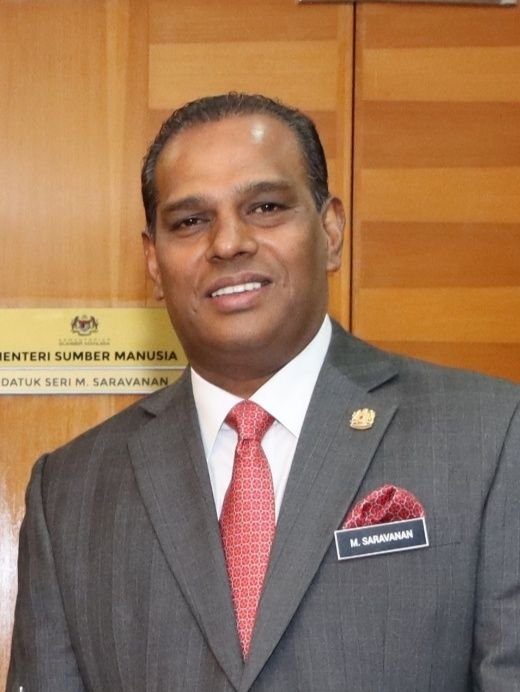
1968—
M. Saravanan
MIC deputy president and Member of Parliament for TapahThe Tapah member of Parliament, former human resources minister and deputy president of the Malaysian Indian Congress.Read biography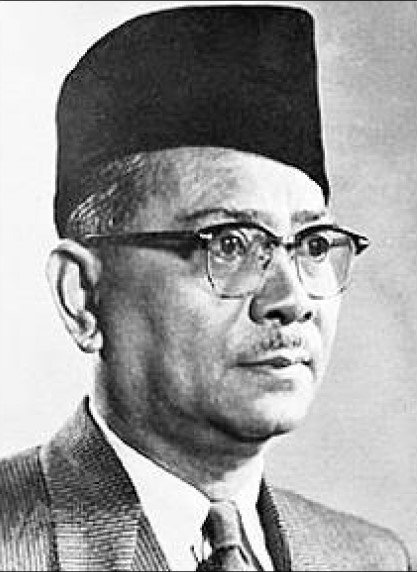
1903—1990
Tunku Abdul Rahman
First Prime Minister of MalaysiaThe independence leader who became Malaya’s first prime minister and helped define the federation that would become modern Malaysia.Read biographyQuick answers
Common questions
- What does MIC stand for?
- MIC stands for the Malaysian Indian Congress, established in August 1946 with John Thivy as its first president.
- When did MIC join the Alliance?
- MIC’s official history dates its entry to 1954 under K. L. Devaser. It contested the 1955 federal election within the UMNO–MCA–MIC Alliance.
- How long was Samy Vellu MIC president?
- Samy Vellu led MIC from 1979 to 2010, a period of more than three decades.
- Who is MIC president?
- S. A. Vigneswaran was elected in 2018. BERNAMA identifies him as MIC president and MIED chairman in its 8 November 2026 report.
Primary and institutional sources
How this history was checked
MIC’s website labels Subramaniam’s term as 2014–July 2018. The UKM journal account dates his succession to 25 June 2015, following the contested internal election. The chronology uses the latter date. Parliamentary totals describe general-election wins, with the deferred 2022 poll identified in the text. This article was reviewed on 18 November 2026.
- Malaysian Indian CongressOur Story: founding and Alliance membership
- Malaysian Indian CongressFormer presidents and their terms
- Malaysian BarThe tough negotiator: Sambanthan and the 1955 election
- Universiti Kebangsaan Malaysia, e-BangiMIC leadership chronology, including the 2015 transition
- Malaysian Indian CongressInstitutions: MIED and AIMST
- AIMST UniversityFoundation and commencement of operations in 2001
- ISEAS – Yusof Ishak Institute2022 Perspective 82: parliamentary composition after GE14
- The Malaysian Insight20 November 2022: MIC’s election result and the deferred Padang Serai poll
- Malaysiakini14 July 2018: Vigneswaran elected president unopposed
- BERNAMA8 November 2026: Vigneswaran at the MIC–MIED event