In this biography
Quick facts
- Born
- 22 November 1958
- Birthplace
- Johor Bahru, Johor
- Country
- Malaysia
- Nationality
- Malaysian
- Known for
- Serving as King of Malaysia and Sultan of Johor
- Full name
- Sultan Ibrahim ibni Almarhum Sultan Iskandar
- Federal office
- Yang di-Pertuan Agong since 31 January 2024
- State office
- Sultan of Johor since 23 January 2010
- Consort
- Raja Zarith Sofiah
Why this life matters
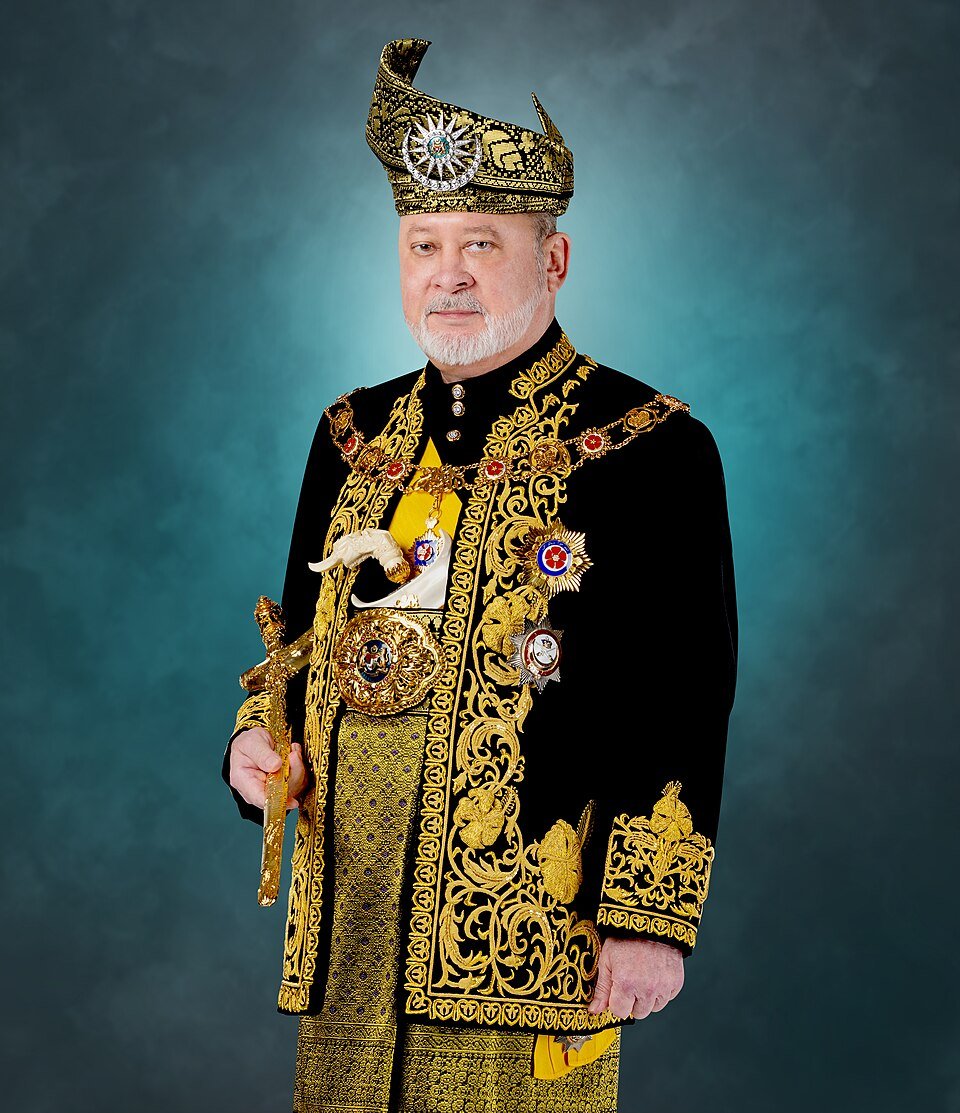
Sultan Ibrahim’s life connects Johor’s modern royal institution with Malaysia’s federal monarchy, including an earlier regency while his father occupied the same national office.
Timeline
Key moments
Born in Johor Bahru
Born on 22 November at Sultanah Aminah Hospital, the eldest son of Sultan Iskandar and Enche’ Besar Hajah Khalsom Abdullah.
Proclaimed Crown Prince of Johor
Became heir to the Johor throne on 3 July after his father’s accession.
Served as Regent of Johor
Performed the ruler’s state duties while Sultan Iskandar served as Malaysia’s eighth Yang di-Pertuan Agong.
Proclaimed Sultan of Johor
Succeeded his father on 23 January and became the state’s sovereign ruler.
Crowned in Johor
The coronation ceremony took place at Istana Besar in Johor Bahru on 23 March.
Elected to the federal throne
The Conference of Rulers selected him as the seventeenth Yang di-Pertuan Agong during its special election meeting in October.
Began his five-year reign
Took the constitutional oath and assumed office on 31 January, with Sultan Nazrin Shah continuing as deputy king.
Installed as Yang di-Pertuan Agong
The formal installation at Istana Negara on 20 July publicly marked his role as Supreme Head of the Federation.
A Johor prince prepared for public duty
Sultan Ibrahim was born in Johor Bahru on 22 November 1958, the eldest son of the future Sultan Iskandar and Enche’ Besar Hajah Khalsom Abdullah. His early education included schools in Johor and Trinity Grammar School in Sydney before he returned to the English College in Johor Bahru. The official royal biography also records religious schooling alongside his general education.
His preparation combined military instruction and civil administration. He attended training at the Malaysian Army Training School in Kota Tinggi and courses at Fort Benning in the United States, then received experience with the Royal Malaysian Navy and Royal Malaysian Air Force. Placements in Johor government departments exposed him to finance, land, planning, forestry and agriculture before he became ruler.
Crown prince and regent during his father’s federal reign
Sultan Iskandar’s accession in 1981 made Ibrahim the heir to Johor’s throne. He was proclaimed Tunku Mahkota on 3 July. A larger constitutional responsibility arrived in 1984, when Sultan Iskandar became the eighth Yang di-Pertuan Agong and moved to the federal palace for a five-year term.
Ibrahim served as Regent of Johor from 25 April 1984 to 25 April 1989. The arrangement showed how Malaysia’s federal and state monarchies operate together: a state ruler elected to the national office remains sovereign of his state, while a regent performs many state functions during the federal reign. Decades later, Ibrahim would follow his father to the same national office.
Sultan of Johor
After Sultan Iskandar died, Ibrahim was proclaimed Sultan of Johor on 23 January 2010. His formal coronation took place at Istana Besar on 23 March 2015. Raja Zarith Sofiah, a daughter of Sultan Idris Shah II of Perak, is his consort; their eldest son, Tunku Ismail, became the state’s crown prince.
His public identity in Johor has included the Kembara Mahkota Johor, a royal touring programme begun while he was crown prince. The programme brought the royal family and state officials through Johor’s districts and combined public encounters with charitable activity. Such initiatives belong to a state monarchy whose formal powers are constitutional but whose social visibility can be extensive.
Election as the seventeenth Yang di-Pertuan Agong
Malaysia does not inherit its federal throne through one royal family. The nine hereditary Malay rulers elect the Yang di-Pertuan Agong by secret ballot, normally following an established rotation and seniority list. At the Special 263rd Meeting of the Conference of Rulers in October 2023, Sultan Ibrahim was selected for the next five-year term.
He took the oath of office on 31 January 2024 and was installed at Istana Negara on 20 July. The installation did not create the office—his reign had already begun with the oath—but marked it through the regalia, royal address and traditions shared by the federation’s rulers. His father’s 1984–1989 reign made Sultan Ibrahim the second generation of Johor’s ruling house to occupy the federal throne.
What the King of Malaysia can—and cannot—do
The Yang di-Pertuan Agong is Malaysia’s head of state, Supreme Commander of the armed forces and part of Parliament. The Constitution nevertheless requires the King to act on Cabinet advice for most functions. The office is therefore neither an absolute monarchy nor an elected executive presidency.
Limited areas of discretion become especially visible when parliamentary support is unclear. The King appoints as prime minister the member of the Dewan Rakyat who in his judgment is likely to command a majority and may withhold consent to a request to dissolve Parliament. These powers operate inside written constitutional rules; they do not replace the requirement that a government maintain confidence in the elected chamber.
A reign inside a changing parliamentary system
Sultan Ibrahim began his federal term after Malaysia had experienced a first change of governing coalition in 2018, several mid-term government transitions and a hung parliament in 2022. Those events increased public attention to the monarchy’s role in verifying confidence and facilitating lawful government formation.
His historical significance therefore rests in two connected institutions. He represents Johor’s continuing royal tradition while occupying a federal office deliberately shared among nine ruling houses. Understanding his position requires separating the individual monarch from the constitutional system: the person changes every five years, while the monarchy’s authority and limits come from the Federal Constitution and collective institutions around it.
Quick answers
Frequently asked questions about Sultan Ibrahim
- Who is Sultan Ibrahim?
- Sultan Ibrahim is the 17th Yang di-Pertuan Agong of Malaysia. Sultan Ibrahim’s life connects Johor’s modern royal institution with Malaysia’s federal monarchy, including an earlier regency while his father occupied the same national office.
- What is Sultan Ibrahim best known for?
- Sultan Ibrahim is best known for serving as King of Malaysia and Sultan of Johor.
- When and where was Sultan Ibrahim born?
- Sultan Ibrahim was born on 22 November 1958 in Johor Bahru, Johor.
Sources and further reading
How this biography was checked
Core dates and offices are checked against the sources below. This profile was last reviewed on 4 October 2026.
- Istana NegaraBiodata of the Yang di-Pertuan Agong
- Office of the Keeper of the Rulers’ SealElection of the Yang di-Pertuan Agong
- Johor Coronation OfficeHis Royal Highness the Sultan of Johor
- Johor Coronation OfficeCoronation Ceremony of Sultan Ibrahim of Johor
- BernamaInstallation of Sultan Ibrahim as the 17th King of Malaysia
- Attorney General’s Chambers of MalaysiaFederal Constitution of Malaysia
- Wikimedia CommonsOfficial portrait and CC0 record