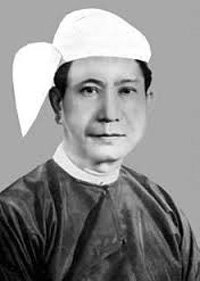
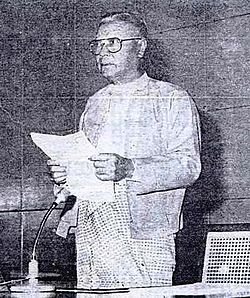
In this biography
Quick facts
- Born
- 27 January 1924 · contemporary obituaries vary by one year
- Died
- 9 April 2004
- Birthplace
- Kawkayin village, Paung, British Burma
- Country
- Myanmar
- Nationality
- Burmese
- Known for
- A seventeen-day presidency during the 1988 uprising and a long association with violent suppression of protest
- BSPP chairman
- 26 July–12 August 1988
- President
- 27 July–12 August 1988
- Time in office
- 17 days
- Resigned
- Amid nationwide protest
Why this life matters
Sein Lwin’s failed succession showed that changing the officeholder could not preserve the one-party system amid nationwide revolt.
Timeline
Key moments
Born in Lower Burma
Born on 27 January in Kawkayin village near Paung; published obituaries differ by one year on his age.
Entered the wartime army
Began the military career that later placed him among Ne Win’s closest security officials.
Associated with suppression after the coup
Command roles tied him to the violent response to Rangoon University protest.
Succeeded to party and state leadership
Became BSPP chairman on 26 July and president the following day.
Security forces attacked nationwide protest
Troops fired on demonstrators during the movement remembered as the 8888 Uprising.
Resigned after seventeen days
Mass opposition made his continuation untenable, but protest and state violence continued.
A security career under Ne Win
Sein Lwin joined Burma’s wartime armed forces and rose after independence as Ne Win consolidated influence within the military. His reputation was built less through public policy than through security command. Published obituaries and human-rights histories link him to the violent suppression of student protest, including the July 1962 crisis at Rangoon University after the coup.
He continued to hold senior responsibilities within the army and the Burma Socialist Programme Party state. By 1988, decades of political exclusion and economic failure had made him a symbol of coercive rule. Contemporary media widely used the epithet “Butcher of Rangoon”; Biography Compass attributes that label rather than adopting it as a neutral title.
Seventeen days as president
Ne Win resigned as BSPP chairman in July 1988 after student deaths, economic crisis and widening unrest. The party elevated Sein Lwin to chairman on 26 July, and the Pyithu Hluttaw elected him president the next day. The move suggested continuity with the security system protesters blamed for the crisis rather than a credible opening to reform.
Demonstrations grew into a nationwide strike centred on 8 August. Human Rights Watch’s chronology and contemporary reporting record troops firing on unarmed protesters and large numbers of deaths. Precise casualty totals remain disputed because the government concealed evidence and restricted reporting. Sein Lwin resigned on 12 August, only seventeen days after taking office.
Why his resignation did not end the uprising
Vice-president Aye Ko performed presidential duties for a week while the ruling elite searched for a replacement. Civilian jurist Maung Maung then promised elections, but distrust and protest continued. On 18 September the armed forces created the State Law and Order Restoration Council and again abolished the presidency, showing that Sein Lwin’s departure had not resolved the struggle over the political system.
Sein Lwin largely disappeared from public politics and died in Yangon on 9 April 2004 after medical treatment abroad. His very short presidency is remembered because it compressed the failure of the BSPP into seventeen days: a succession intended to preserve the state instead intensified mobilisation and exposed how little legitimacy coercive continuity retained.
Quick answers
Frequently asked questions about Sein Lwin
- Who was Sein Lwin?
- Sein Lwin was a general and sixth president of Burma. Sein Lwin’s failed succession showed that changing the officeholder could not preserve the one-party system amid nationwide revolt.
- What is Sein Lwin best known for?
- Sein Lwin is best known for a seventeen-day presidency during the 1988 uprising and a long association with violent suppression of protest.
- When and where was Sein Lwin born?
- Sein Lwin was born on 27 January 1924 · contemporary obituaries vary by one year in Kawkayin village, Paung, British Burma.
- When did Sein Lwin die?
- Sein Lwin died on 9 April 2004.
Sources and further reading
Explore the evidence
These references support the biography and offer further reading. Official records, first-person accounts and independent reporting provide different perspectives; image records document attribution and licensing.
- 1. Human Rights WatchChronology of political events in Burma, 1962–2008
- 2. The Washington PostSein Lwin · former Myanmar president · obituary
- 3. Human Rights WatchBurma’s 1988 protests and political transition
- 4. Myanmar Ministry of Natural Resources and Environmental ConservationConstitution of the Socialist Republic of the Union of Burma
- 5. Wikimedia CommonsSein Lwin portrait record