
In this biography
Quick facts
- Born
- 3 July 1924
- Died
- 22 August 2016
- Birthplace
- Singapore, Straits Settlements
- Country
- Singapore
- Nationality
- Singaporean
- Known for
- Singapore’s presidency from 1999 to 2011, the Laju hostage release and President’s Challenge
- Birth
- 3 July 1924, Singapore
- Social-work qualification
- University of Malaya, Diploma in Social Studies, 1954
- Presidency
- Sixth President of Singapore, 1999–2011
- Election route
- Uncontested elections in 1999 and 2005
- Community initiative
- President’s Challenge, initiated in 2000
- Death
- 22 August 2016
Why this life matters
His career links the practical work of welfare and diplomacy with the development of the elected president’s custodial role.
Timeline
Key moments
Singapore birth
Born on 3 July.
Social studies and welfare work
Completed a social-studies diploma, entered the civil service and became Seamen’s Welfare Officer.
Laju hostage crisis
Headed the group accompanying the hijackers out of Singapore to secure the civilian hostages’ release.
Diplomatic appointments
Served as high commissioner to Malaysia and then ambassador to the United States.
Two presidential terms
First took office on 1 September 1999; began his second term on 1 September 2005.
President’s Challenge
Initiated the community-giving and volunteering effort.
Death
Died on 22 August after leaving the presidency in 2011.
The Laju incident and diplomatic service
During the 1974 Laju crisis, Nathan led a 13-person group that accompanied the hijackers out of Singapore in exchange for the release of civilian hostages. The defence ministry’s account places this action within the negotiated resolution of the crisis, rather than describing Nathan as the commander of an armed rescue.
He subsequently worked in media leadership and diplomacy. After becoming executive chairman of Straits Times Press in February 1982, he was appointed high commissioner to Malaysia in April 1988 and ambassador to the United States in July 1990, serving in Washington until June 1996.
Two uncontested elections and a custodial presidency
Nathan was elected president on 18 August 1999 and took office on 1 September. He was re-elected on 17 August 2005 and sworn in again on 1 September. Both elections were uncontested: there was no competitive popular-vote result to attach to either victory.
As president, he exercised constitutional safeguards rather than running the government as prime minister. During the global financial crisis, the government sought his consent to use past reserves. After consultation with the Council of Presidential Advisers, he approved the first actual draw, establishing an important precedent for the presidency’s financial custodianship.
President’s Challenge and his later legacy
Nathan initiated President’s Challenge in 2000, linking fundraising with volunteering and wider participation in social service. In his 2011 farewell address, Prime Minister Lee Hsien Loong connected that initiative with Nathan’s earlier welfare work and his extensive contact with community organisations.
His presidency ended in 2011. He died at Singapore General Hospital on 22 August 2016. Remembering both the welfare officer and the head of state helps explain his public role more fully than a list of ceremonial duties: community engagement and carefully bounded constitutional powers were distinct parts of the same presidency.
Quick answers
Frequently asked questions about S. R. Nathan
- Who was S. R. Nathan?
- He was Singapore’s sixth president, serving from 1999 to 2011 after a career in social work, public administration and diplomacy.
- Did Nathan win a contested presidential vote?
- No. The Elections Department records both the 1999 and 2005 presidential elections as uncontested.
- What did Nathan do during the Laju incident?
- In 1974 he led the group accompanying the hijackers out of Singapore as part of the arrangement securing the civilian hostages’ release.
- What was President’s Challenge?
- Nathan initiated it in 2000 to encourage giving, volunteering and community support for social-service causes.
Keep exploring
Lives connected to this story
- Goh Chok Tong
Read about the prime minister in office when Nathan began his presidency; the two constitutional roles were different.
- Lee Hsien Loong
Explore the government leadership during Nathan’s second term and the global financial crisis.
Sources and further reading
Explore the evidence
These references support the biography and offer further reading. Official records, first-person accounts and independent reporting provide different perspectives; image records document attribution and licensing.
- 1. Istana · former presidentsEducation, public-service appointments and presidential dates
- 2. Elections Department SingaporeUncontested presidential elections in 1999 and 2005
Election dates and dates of taking office are kept separate. Uncontested elections are not assigned invented vote shares.
- 3. MINDEF · National Archives SingaporeLaju crisis and the 13-person accompanying group
- 4. Prime Minister’s Office · 31 August 2011President’s Challenge and the first draw on past reserves
This is an official farewell tribute, used for the documented initiative and constitutional process, not as an independent evaluation of every claim about economic outcomes.
- 5. Prime Minister’s Office · 22 August 2016Death at Singapore General Hospital
The PMO announcement establishes 22 August 2016. A conflicting time-of-day transcription in a retrospective is not repeated.
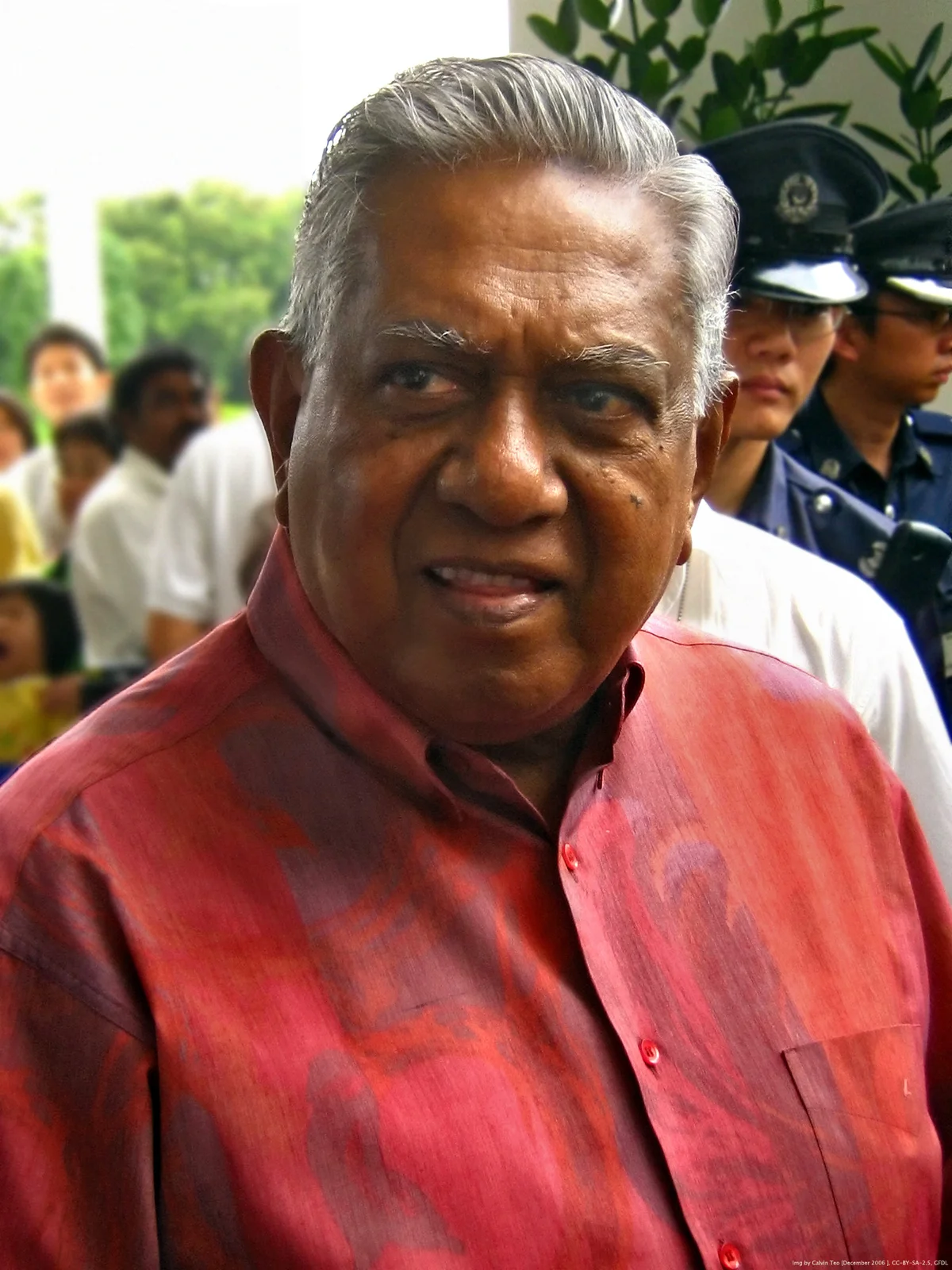
- 6. Wikimedia Commons · Calvin TeoDecember 2006 photograph and CC BY-SA licensing
The photographer offers multiple licences; this page uses CC BY-SA 3.0. The 2006 image is an archival event photograph, not evidence of a present officeholder.


Social work before high office
S. R. Nathan was born in Singapore on 3 July 1924. His schooling was interrupted, and he later completed secondary studies independently while working. In 1954 he earned a Diploma in Social Studies with distinction from the University of Malaya, then based in Singapore.
He entered the civil service as a medical social worker in 1955 and became Seamen’s Welfare Officer in 1956. These early responsibilities put welfare and workers’ concerns at the start of a career that later crossed labour administration, foreign affairs and security.
Sources for this section: [1] · [4]