In this biography
Quick facts
- Born
- 1759-04-27
- Died
- 1797-09-10
- Birthplace
- Spitalfields, London, England
- Country
- United Kingdom
- Nationality
- English
- Known for
- A Vindication of the Rights of Woman and the argument for women’s rational education and independence
- Born
- 27 April 1759, Spitalfields, London
- Major work
- A Vindication of the Rights of Woman, 1792
- Occupation
- Educator, reviewer, translator and author
- Family connection
- Mother of Fanny Imlay and Mary Shelley
Why this life matters
She challenged the contradiction between universal claims about human rights and institutions that trained women for dependence, making education and private relationships central political questions.
Timeline
Key moments
Born in London
A mobile and financially insecure childhood preceded her working life.
School at Newington Green
She worked with other women and encountered the Dissenting intellectual circle around Richard Price.
Entered professional authorship
Educational writing, fiction, translation and reviewing developed through Joseph Johnson’s publishing network.
Rights of Men
She answered Edmund Burke’s attack on the French Revolution and Richard Price.
Rights of Woman
Her best-known political work appeared before she moved to revolutionary France.
Scandinavian letters published
Travel writing brought together personal experience, landscape, commerce and social criticism.
Marriage, birth and death
She married William Godwin, gave birth to the future Mary Shelley and died on 10 September.
Posthumous publications
Godwin’s Memoirs and her unfinished fiction shaped a complicated afterlife.
Education was first a practical problem
Mary Wollstonecraft was born near Spitalfields, London, on 27 April 1759. Her family moved repeatedly, and her formal schooling was limited compared with the education available to privileged men. Friendship, reading and work helped develop her intellectual resources. Economic insecurity and the restricted employments open to women were not abstract subjects she encountered only after becoming a political writer.
In the 1780s she worked as a companion, helped run a school at Newington Green and later became a governess in Ireland. The school was a collective undertaking involving her sisters and Fanny Blood, not a solitary achievement. At Newington Green she encountered the Dissenting minister Richard Price and a network in which education, religion and political reform were closely connected.
Professional writing opened a wider intellectual world
Wollstonecraft’s Thoughts on the Education of Daughters appeared in 1787. Her relationship with publisher Joseph Johnson then supported a varied working life as reviewer, translator and author. Mary, A Fiction and Original Stories from Real Life appeared in 1788. Reviewing required sustained engagement with books about morals, religion, politics and culture; it was part of her intellectual formation, not merely a way of earning money between major works.
The range of this work complicates an image of her as the author of a single manifesto. Educational practice, literary judgement and moral philosophy developed together. She asked how habits, social expectations and institutions shaped people’s capacities, and whether apparently natural weaknesses were instead produced by the ways children and adults were trained to live.
Revolutionary controversy became an argument about women
In A Vindication of the Rights of Men, published in 1790, Wollstonecraft answered Edmund Burke’s Reflections on the Revolution in France and defended Price against his attack. She challenged inherited rank and the assumption that established institutions deserved obedience simply because they were old. Rights, duties and the standards by which political authority could be judged became central to her public writing.
A Vindication of the Rights of Woman followed in 1792. It attacked education that made women dependent on appearance, marriage and male approval. If women shared the human capacity for reason, she argued, they needed opportunities to exercise it. The demand was not for women to dominate men, but for independence of judgement and a civil existence that made responsible action possible.
Her proposals extended beyond a classroom syllabus
The Vindication connected education with employment, marriage, property and representation. Wollstonecraft envisaged women entering occupations beyond the narrow options convention allowed, and suggested that they should have political representatives. Her national-education chapter proposed that boys and girls learn together. These proposals addressed the organisation of society, not simply improved accomplishments for young ladies.
Her position was nevertheless rooted in eighteenth-century moral and religious assumptions. She gave substantial weight to motherhood, family duties and the cultivation of virtue, and her school scheme retained differentiated routes after early shared education. Reading her as if she had supplied a complete present-day equality programme misses both the force of her challenge and the historical limits within which she framed it.
France, family and travel changed the texture of her writing
Wollstonecraft moved to France in December 1792 and witnessed revolutionary violence as well as revolutionary promise. Her relationship with the American Gilbert Imlay produced a daughter, Fanny, in 1794; they did not marry. Their separation brought severe distress. Her subsequent Scandinavian journey with her daughter informed Letters Written during a Short Residence in Sweden, Norway, and Denmark, published in 1796.
Those letters joined landscape and feeling to questions about commerce and social life. They resist a picture of a thinker concerned only with abstract reason or indifferent to affection. She renewed her acquaintance with William Godwin, and they married in March 1797. Their daughter Mary, later Mary Shelley, was born on 30 August. Wollstonecraft died on 10 September from complications following childbirth.
A damaged reputation did not mean complete disappearance
Godwin’s candid Memoirs of 1798 publicised aspects of her relationships and personal suffering that hostile readers used against her. Her unfinished novel Maria, or The Wrongs of Woman also appeared posthumously, extending her critique of women’s legal and social dependence. Reception often reduced arguments to supposed violations of respectable conduct.
Yet the familiar story that she was entirely forgotten until the twentieth century is too simple. Translations and readers beyond Britain sustained an international afterlife. Later scholarship has recovered her writing about aesthetics, emotion and political economy alongside women’s education. Her lasting importance lies in exposing dependence as an institutional problem while asking what kinds of upbringing and social relationships could make freedom meaningful.
Quick answers
Frequently asked questions about Mary Wollstonecraft
- What was Wollstonecraft’s best-known argument?
- She argued that women’s apparent weakness and dependence were largely created by their education and social position, and that women needed rational education and independence as human beings.
- Was she Mary Shelley?
- No. Wollstonecraft was Mary Shelley’s mother. Her daughter was born in August 1797 and later wrote Frankenstein.
- Was Vindication only about schooling?
- No. Schooling is central, but the book connects education with work, property, marriage, moral duties and women’s civil and political standing.
- Was she completely forgotten after her death?
- No. Hostile publicity damaged her reputation, especially in Britain, but translations and international readers continued to engage with her work before its later feminist revival.
Keep exploring
Lives connected to this story
- Mary Shelley
Read about her daughter, a separate writer whose fiction and intellectual life should not be confused with Wollstonecraft’s own works.
- Nancy Astor
Compare the philosophical argument for women’s civil existence with the much later entry of a woman into the Commons.
- Betty Boothroyd
Follow another stage in women’s access to parliamentary authority, without assuming a direct personal line of influence.
Sources and further reading
Explore the evidence
These references support the biography and offer further reading. Official records, first-person accounts and independent reporting provide different perspectives; image records document attribution and licensing.
- 1. Stanford Encyclopedia of Philosophy / Sylvana TomaselliMary Wollstonecraft: biography, political thought and reception
The Notre Dame chronology and Stanford entry provide the biographical sequence and scholarly interpretation. Retrieved passages, not unpublished correspondence or the full Godwin–Shelley archive, were consulted. The British Library work introduction is used for context, not its erroneous birth-year metadata.
- 2. University of Notre Dame / Eileen M. HuntMary Wollstonecraft: biographical timeline
- 3. Mary Wollstonecraft / Project GutenbergA Vindication of the Rights of Woman: dedication, introduction and selected chapters
Read the Vindication dedication and introduction and selected passages in chapters 5, 9 and 12, rather than claiming a cover-to-cover reading of every work. The national-education proposal and brief representation argument are interpreted in their own context.
- 4. British LibraryA Vindication of the Rights of Woman: work introduction
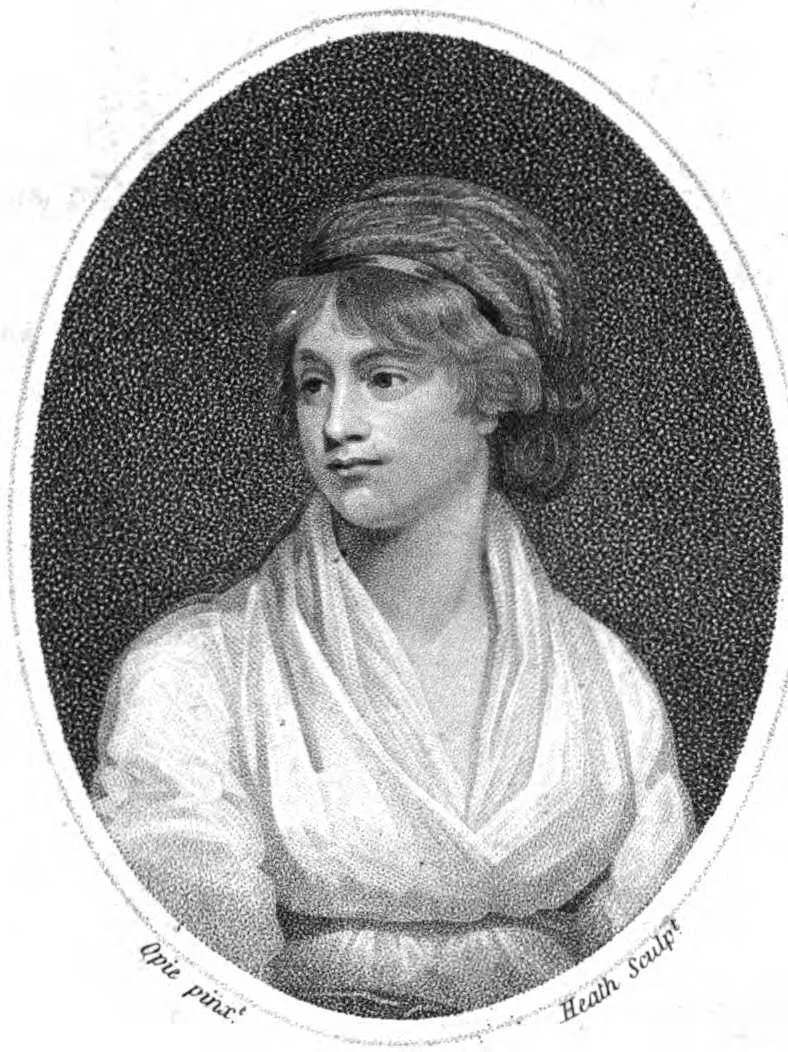
- 5. James Heath after John Opie / Wikimedia CommonsMary Wollstonecraft engraving: historical publication and public-domain record
- 6. Creative CommonsPublic Domain Mark 1.0