In this biography
Quick facts
- Born
- 6 December 1927
- Died
- 28 September 2002
- Birthplace
- Pā‘ia, Maui, Territory of Hawaii, United States
- Country
- United States
- Nationality
- American
- Known for
- Becoming the first woman of color elected to Congress and helping develop and defend Title IX’s prohibition of sex discrimination in federally funded education
- Birth
- 6 December 1927 in Pā‘ia, Maui, Hawaii Territory
- Education
- B.A., University of Hawaii, 1948; J.D., University of Chicago, 1951
- House service
- 3 January 1965–3 January 1977; 22 September 1990–28 September 2002
- Education legislation
- Co-author and defender of Title IX; advocate for the Women’s Educational Equity Act
- Other public office
- Hawaii territorial and state legislature; State Department; Honolulu City Council
- Death
- 28 September 2002 in Honolulu, Hawaii
Why this life matters
Mink helped turn sex equality in education into federal law and defended its reach, while treating child care, poverty and representation as national legislative responsibilities.
Timeline
Key moments
Born on Maui
Born Patsy Matsu Takemoto in Pā‘ia while Hawaii was a U.S. territory.
From science to law
Completed her University of Hawaii bachelor’s degree and earned a University of Chicago law degree in 1951.
Territorial and state politics
Won office in Hawaii’s territorial House, later served in the territorial Senate and then the state Senate.
Elected to Congress
Won a Hawaii at-large seat in 1964 and entered the House in January 1965, the first woman of color elected to Congress.
Child care defeat and education equality
Nixon vetoed comprehensive child development legislation in 1971; the Education Amendments containing Title IX became law on 23 June 1972.
Defending Title IX
Worked against the Tower proposal to exempt revenue-producing intercollegiate sports and advanced the Women’s Educational Equity Act.
Work beyond the House
Lost a Senate primary, served as an assistant secretary of state and on Honolulu’s council, then returned to Congress through a 1990 special election.
Death and statutory tribute
Died in Honolulu; a law approved a month later authorized Title IX’s citation as the Patsy Takemoto Mink Equal Opportunity in Education Act.
Education, exclusion and a legal career
Patsy Mink was born Patsy Matsu Takemoto in Pā‘ia, Maui, on 6 December 1927, when Hawaii was a U.S. territory. She attended college on the mainland before graduating from the University of Hawaii in 1948. At the University of Nebraska she had challenged segregated student housing, an early example of her willingness to contest an institution’s rules.
Mink hoped to become a physician, but medical school rejections redirected her toward law. She earned her J.D. at the University of Chicago in 1951 and married geology student John Mink. Racial and sex discrimination complicated her search for legal employment. Back in Hawaii, she built a private practice and taught business law, combining professional work, motherhood and growing involvement in Democratic politics.
An independent route from Hawaii to Congress
Elected to Hawaii’s territorial House in 1956, Mink subsequently served in the territorial and state Senates. Her independence strained relations with Democratic leaders. She lost the 1959 congressional primary to Daniel Inouye, then returned to the state Senate in 1962 and chaired its education committee. She was an experienced legislator before becoming a national officeholder.
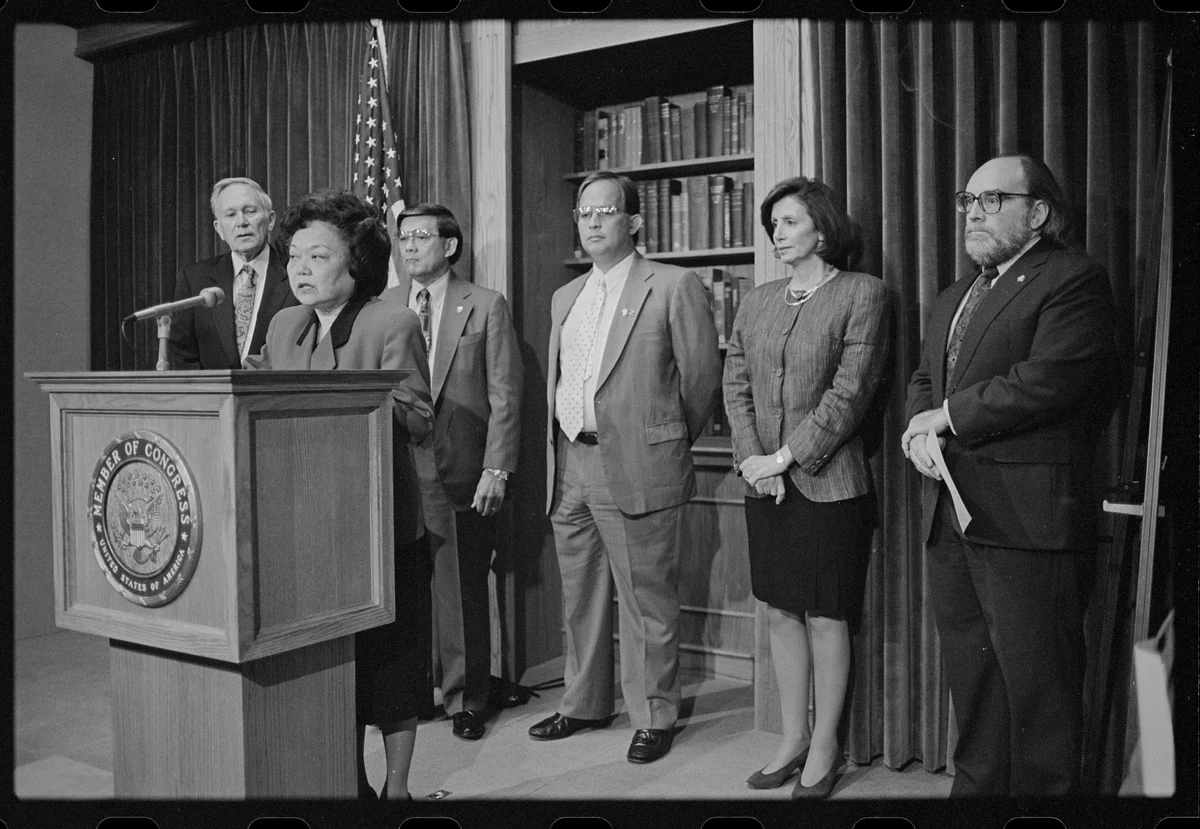
In 1964 she campaigned for one of Hawaii’s two at-large House seats with volunteers and small contributions. Her victory made her the first woman of color elected to Congress. In office from January 1965, she sought the Education and Labor Committee, a position from which she could pursue schooling and child development. Her national focus also required sustained attention to an island constituency dispersed across considerable distances.
Title IX and the work of making equality practical
Mink helped develop Title IX with Representative Edith Green and Senator Birch Bayh. Enacted within the Education Amendments of 1972, it prohibited sex discrimination in federally assisted education, subject to statutory exceptions. The project addressed admissions, academic opportunities, scholarships and employment; its significance extended far beyond the athletic programs with which it became closely associated.
Passage did not finish the work. In 1974 Mink opposed an attempt to exempt revenue-producing college sports, while advancing the Women’s Educational Equity Act as a practical companion to the nondiscrimination rule. She also sought comprehensive child care. That effort ended in a major defeat when President Richard Nixon vetoed the 1971 legislation, illustrating the distance between building a congressional coalition and securing an enacted program.
Civil rights, war and public accountability
Mink’s legislative interests reached beyond education. At the opening of Congress in 1965, she joined the unsuccessful challenge to seating Mississippi’s all-white delegation after an election marred by Black voter exclusion. In 1970 she opposed Supreme Court nominee G. Harrold Carswell, citing his record on both racial and sex discrimination.
She also opposed the Vietnam War, meeting participants in the Paris peace negotiations with Bella Abzug in 1972. That year her limited presidential campaign used the Oregon primary to promote an antiwar platform. Her demand for documents about the Amchitka nuclear test produced litigation under the Freedom of Information Act. Neither the test nor the withheld documents yielded to her immediate efforts, but the controversy helped prompt stronger congressional scrutiny of government secrecy.
Returning to defend the social safety net
After losing the 1976 Democratic Senate primary, Mink served in the State Department and later on Honolulu’s City Council. A September 1990 special election returned her to the House. During this second period she opposed welfare proposals that dismantled federal guarantees to families in poverty, including measures supported by President Bill Clinton. Her alternative approach did not prevail in the 1996 overhaul.
Mink died in Honolulu on 28 September 2002 while still serving. Congress subsequently authorized the name Patsy Takemoto Mink Equal Opportunity in Education Act for Title IX on 29 October. The tribute recognized her role in a collective legislative achievement and her continuing defense of it across a career marked by both durable gains and consequential defeats.
Quick answers
Frequently asked questions about Patsy Mink
- What was Patsy Mink the first to do in Congress?
- Elected in 1964 and seated in January 1965, Mink was the first woman of color elected to the U.S. Congress. She was also its first Asian American woman. Her service came in two periods: 1965–1977 and 1990–2002.
- Did Patsy Mink write Title IX alone?
- No. She was a central co-author and defender in a collective effort that included Representative Edith Green and Senator Birch Bayh. Title IX became law in 1972; the law allowing its citation under Mink’s name followed her death in 2002.
- Was Title IX only about women’s sports?
- No. Its nondiscrimination principle reached federally assisted education more broadly. Mink and her colleagues addressed educational admission, academic opportunities, scholarships and employment, while later legislative and regulatory work established how it applied to athletics.
- Why did Patsy Mink leave Congress and return?
- She gave up her House seat to seek the Democratic Senate nomination in 1976 and lost. After State Department and Honolulu City Council service, she won a September 1990 special election and remained in the House until her death in 2002.
Keep exploring
Lives connected to this story
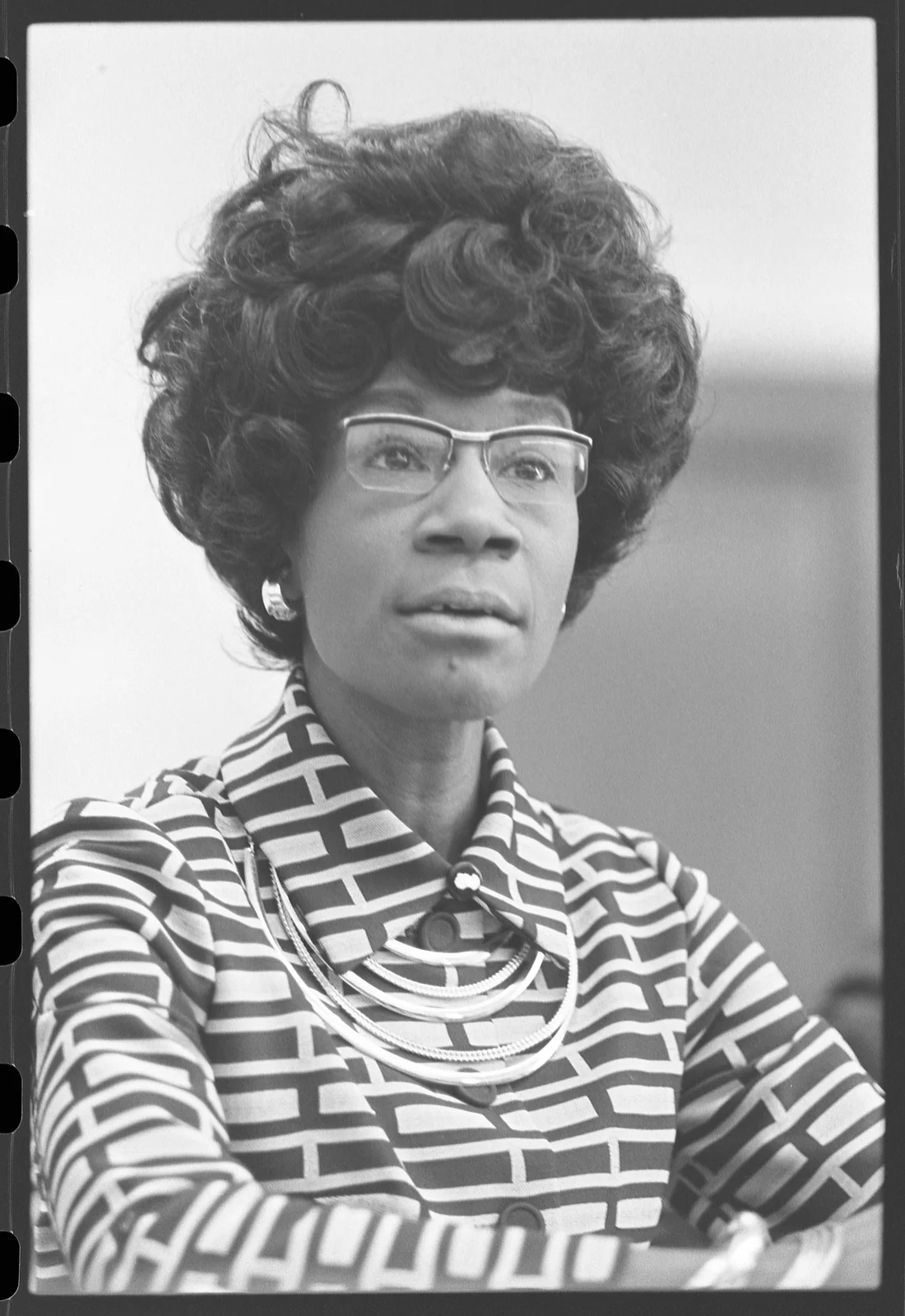
- Shirley Chisholm
Compare another educator and congressional contemporary whose work joined child care, women’s equality, antiwar politics and an independent presidential campaign.
- Tammy Duckworth
Read about a later Asian American congresswoman and senator who pursued policies addressing parents’ practical needs in public institutions.
Sources and further reading
Explore the evidence
These references support the biography and offer further reading. Official records, first-person accounts and independent reporting provide different perspectives; image records document attribution and licensing.
- 1. U.S. House of Representatives, History, Art & ArchivesMINK, Patsy Takemoto — congressional biography
Mink: born Pā‘ia6 December1927; died Honolulu28 September2002; law degree1951; territorial/state offices; House dates1965–1977 and22 September1990–28 September2002; 1959 primary defeat and1964 victory; 1976 Senate defeat.
- 2. National Park ServicePatsy Mink
- 3. University of ChicagoA principled politician: The story of Patsy Mink, the first woman of color elected to Congress
- 4. Library of CongressPatsy T. Mink Papers — Collection Overview
1965 Mississippi delegation challenge; Carswell testimony; Amchitka/FOIA dispute and limits of immediate success; childcare veto1971; limited Oregon presidential campaign; Tower amendment opposition1974; welfare alternative and defeat1996. Do not call Mink the first woman attorney in Hawaii: she was the first Japanese-American woman admitted to its bar.
- 5. Library of CongressPatsy T. Mink Papers — Title IX Overview
Green’s1970 hearings and Mink’s testimony; Green/Mink cosponsorship; academic admissions, subject access, scholarships and employment as original concerns; WEEA1974.
- 6. Library of CongressPatsy Takemoto Mink’s Title IX Legacy
- 7. U.S. Congress, via GovInfoPublic Law 107–255: Recognizing the contributions of Patsy Takemoto Mink