In this biography
Quick facts
- Born
- 30 November 1924
- Died
- 1 January 2005
- Birthplace
- Brooklyn, New York, United States
- Country
- United States
- Nationality
- American
- Known for
- Becoming the first Black woman elected to Congress, campaigning for the Democratic presidential nomination in 1972, and advancing education and family policy
- Birth
- 30 November 1924 in Brooklyn, New York
- Education
- B.A., Brooklyn College, 1946; M.A., Columbia University, 1952
- Before Congress
- Early childhood educator, day-care director and New York State assemblywoman
- House service
- New York, 3 January 1969–3 January 1983
- Presidential campaign
- Sought the Democratic nomination in 1972; George McGovern became the nominee
- Death
- 1 January 2005 in Ormond Beach, Florida
Why this life matters
Chisholm connected neighborhood organizing with congressional power, challenging party gatekeepers while pursuing nutrition, education, child care and equal rights legislation.
Timeline
Key moments
Born in Brooklyn
Born Shirley Anita St. Hill to parents with roots in British Guiana and Barbados.
Education and child welfare
Graduated from Brooklyn College, entered early childhood education and completed a Columbia master’s degree.
Elected to the state Assembly
Won a New York legislative seat after years of neighborhood and Democratic club organizing.
First Black congresswoman
Won election in Brooklyn in November 1968 and began House service on 3 January 1969.
Building national caucuses
Became a founding member of the Congressional Black Caucus and National Women’s Political Caucus.
Presidential campaign announcement
Announced her bid for the Democratic presidential nomination; she continued to serve in Congress after the campaign.
Democratic leadership
Served as secretary of the House Democratic Caucus and joined the influential Rules Committee in 1977.
Teaching and later life
Left Congress in January 1983, taught and lectured, and died in Florida on 1 January 2005.
An educator shaped by Brooklyn and Barbados
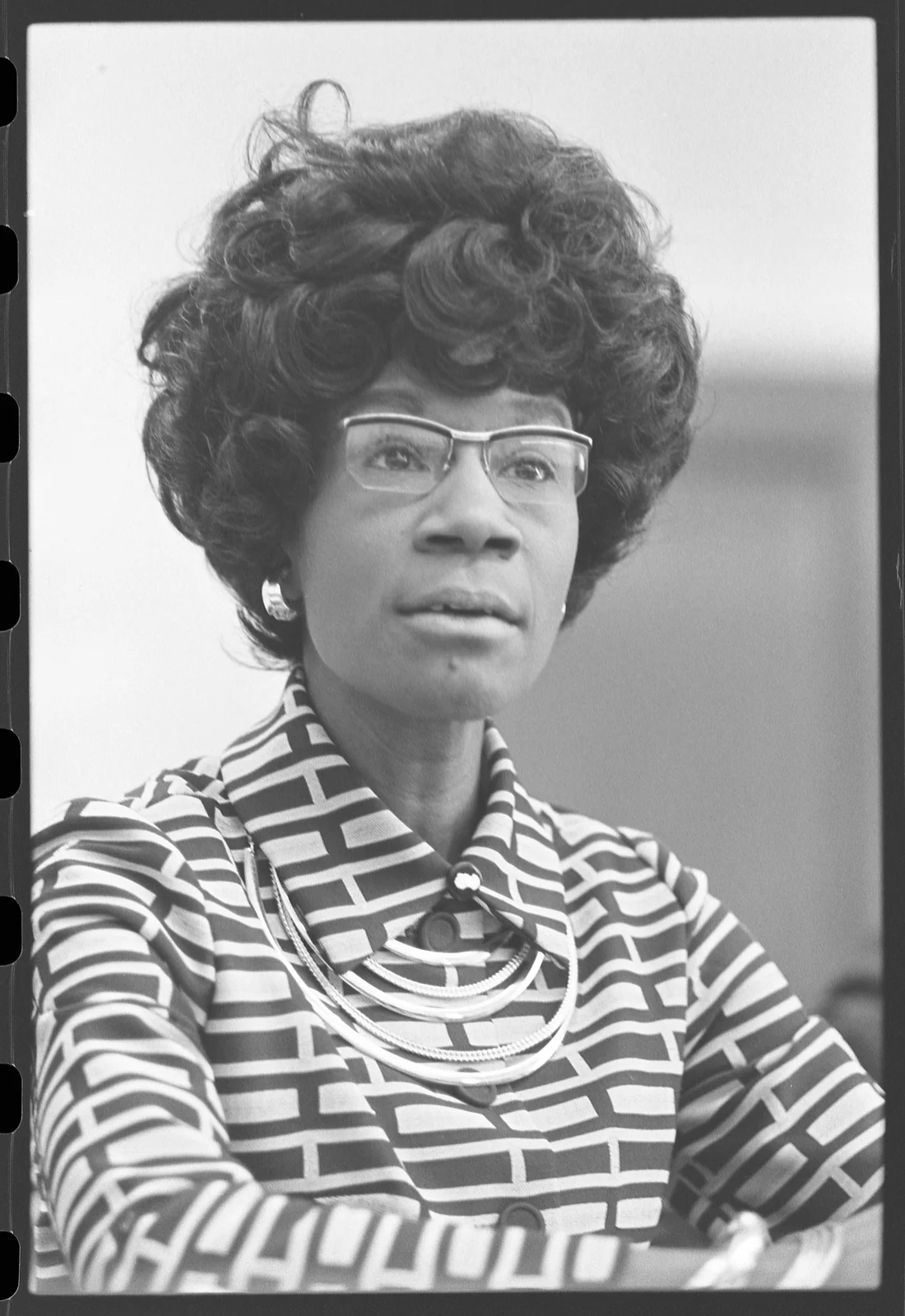
Shirley Chisholm was born Shirley Anita St. Hill in Brooklyn on 30 November 1924. Her parents came from British Guiana and Barbados, and she spent part of her childhood with her grandmother in Barbados before returning to New York. At Brooklyn College she studied sociology, developed her debating skills and graduated in 1946. A Columbia University master’s degree followed in 1952.
Early childhood education gave Chisholm both professional expertise and a close view of families’ needs. She taught nursery school, directed day-care centers and became a consultant to New York City’s day-care division. Her later arguments for public child care and educational opportunity grew from this working life as well as from her political commitments.
Winning power through neighborhood organization
Chisholm learned politics through Democratic clubs and community organizations, doing the routine work of meetings, mailings and voter mobilization. She also confronted organizations in which women supplied much of the labor while men controlled nominations. Elected to the New York State Assembly in 1964, she worked for educational access and unemployment protection for domestic workers.
Her congressional opportunity came with a newly drawn Brooklyn district containing Black and Puerto Rican communities. In 1968 she defeated a machine-backed rival in the Democratic primary, then civil rights leader James Farmer in the general election. Local organizers and direct campaigning helped turn her independence into an electoral advantage. Her victory made her the first Black woman elected to Congress.
From an unwanted assignment to legislative influence
Beginning House service in January 1969, Chisholm challenged an initial assignment to the Agriculture Committee as poorly matched to her urban constituency. She secured a transfer to Veterans’ Affairs and later joined Education and Labor. Her agenda connected the cost of the Vietnam War with unmet needs at home, including hunger, schooling and support for parents who worked.
She helped expand food assistance and backed the nutrition program for women, infants and children known as WIC. Coalition building accompanied her criticism of institutions: she helped found the Congressional Black Caucus and the National Women’s Political Caucus in 1971. These organizations offered different routes for increasing representation, and Chisholm’s commitments to both could complicate expectations of political loyalty.
The 1972 presidential campaign
On 25 January 1972 Chisholm announced her campaign for the Democratic presidential nomination. She sought a coalition across race and sex, drawing in young people, women and voters excluded from conventional party bargaining. Her campaign carried the independence expressed in her familiar phrase, Unbought and Unbossed, onto a national stage.
Support did not follow automatically from her identity or organizational ties. Some Black political leaders preferred other strategies or candidates; sexism and limited resources also constrained her campaign. The Library of Congress documents resistance within the Congressional Black Caucus to both her candidacy and her willingness to work beyond it. George McGovern won the nomination. Chisholm’s campaign nevertheless challenged the assumption that presidential contenders had to emerge from an exclusively white, male political leadership.
An institutional career beyond the campaign
Chisholm’s congressional career continued for another decade. She joined the Rules Committee in 1977, gaining influence over how legislation reached the floor, and served as Democratic Caucus secretary from 1977 to 1981. She continued to advocate for working families and became an outspoken defender of Haitian refugees facing unequal treatment in American immigration policy.
After leaving the House in January 1983, she returned to education through teaching and public lectures, including work at Mount Holyoke and Spelman. She died in Ormond Beach, Florida, on 1 January 2005. Her seven House terms show how an insurgent political voice could also acquire procedural influence and sustain a broad legislative agenda.
Quick answers
Frequently asked questions about Shirley Chisholm
- What was Shirley Chisholm the first to do?
- Her election in 1968 made her the first Black woman elected to the U.S. Congress. She began serving in January 1969. Her 1972 presidential bid was a campaign for the Democratic nomination, which she did not win.
- What did Unbought and Unbossed mean in her politics?
- The phrase expressed her claim to independence from party machines and donors. She used community organization and direct campaigning to win office, while later working through caucuses, committees and Democratic leadership.
- What policies did she work on besides her presidential campaign?
- Chisholm pursued educational access, child care, food assistance, women’s equality and protections for domestic workers. She also defended Haitian refugees and criticized spending on the Vietnam War while social needs went unmet at home.
- When did Shirley Chisholm leave Congress and die?
- Her House service ended on 3 January 1983. She subsequently taught and lectured, and died on 1 January 2005 in Ormond Beach, Florida.
Keep exploring
Lives connected to this story
- Patsy Mink
Read about a congressional contemporary who also linked women’s equality, education, child care and opposition to the Vietnam War.
- Tammy Duckworth
Follow a later legislator’s work on the practical barriers faced by parents using federal institutions and public facilities.
Sources and further reading
Explore the evidence
These references support the biography and offer further reading. Official records, first-person accounts and independent reporting provide different perspectives; image records document attribution and licensing.
- 1. U.S. House of Representatives, History, Art & ArchivesCHISHOLM, Shirley Anita — congressional biography
Chisholm: born Brooklyn 30 November 1924; died Ormond Beach 1 January 2005; BA1946 and MA1952; House service 3 January1969–3 January1983; first Black congresswoman; 1968 primary/general election, committee changes, 1977 Rules Committee and Democratic leadership.
- 2. Brooklyn CollegeShirley Chisholm Project on Brooklyn Women’s Activism
- 3. Brooklyn CollegeHappy Birthday, Shirley!
- 4. National Park ServiceShirley Chisholm
- 5. Library of CongressShirley Chisholm in Pictures: Unbought and Unbossed