In this biography
Quick facts
- Born
- 1874-11-30
- Died
- 1942-04-24
- Birthplace
- Clifton, now New London, Prince Edward Island, Canada
- Country
- Canada
- Nationality
- Canadian
- Known for
- Anne of Green Gables, the Emily novels and extensive journals
- Born
- 30 November 1874, Prince Edward Island
- First novel
- Anne of Green Gables (1908)
- University studies
- Dalhousie, 1895–1896; no degree completed there
- Later home
- Ontario from 1911 until her death in 1942
Why this life matters
Her fiction made girls’ education, imagination and domestic choices central subjects. Journals, manuscripts and later scholarship reveal a more complicated working life than the cheerful image of Anne alone suggests.
Timeline
Key moments
Island birth
Born at Clifton, now New London, on 30 November.
Teaching and study
Teacher training is followed by one academic year at Dalhousie.
Anne reaches publication
A manuscript written in 1905 is reconsidered after rejection and published in 1908.
Marriage and move
Marries Ewan Macdonald and moves to Ontario.
Death and burial
Dies in Toronto on 24 April and is buried in Cavendish, Prince Edward Island.
Clifton, Cavendish and a childhood shaped by loss
Lucy Maud Montgomery was born at Clifton, now New London, on Prince Edward Island on 30 November 1874. After her mother’s death, she was brought up mainly by her maternal grandparents in Cavendish. The Island became a lasting imaginative resource, but that does not make every fictional house a documentary copy of her childhood home.
A period with her father in Prince Albert and early publication widened that experience. Reading and writing offered possibilities beyond household expectations, while family obligations continued to influence where she could live and work.
Training, teaching and the cost of education
Montgomery trained as a teacher at Prince of Wales College and later attended Dalhousie in 1895–1896. She studied English and contributed to student publication, but finances prevented an extended university course. She did not earn a Dalhousie degree.
Teaching wages and income from published work supported her ambition. Dalhousie’s archival accounts show a writer planning a professional life, not merely someone who happened to produce a successful manuscript in spare moments. Educational opportunity and the need to earn money were intertwined.
The long route to Anne of Green Gables
After returning to care for her grandmother, Montgomery continued submitting stories and poems. She also worked at the Daily Echo in Halifax in 1901–1902. Anne of Green Gables was written in 1905, rejected, put aside and then sent out again before L. C. Page published it in Boston in 1908.
The surviving manuscript is valuable evidence of work and revision. Its preservation and digital exhibition counter the idea that Anne arrived fully formed from an author’s naturally cheerful personality. A character’s exuberance and the labour required to construct a novel are different things.
Marriage and a substantial Ontario life
Montgomery married the Presbyterian minister Ewan Macdonald in 1911 and moved to Ontario. Leaskdale, Norval and Toronto belong to her biography alongside Cavendish. Parks Canada explicitly distinguishes her Island settings from the later places in which she wrote.
Family bereavement, the First World War and her husband’s illness complicated these years. The contrast between public success and private strain is important, but it should not be converted into a retrospective clinical diagnosis. Her journals are authored records, not transparent access to every event or feeling.
Girls’ ambitions and the limits of public rebellion
Literary scholar Laura Robinson describes a tension between Montgomery’s cautious public statements about women’s roles and the opportunities her fiction gives girls. Anne is unwanted because the Cuthberts expected a boy, yet education, work and a changing household gradually establish her value.
This is not a reason to call Montgomery an uncomplicated modern campaigner. Robinson’s account is more precise: domestic stories could unsettle assumptions without openly repudiating every convention. Comparing Anne with the Emily books also moves attention from a single famous character to a recurring interest in girls who want to create.
Death, archives and a career beyond one heroine
Montgomery died in Toronto on 24 April 1942 and was buried in Cavendish. She was designated a national historic person in 1943. The memorial connection to Prince Edward Island should not erase the decades she spent elsewhere.
Her legacy includes twenty novels as well as short stories, poetry, letters and journals. Scholarship and manuscript projects continue to separate the marketed Anne image from a larger body of writing. Reading her today also means asking whose Island experience appears in the fiction, and whose is left outside it.
Quick answers
Frequently asked questions about Lucy Maud Montgomery
- What does L. M. Montgomery stand for?
- Lucy Maud Montgomery. She was often known personally as Maud and is also associated with the married surname Macdonald.
- When was Anne of Green Gables first published?
- The novel was first published in 1908. Montgomery had written the manuscript in 1905 before initial rejections and reconsideration.
- Did Lucy Maud Montgomery live only on Prince Edward Island?
- No. She also spent time in Prince Albert and Halifax, and lived in Ontario from her 1911 marriage until her death in 1942.
- Did Montgomery graduate from Dalhousie?
- She studied there in 1895–1896 but did not complete a degree. Financial constraints limited her time at the university.
Keep exploring
Lives connected to this story
- Alice Munro
Munro’s Nobel biography identifies Montgomery among her early reading; compare their very different forms of Canadian fiction.
- Louisa May Alcott
Compare another writer whose famous girl character can overshadow her wider professional life.
- Margaret Atwood
Explore a later Canadian author’s career across fiction, criticism and public literary life.
Sources and further reading
Explore the evidence
These references support the biography and offer further reading. Official records, first-person accounts and independent reporting provide different perspectives; image records document attribution and licensing.
- 1. L. M. Montgomery Institute / University of Prince Edward IslandLife and chronology: Island childhood, work and Ontario years
- 2. Dawn Morrison / Dalhousie University2018: Montgomery’s 1895–1896 studies
University attendance is not presented as degree completion.
- 3. Marilyn Smulders / Dalhousie University2008: income, education and the professional writer
- 4. Laura Robinson / L. M. Montgomery Institute2018: gender roles, public persona and domestic heroism
Scholarly interpretation of gender roles is attributed rather than treated as a statement of all modern readers’ views.
- 5. Parks CanadaLucy Maud Montgomery: national historic person
- 6. L. M. Montgomery InstitutePublications and scholarship beyond Anne
- 7. L. M. Montgomery InstituteAnne manuscript exhibition and its institutional partners
- 8. Project GutenbergAnne of Green Gables: original novel and publication record
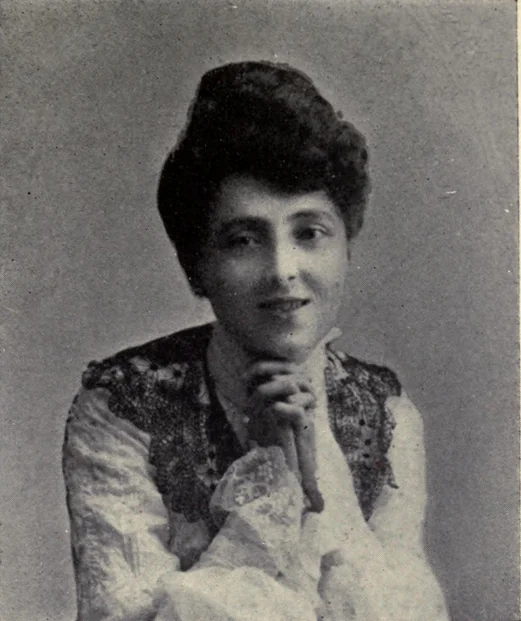
- 9. Canadian Poets (1916) / Wikimedia CommonsFull supplied portrait extraction and public-domain publication evidence
Uses the specific portrait documented as published in 1916, not a different 1932 image with an inapplicable US publication claim. The upstream portrait extraction is disclosed.