In this biography
Quick facts
- Born
- 1957
- Birthplace
- Newmarket, Ontario
- Country
- Canada
- Nationality
- Canadian
- Known for
- The Book of Negroes, The Illegal and writing about identity and belonging
- Education
- Economics at Université Laval; writing at Johns Hopkins University
- Breakthrough novel
- The Book of Negroes, 2007
- Nonfiction
- Black Berry, Sweet Juice; Blood: The Stuff of Life
- Teaching
- University of Guelph creative-writing professor from 2016
Why this life matters
Hill brought Black Loyalist history to a broad fiction readership without presenting an invented narrator as a recovered historical witness.
Timeline
Key moments
Born in Ontario
Born in Newmarket and grows up in Don Mills in a family engaged in human rights.
Early fiction and memoir
Some Great Thing and Any Known Blood precede Black Berry, Sweet Juice.
A historical novel reaches wider readers
The Book of Negroes wins the 2007 Writers’ Trust fiction prize and the 2008 Commonwealth Writers’ Prize; Canada Reads follows in 2009.
Blood and public lectures
Blood: The Stuff of Life accompanies his Massey Lectures.
Screenwriting and teaching
The adaptation airs in 2015; The Illegal wins Canada Reads and he becomes a Guelph professor in 2016.
A different fictional readership
Beatrice and Croc Harry extends his work into a novel for younger readers.
A Canadian childhood shaped by a family’s human-rights work
Lawrence Hill was born in Newmarket, Ontario, in 1957 and grew up in Don Mills. His parents, Daniel and Donna Hill, were American immigrants who moved to Canada after marrying in 1953. Their work against racial discrimination helped shape his interest in how people understand identity, history and belonging.
He studied economics at Université Laval and writing at Johns Hopkins University. Before becoming widely known for fiction, he worked as a newspaper journalist, including for The Globe and Mail and the Winnipeg Free Press. Reporting and literary invention became distinct parts of a career concerned with whose experiences reach a public audience.
The early books explored more than one way of telling a life
His first novel, Some Great Thing, appeared in 1992, followed by Any Known Blood in 1997. Black Berry, Sweet Juice: On Being Black and White in Canada, published in 2001, brought memoir into that developing body of work. The sequence matters: the writer was already examining race and family before his best-known historical novel.
In fiction, an imagined character can move through situations that the author never personally experienced. In memoir, the writer makes a different claim about the relationship between narration and a lived past. Hill has worked in both forms; treating every protagonist as his disguised autobiography would obscure that difference.
The Book of Negroes made a neglected history widely visible
Published in 2007, The Book of Negroes follows Aminata Diallo, a fictional African woman whose life crosses the Atlantic world of enslavement and displacement. Its title comes from a real 1783 register associated with the evacuation of Black people from New York. The imagined life and the surviving document are connected but are not interchangeable evidence.
The novel won the 2007 Rogers Writers’ Trust Fiction Prize and the 2008 Commonwealth Writers’ Prize. In his 2009 Mosaic interview, Hill described visiting the original register at Britain’s National Archives after receiving the Commonwealth award. The literary success thus also created a public entry point into a historical record that predates the novel by more than two centuries.
Nonfiction and adaptation opened other conversations
Blood: The Stuff of Life appeared in 2013 and supplied the basis for that year’s Massey Lectures. It examines blood as a biological reality and as a means through which societies define identity and exclusion. This was a nonfiction inquiry alongside the novels, not another volume of Aminata’s fictional life.
Hill co-wrote the six-part screen adaptation of The Book of Negroes with director Clement Virgo. It aired in 2015. Speaking at Dalhousie that year, he discussed the difficulty of finding Aminata’s changing voice and choosing how a screen work should portray violence. Adaptation involved selection and compromise rather than simply transferring every page to a camera.
Teaching and later fiction continued beyond the breakthrough
The Illegal, published in 2015, won Canada Reads in 2016 when defended by Clara Hughes. That year Hill became a creative-writing professor at the University of Guelph. His university profile describes teaching through close attention to drafts, revision and the reading of other writers, rather than treating a published author’s success as a formula students can copy.
Beatrice and Croc Harry, a novel for children and adults, followed in 2022. Hill’s public work also includes prison reading and writing initiatives and support for Crossroads International. His appointment to the Order of Canada was awarded in May 2015, with investiture in September 2016. The official citation recognizes both authorship and activism; those two dates describe separate stages of the same honour.
Quick answers
Frequently asked questions about Lawrence Hill
- Is Aminata Diallo a real person?
- She is Hill’s fictional narrator. The 1783 register named in the novel’s title is a real historical document.
- Why is the novel also called Someone Knows My Name?
- That is a title used for editions in several markets, including the United States. It is not a separate sequel.
- What did Lawrence Hill study?
- He earned a BA in economics at Université Laval and an MA in writing at Johns Hopkins University.
- Did he help write the television adaptation?
- Yes. He co-wrote the six-part adaptation with director Clement Virgo; it aired in 2015.
Keep exploring
Lives connected to this story
- Yann Martel
Compare another Canadian novelist’s explanation of research, invention and the relationship between a book and its screen adaptation.
- Margaret Atwood
Explore another Canadian writer working across fiction, public discussion and the defence of reading.
- Michael Ondaatje
Follow a different Canadian literary career in which imaginative fiction and adaptation reached international audiences.
Sources and further reading
Explore the evidence
These references support the biography and offer further reading. Official records, first-person accounts and independent reporting provide different perspectives; image records document attribution and licensing.
- 1. Lawrence HillAuthor biography: family, education, reporting and bibliography
- 2. Canada’s Walk of FameLawrence Hill: 2015 inductee and Newmarket birthplace
The institution supports the Newmarket birthplace and 1957 birth year. Its January 1 display conflicts with other exact-day accounts; no precise birthday is asserted here. Older book and honorary-degree totals are not reused as current.
- 3. University of GuelphLawrence Hill: creative writing faculty profile, teaching and public work
The actual faculty profile establishes the 2016 appointment, later teaching and 2022 novel. Awards for the television script are kept separate from prizes for the novel; no unsupported current total of books or degrees is asserted.
- 4. Writers’ Trust of CanadaLawrence Hill: 2007 Rogers Writers’ Trust Fiction Prize winner
- 5. Governor General of CanadaLawrence Hill: Member of the Order of Canada, awarded 7 May 2015
- 6. Dalhousie UniversityLawrence Hill: 2014 honorary-degree citation, including 2009 Canada Reads
- 7. Lawrence HillBeatrice and Croc Harry: novel for children and adults, 11 January 2022
- 8. Lawrence HillThe Book of Negroes: author’s novel synopsis and publication context
- 9. Jessie Sagawa / Studies in Canadian Literature, University of New BrunswickProjecting History Honestly: original interview recorded 23 October 2007, published 2008
- 10. Maranda Moses / Mosaic MagazineOriginal Lawrence Hill interview, 17 June 2009: titles, displacement and the Commonwealth prize
- 11. Marie Visca / Dalhousie UniversityFrom manuscript to miniseries: report of Hill’s 2015 lecture and adaptation discussion
- 12. Library and Archives CanadaBook of Negroes, 1783: register, legal status and access to records
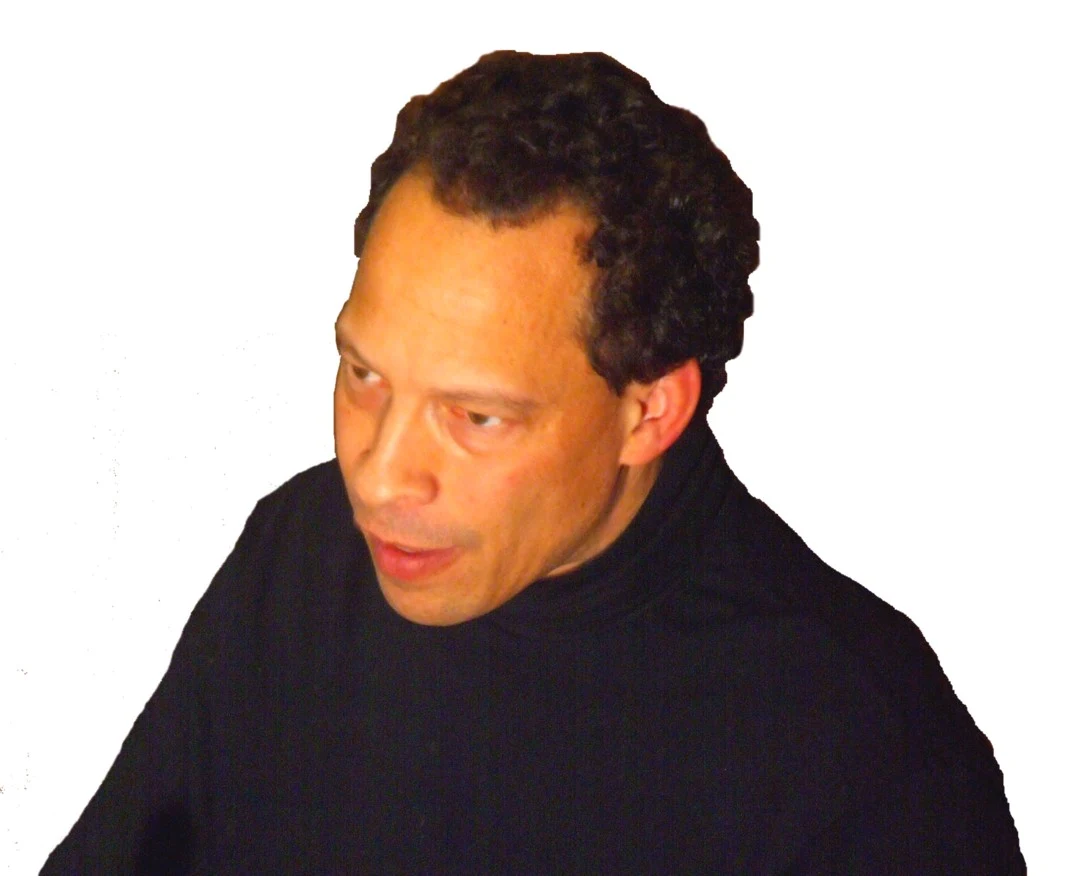
- 13. Joshua Sherurcij / Wikimedia CommonsLawrence Hill.JPG: own-work photograph and explicit attribution-only commercial-use grant
The original uploader identifies the work as self-made and expressly grants commercial use with attribution to Joshua Sherurcij. This is an attribution-only permission, not a Creative Commons licence or a CC0 release.