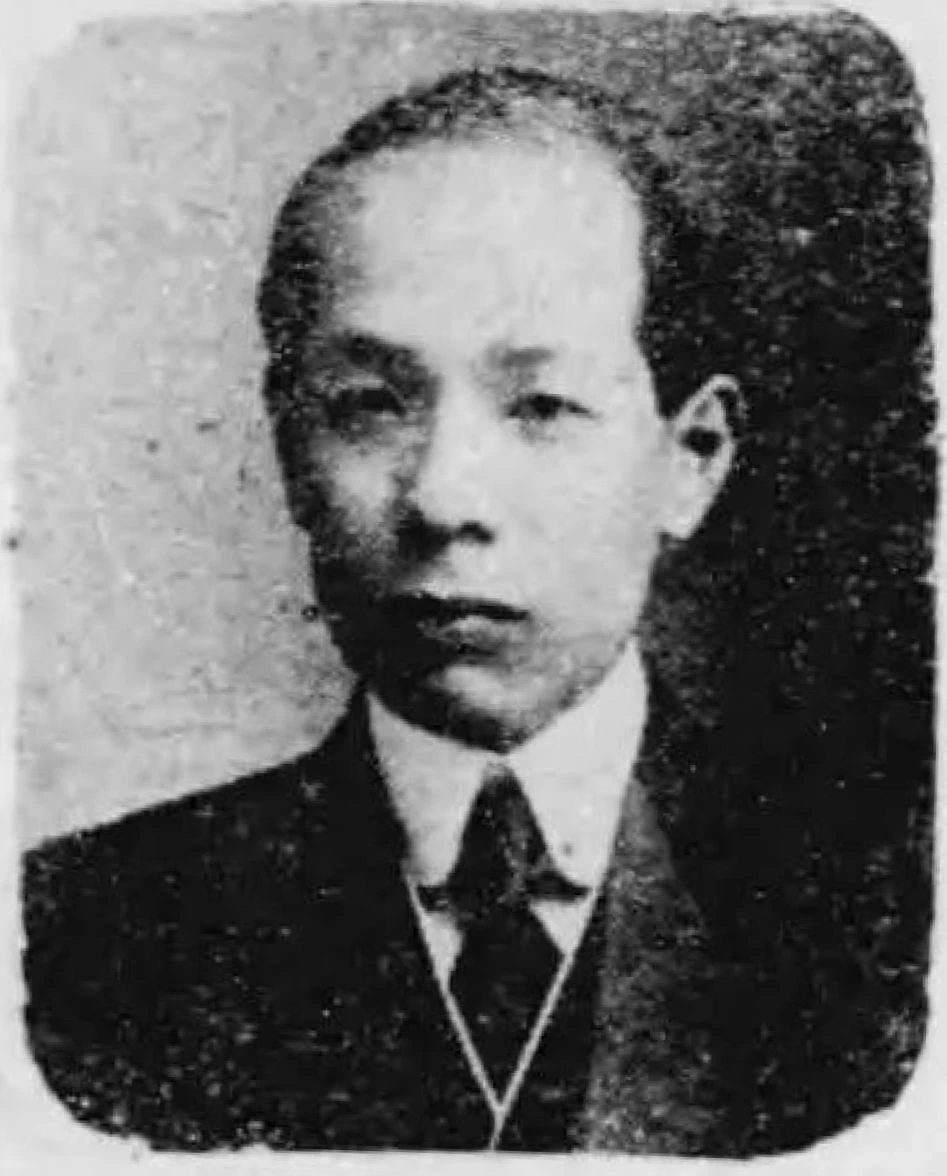
In this biography
Quick facts
- Born
- 1899
- Died
- 1990
- Birthplace
- Hamamatsu, Shizuoka, Japan
- Country
- Japan
- Nationality
- Not independently established
- Known for
- A1926 television demonstration using mechanical scanning and a cathode-ray-tube display
- Known for
- A1926 television demonstration using mechanical scanning and a cathode-ray-tube display
Why this life matters
A1926 television demonstration using mechanical scanning and a cathode-ray-tube display.
Timeline
Key moments
A teacher develops a television programme
Kenjiro Takayanagi was born in 1899 and became a pioneer of television research in Japan. His work developed through teaching and a laboratory programme at Hamamatsu Higher Technical School, now associated with Shizuoka University. He began that research there in 1924. The problem involved more than making a luminous image appear on a screen. An image had to be broken into a sequence, transmitted as a signal and reconstructed in corresponding positions, making scanning and synchronisation central to the project.
A demonstration with two kinds of technology
On 25 December 1926 Takayanagi demonstrated the Japanese characterイon a cathode-ray tube. Tokyo Tech's account specifies that the image was scanned mechanically and displayed electronically. This distinction matters when the event is described as electronic television: the electronic display did not make every stage of that particular system electronic. The demonstration was an important step in a continuing programme, followed by improvements in image quality and later work on more fully electronic arrangements.
Research teams and a longer development history
The National Museum of Nature and Science describes how a 1930 demonstration helped expand the research setting and support team-based work. The IEEE milestone records electronic-system broadcasting in 1935 and recognises Takayanagi's research, patents and teaching. He died in 1990. His contribution is therefore better understood as a sustained technical and educational programme than as one successful image detached from the people who developed later equipment. The surviving institutional chronology also helps distinguish an early proof of a component arrangement from the wider broadcasting and manufacturing systems that followed.
Quick answers
Frequently asked questions about Kenjiro Takayanagi
- What is Kenjiro Takayanagi known for?
- A1926 television demonstration using mechanical scanning and a cathode-ray-tube display.
Keep exploring
Lives connected to this story
- Shintaro Uda
How do driven and parasitic elements work in the Yagi–Uda antenna?
- George E. Smith
How can a charge-coupled device transfer and read an image?
Sources and further reading
Explore the evidence
These references support the biography and offer further reading. Official records, first-person accounts and independent reporting provide different perspectives; image records document attribution and licensing.
- 1. IEEE Japan Council milestone recordDevelopment of Electronic Television,1924–1941
Actualone-pageplaquetextread:Hamamatsu 1924, characteronCRT25 December 1926, electronicsystem 1935, research/patents/teaching. Noimageorperformancenumberscopied.
- 2. Tokyo Institute of Technology / Science TokyoA passion for innovation—Dr.Takayanagi
Actualinstitutionalpassagesread:1899–1990, mechanicaldiskscanversusCRTdisplayin 1926, continuingimprovements. Broadheadlineall-electronicshorthandnarrowedtoactualstages.
- 3. National Museum of Nature and Science, TokyoThe Beginning and Development of Television Technology
Actualexhibitiontextread:1924 Hamamatsu,1926 character,1930 demonstration/teamresearch andsurvivingrecords. Notclaimingpersonalinspectionofmuseumobjects.
- 4. Takayanagi Memorial Hall, Shizuoka UniversityKenjiro Takayanagi archive: television chronology and principle
ActualJapanesechronology/explanationread:mechanicalNipkowdisk, synchronisationofreceiverCRTscan, image-to-sequenceandsequencetoimage. Onlyconceptualprincipleused, not 1931 numericresolutionorunviewednotebook.