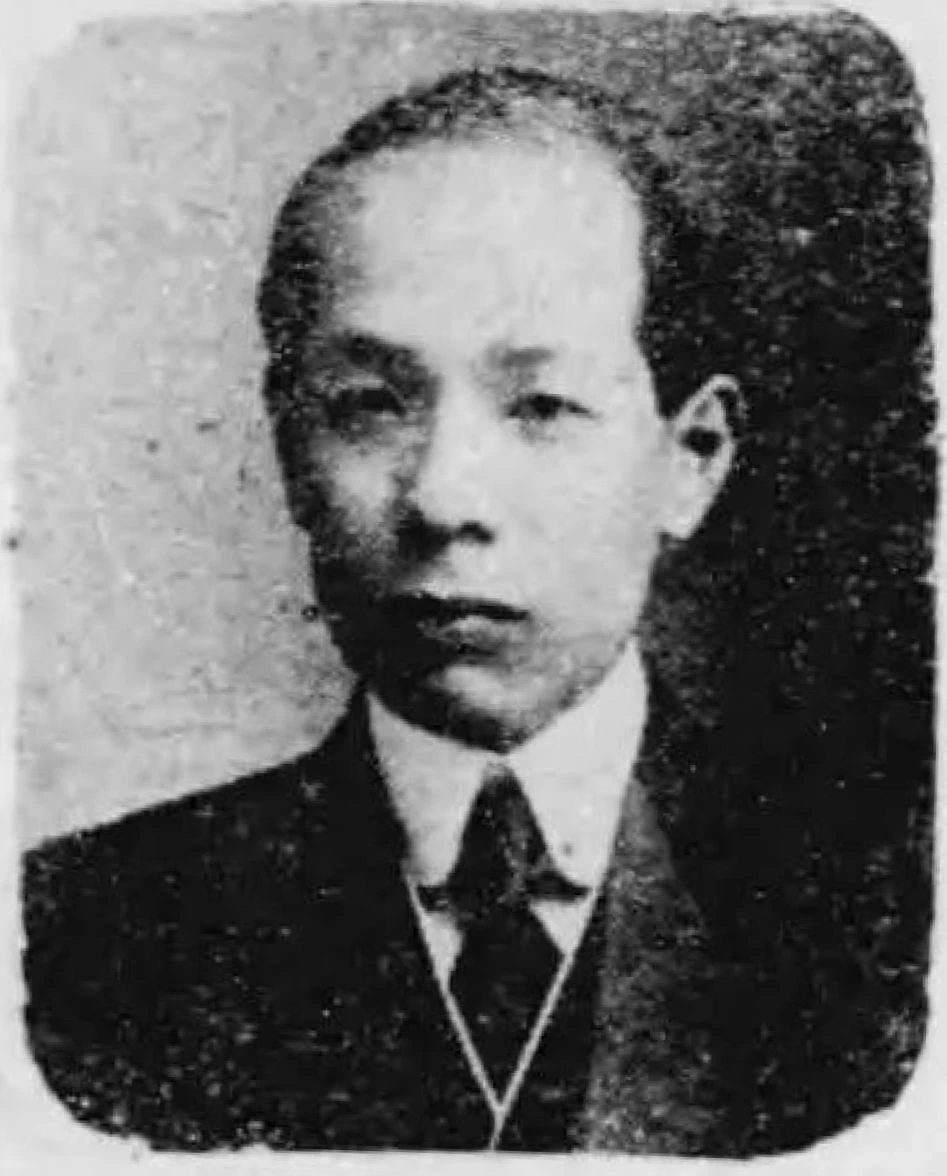
In this biography
Quick facts
- Born
- 1896
- Died
- 1976
- Birthplace
- Not independently established
- Country
- Japan
- Nationality
- Not independently established
- Known for
- Experimental development of the Yagi–Uda directional antenna
- Known for
- Experimental development of the Yagi–Uda directional antenna
Why this life matters
Experimental development of the Yagi–Uda directional antenna.
Timeline
Key moments
A communications researcher at Tohoku
Shintaro Uda was born in 1896 and became a communications-engineering professor at Tohoku University. The university's archive identifies him as an inventor of the Yagi–Uda antenna and preserves a photograph from a later engineering graduation album. His most influential early work concerned the arrangement of conductors around a radiating antenna. It made the direction of radio transmission an experimental question: the position and dimensions of nearby elements could influence where the signal was strongest, rather than leaving radiation uniform in every direction.
Measurements and a joint technical description
The historical record identifies Uda's 1925 report of measurements as an early account of the directional arrangement. In 1926 he and Hidetsugu Yagi published a joint English paper. Their primary description discusses currents induced in nearby rods and distinguishes reflecting and directing behaviour. The paper connects those effects with arrangements intended to narrow the beam. It is a more informative record of Uda's contribution than the shortened popular name Yagi antenna, which can make a collaborative experimental history disappear behind one surname.
An enduring contribution with limited biographical evidence
Uda continued an academic career associated with Tohoku and died in 1976. The records used here document his research and university role more securely than a detailed private-life narrative, so this profile concentrates on those verified contributions. The significance is substantial: conductors without their own direct feed could participate in a useful directional system through coupling. Recognising that experimental work beside Yagi's institutional and international role makes the full name Yagi–Uda meaningful. It also directs readers back to the joint paper, where the proposed arrangement and the stated measurements can be examined separately from later reputation.
Quick answers
Frequently asked questions about Shintaro Uda
- What is Shintaro Uda known for?
- Experimental development of the Yagi–Uda directional antenna.
Keep exploring
Lives connected to this story
- Hidetsugu Yagi
How should the Yagi–Uda antenna’s invention and international credit be separated?
- Kenjiro Takayanagi
What was electronic and what was mechanical in Takayanagi’s 1926 television?
Sources and further reading
Explore the evidence
These references support the biography and offer further reading. Official records, first-person accounts and independent reporting provide different perspectives; image records document attribution and licensing.
- 1. Tohoku University Digital ArchiveProfessor Shintaro Uda, archive recordC004326
Actualcatalogue 22–26 read:1896–1976, communicationengineeringprofessor, inventorofYagi–Uda, photographcirca 1960 from 1961 graduationalbum. Noimpliedfullprivatebiographyorphoto-reusegrant.
- 2. H.Yagi and S.Uda / Proceedings of the Imperial Academy,1926Projector of the Sharpest Beam of Electric Waves
Actual 4-pageprimaryPDFtextreadafterwebtimeout/nativecurlsuccess:inducedcurrent, reflector/directorroles, combinedarrangements andexplicitseparationofgeometry/observations. Figuresandnumericpatternsnotcopiedorusedfornewclaims; cachedtechnology-c-yagi-uda-1926.pdf/.txt.
- 3. Qiang Chen / Proceedings of the Japan Academy,2025First English article of Yagi-Uda antenna
Actuallyreadscoped 1925 measurement report/1926 jointpaper/recognitionpassages. Usedalongsideactualoriginalpaper, notassubstituteforunreadgraphs.
- 4. IEEE Japan Council milestone recordDirective Short Wave Antenna,1924
Actualplaquetextread:YagiandUda jointlynamed, closelycoupledparasiticelements, highdirectivity andlaterapplications. Noactualgainvaluetakenfromplaque.