In this biography
Quick facts
- Born
- 13 December 1920
- Died
- 21 November 1992
- Birthplace
- Savannakhet, Laos
- Country
- Laos
- Nationality
- Lao
- Known for
- Leading the Lao People’s Revolutionary Party and the state created in 1975
- Party leadership
- 1955–1992
- Prime minister
- 1975–1991
- President
- 1991–1992
- Reform programme
- New Economic Mechanism, developed in 1985–1986
Why this life matters
Kaysone was the central party leader behind the 1975 revolution, early socialist transformation and market-oriented reforms developed during the mid-1980s.
Timeline
Key moments
Born in Savannakhet
Born in southern Laos and later studied in Hanoi.
Party leadership established
Became general secretary of the newly formed Lao People’s Party.
Ceasefire and coalition agreement
The Vientiane settlement opened the final political phase before the revolutionary victory.
Became prime minister
Headed the government of the new Lao People’s Democratic Republic.
Early market-oriented adjustments
The government began loosening controls on trade and agricultural prices before the later reform programme.
New Economic Mechanism
Market-oriented changes gathered pace in 1985 and were consolidated politically at the 1986 party congress.
Became president
Moved from the premiership to the presidency after the new constitution; his party title also changed from general secretary to chairman.
Died while president and party chairman
His death ended nearly four decades at the centre of the revolutionary party’s leadership.
A Hanoi student and the organisation of the Lao party
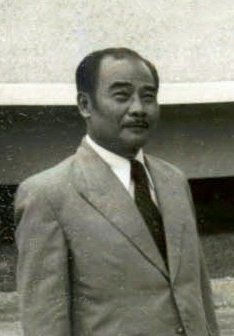
Kaysone Phomvihane was born in Savannakhet on 13 December 1920 and studied law in Hanoi. The Library of Congress country study places his recruitment into the Indochinese Communist Party in 1946 or early 1947. His early political life developed through the links between Lao resistance organisers and Vietnamese communists, rather than through the royal institutions in Vientiane.
He became general secretary of the Lao People’s Party at its founding congress on 22 March 1955. Initially clandestine, the party worked behind broader nationalist fronts. It adopted the name Lao People’s Revolutionary Party in 1972. Kaysone’s organising role differed from Souphanouvong’s more visible public leadership, although both belonged to the same revolutionary movement.
War, coalition politics and the republic of 1975
The Pathet Lao combined coalition negotiations with armed struggle and close cooperation with North Vietnam. The Vientiane agreement of 21 February 1973 and subsequent coalition created a final power-sharing phase, but the revolutionary movement expanded its control as the wider Indochina war ended in 1975.
At the National Congress on 2 December 1975, Kaysone presented the motion establishing the Lao People’s Democratic Republic and nominated Souphanouvong as president. Kaysone became the first prime minister while remaining party leader. The monarchy ended and noncommunist parties disappeared. Party control and the premiership gave Kaysone the decisive governing position, rather than the country being directed simply by whoever held its ceremonial presidency.
The difficulties of early socialist transformation
The government sought to direct production and distribution through socialist planning in an economy damaged by war and dominated by agriculture. Price controls, restrictions on trade and poorly aligned incentives contributed to shortages and parallel markets. An IMF retrospective describes these problems as the background to the first reforms in December 1979.
Political consolidation also involved re-education camps for former officials and opponents. The country study records prolonged detention and the difficulty of establishing reliable totals for a secretive camp system. These were consequences of the governing order Kaysone led, not merely economic adjustments. His early premiership must be considered through both reconstruction and the coercive treatment of those excluded from the new political system.
The New Economic Mechanism was a process, not one day
Kaysone’s administration moved progressively toward markets. The IMF’s 1996 study dates a more decisive shift under the New Economic Mechanism to 1985, while its contemporary survey describes an articulated programme adopted in 1986. The Fourth Party Congress of November 1986 consolidated the policy direction. These accounts distinguish initial measures from the broader political endorsement.
The changes gave state enterprises greater operating autonomy, loosened prices and trade controls, and ended the state monopoly over rice procurement and distribution. Farmers could receive cash payments for produce. Private activity and foreign investment gained more room. The reforms altered how the economy worked while preserving the party’s political monopoly, making economic opening different from a transition to multiparty government.
The 1991 constitution and a final presidency
The Supreme People’s Assembly adopted a constitution on 14 August 1991, sixteen years after the republic’s establishment. It formalised state institutions and affirmed the party’s leading role. Kaysone moved from prime minister to president; the new presidency had powers over government appointments and state administration that its earlier ceremonial form had lacked.
The party also changed his leadership title from general secretary to chairman in 1991. He retained political authority until his death on 21 November 1992. His legacy joins the revolutionary state founded in 1975 with a later, controlled departure from comprehensive planning. The institutions survived him, but neither economic reform nor a written constitution ended one-party rule.
Quick answers
Frequently asked questions about Kaysone Phomvihane
- What is Kaysone Phomvihane known for?
- He led the Lao revolutionary party from its 1955 foundation, became the Lao PDR’s first prime minister in 1975 and later president. His administration also directed the mid-1980s shift toward the New Economic Mechanism.
- Was Kaysone the Lao PDR’s first president?
- No. Souphanouvong was the first president in 1975, while Kaysone was prime minister and party leader. Kaysone took the presidency in 1991 and held it until his death in November 1992.
- Did the New Economic Mechanism begin in 1985 or 1986?
- The IMF’s retrospective identifies a decisive market-oriented shift in 1985, while other accounts date the articulated programme and party endorsement to 1986. Reforms had already begun in 1979, so the programme is better understood as a process than a single-day launch.
- Did Kaysone’s market reforms introduce multiparty democracy?
- No. They changed prices, enterprise management, trade and investment while retaining the party’s political dominance. The 1991 constitution continued to recognise the party’s leading role.
Keep exploring
Lives connected to this story
- Khamtai Siphandon
Explore Khamtai Siphandon’s distinct military, government and party career, including the chairmanship following Kaysone’s death.
- Souphanouvong
Compare the revolutionary front’s public leader and first president with Kaysone’s party and government roles.
- Souvanna Phouma
Read the coalition premier’s efforts to preserve neutrality before the revolutionary takeover.
- Nouhak Phoumsavanh
Follow another founding organiser who later became president after Kaysone’s death.
- Sisavang Vatthana
Place the abolition of the monarchy within the last king’s biography and the uncertain record of his detention.
Sources and further reading
Explore the evidence
These references support the biography and offer further reading. Official records, first-person accounts and independent reporting provide different perspectives; image records document attribution and licensing.
- 1. United Nations General AssemblyTribute to President Kaysone Phomvihane
- 2. Lao News AgencyKaysone Phomvihane anniversary
- 3. International Monetary FundThe Lao People’s Democratic Republic: Systemic Transformation and Adjustment
The 2016 URL is not the study’s publication year: the publication is dated May 1996. Its summary places early reform in December 1979 and NEM acceleration in 1985.
- 4. Lao News AgencyParty founding and development — official historical account
An official party-history narrative supports the founding date and leadership. Its ideological and celebratory assessments are not treated as neutral evaluations of the regime.
- 5. International Monetary FundSystemic transformation — introduction to the 1996 study
- 6. International Monetary FundIMF Survey — the articulated New Economic Mechanism
The indexed contemporary IMF survey uses 1986 for the articulated programme. It is kept separate from the 1985 shift in the longer retrospective, rather than declaring either date a simple error. The full eLibrary pages were access-blocked in this review.
- 7. Library of Congress / CountryStudies.usThe Vientiane agreement — Country Study transcription
- 8. Library of Congress / CountryStudies.usEstablishment of the republic — Country Study transcription
- 9. Library of Congress / CountryStudies.usRe-education camps — Country Study transcription
The account describes repression and uncertain camp totals. No disputed exact death date for the last king or precise national detention total is imported here.
- 10. Library of Congress / CountryStudies.usEconomic policy and party endorsement — Country Study transcription
- 11. Library of Congress / CountryStudies.usParty organisation and the 1991 title change — Country Study transcription
The HTML country-study transcription was consulted. Its explicit account of the Fifth Congress changes Kaysone’s title to chairman in 1991; his entire leadership is not described as an unchanged secretary-general tenure.
- 12. Library of Congress / CountryStudies.usThe 1991 constitution — Country Study transcription
- 13. Library of Congress / CountryStudies.usThe presidency — Country Study transcription
- 14. Wikimedia CommonsPortrait licensing record