
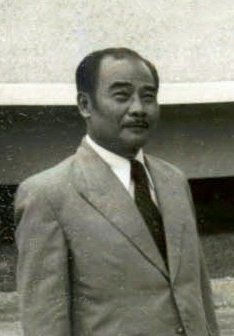
In this biography
Quick facts
- Born
- 13 July 1909
- Died
- 9 January 1995
- Birthplace
- Luang Prabang, Laos
- Country
- Laos
- Nationality
- Lao
- Known for
- Leading the Pathet Lao and becoming the republic’s first president
- Education
- Civil engineering in France
- Movement
- Pathet Lao
- Office
- President, 1975–1991
- Family connection
- Half-brother of Phetsarath and Souvanna Phouma
Why this life matters
Souphanouvong’s life joined royal lineage to communist revolution and illustrates how anticolonial conflict became a struggle over the political future of Laos.
Timeline
Key moments
Born in Luang Prabang
Born into the royal family of Luang Prabang.
Joined the independence struggle
Helped organise armed resistance as colonial rule returned after the Second World War.
Pathet Lao front formed
Became the best-known public leader of the revolutionary movement.
Geneva settlement
Pathet Lao forces were assigned regroupment areas in Houaphanh and Phongsaly pending political integration.
Joined the first coalition government
Entered a government led by his half-brother Souvanna Phouma after negotiations over national reconciliation.
Entered coalition government
Served in the second coalition under Souvanna Phouma.
Became president
Took office when the Lao People’s Democratic Republic was proclaimed.
Presidency passed to Kaysone
The new constitutional period changed the presidency while Kaysone retained party leadership.
Died after a long public career
His life remained central to official accounts of the Lao revolutionary movement.
Royal upbringing and an engineer’s working life
Souphanouvong was born on 13 July 1909 into the royal family of Luang Prabang. His father was Prince Bounkhong, and Phetsarath and Souvanna Phouma were his half-brothers. Their later political paths diverged: royal family ties did not create a single position on colonial rule, monarchy or communism.
He continued his education in Vietnam and France, training as a civil engineer at the École Nationale des Ponts et Chaussées in Paris before working in Vietnam. This professional life connected him to Indochina beyond the Lao royal court. The subsequent nickname “Red Prince” captures the unusual combination of royal descent and leadership of a communist-aligned movement, rather than identifying him as a king.
Sources for this section: [4]
Lao Issara, exile and a new resistance front
Returning to Laos in 1945, Souphanouvong became foreign minister and commander-in-chief in the Lao Issara government. He supported military cooperation with Ho Chi Minh’s government. The French return forced the independence movement into exile; he was wounded at Thakhek and fled across the Mekong to Thailand.
When the Lao Issara government-in-exile dissolved in 1949 and other leaders accepted a return under negotiated arrangements, Souphanouvong continued resistance with Vietnamese support. A congress in 1950 created the Neo Lao Issara front and a resistance government under his leadership. This was an important step in the development of the Pathet Lao, whose nationalist public front and communist party organisation were related but distinct.
Coalition diplomacy and the three princes
Souphanouvong entered the first coalition government in 1957 after negotiations with Souvanna Phouma. Political integration remained unstable, and another settlement was negotiated amid renewed civil war and foreign intervention. The “three princes” associated with these negotiations were Souvanna Phouma, Souphanouvong and Boun Oum. Phoumi Nosavan was an influential right-wing military leader, not one of the three princes.
The agreed June 1962 cabinet list identifies Souphanouvong as deputy premier with the Economy and Plan portfolio, alongside Phoumi Nosavan as deputy premier and finance minister. The government was headed by Souvanna Phouma. Contemporary US records reveal the bargaining over portfolios and outside support, showing why an agreed cabinet did not by itself reconcile the competing military forces or secure lasting neutrality.
First president of the republic, not its dominant party chief
On 2 December 1975, the National Congress of People’s Representatives established the Lao People’s Democratic Republic after the monarchy’s abolition. Kaysone Phomvihane nominated Souphanouvong as president, while Kaysone became prime minister and retained leadership of the revolutionary party. The two offices represented different roles within the new state.
Souphanouvong’s royal origins and long public leadership gave the revolution a recognisable national figure. Kaysone’s party organisation, however, was the principal centre of decision-making. Other political parties disappeared under the new one-party order. The transition also brought re-education camps for defeated officials and substantial outward migration, consequences that belong alongside the state’s account of liberation.
Later years and the legacy of the Red Prince
Souphanouvong remained the republic’s first president until 1991, when Kaysone took the office in the new constitutional period. The presidency’s powers changed substantially under that constitution. A title held across the earlier period should therefore not be read as evidence that Souphanouvong exercised the same authority as his successor.
He died on 9 January 1995. Later official commemorations emphasise his patriotism, royal background and contribution to the revolutionary front. His wider historical significance lies in the connections between engineering, anticolonial resistance, coalition negotiation and communist state-building. Those connections explain his prominence without making him the sole founder of the movement or confusing the presidency with party leadership.
Quick answers
Frequently asked questions about Souphanouvong
- Why was Souphanouvong called the Red Prince?
- He belonged to the royal family of Luang Prabang but led the communist-aligned Pathet Lao movement. The nickname connects his royal descent with his revolutionary politics; he was not the king of Laos.
- Who were the three princes in Lao coalition politics?
- They were Souvanna Phouma, Souphanouvong and Boun Oum, representing the neutralist, Pathet Lao and right-wing royalist camps. Phoumi Nosavan was a military and political leader of the right, not one of the three princes.
- Was Souphanouvong an engineer before becoming a politician?
- Yes. He trained in civil engineering in France and worked in Vietnam before joining the Lao independence struggle in 1945. His career crossed technical work, armed resistance, diplomacy and the presidency.
- Was Souphanouvong the same leader as Kaysone Phomvihane?
- No. Souphanouvong became the Lao PDR’s first president in 1975. Kaysone was the party leader and first prime minister, and he succeeded Souphanouvong as president in 1991.
Keep exploring
Lives connected to this story
- Phetsarath Ratanavongsa
Compare the independence strategy of another royal family member involved in the Lao Issara movement.
- Souvanna Phouma
Read the neutralist premier’s attempts to reconcile the factions in coalition governments.
- Kaysone Phomvihane
Distinguish the republic’s first president from the party leader and prime minister who directed its governing machinery.
- Sisavang Vatthana
Follow the last monarch’s experience of the transition that brought Souphanouvong to the presidency.
Sources and further reading
Explore the evidence
These references support the biography and offer further reading. Official records, first-person accounts and independent reporting provide different perspectives; image records document attribution and licensing.
- 1. Encyclopaedia BritannicaSouphanouvong
- 2. Library of CongressLaos: A Country Study
- 3. U.S. Department of State, Office of the HistorianLaos Planning and the 1962 coalition cabinet
The agreed cabinet list in the archival footnote names Economy and Plan for Souphanouvong, although the memo’s main text says Information. The explicit list is used, and Phoumi Nosavan is not mislabeled as a prince.
- 4. Vientiane Times / Party Central Committee accountSouphanouvong’s life — official commemorative account, July 2025
The newspaper attributes this account to the Party Central Committee’s Propaganda and Training Committee. It supports personal and institutional milestones; its celebratory assessments and uncorroborated “first” claims are not adopted as neutral findings.
- 5. US Department of State, Office of the HistorianCoalition negotiations — January 1962
- 6. Library of Congress / CountryStudies.usLao Issara government — Country Study transcription
- 7. Library of Congress / CountryStudies.usThe Kingdom of Laos and the 1949 split — Country Study transcription
- 8. Library of Congress / CountryStudies.usPathet Lao and the resistance front — Country Study transcription
- 9. Library of Congress / CountryStudies.usEstablishment of the republic — Country Study transcription
This HTML transcription of the Library of Congress country study was consulted when the scanned edition could not be fetched. Its historical coverage is not a present-day institutional roster.
- 10. Library of Congress / CountryStudies.usRe-education camps — Country Study transcription
- 11. Library of Congress / CountryStudies.usParty organisation — Country Study transcription
- 12. Library of Congress / CountryStudies.usThe presidency — Country Study transcription
The account describes the expanded presidency under the 1991 constitution. Those powers are not projected backward onto Souphanouvong’s earlier presidency.
- 13. Wikimedia CommonsPortrait licensing record


