In this biography
Quick facts
- Born
- 18 January 1937
- Died
- 3 August 2020
- Birthplace
- Derry (Londonderry), Northern Ireland, United Kingdom
- Country
- United Kingdom
- Nationality
- Not independently established
- Known for
- Consent-based politics and the Northern Ireland peace process
- SDLP leadership
- 1979–2001
- European Parliament
- 1979–2004
- Westminster constituency
- Foyle, 1983–2005
- Nobel Peace Prize
- 1998, shared with David Trimble
Why this life matters
Hume made consent, accommodation and international cooperation central to constitutional nationalism, while recognising that an agreement required more participants than any single leader.
Timeline
Key moments
Born in Derry
Born on 18 January in Northern Ireland.
Community finance
Helped establish Derry Credit Union.
From civil rights to party politics
Elected to Stormont in 1969; co-founded the SDLP in 1970.
Power-sharing executive
Served as commerce minister in the short-lived executive.
European and party leadership
Became an MEP and SDLP leader.
Agreement and Nobel recognition
Contributed to the Belfast/Good Friday Agreement and shared the Peace Prize.
Death
Died in Derry on 3 August.
Community institutions came before international recognition
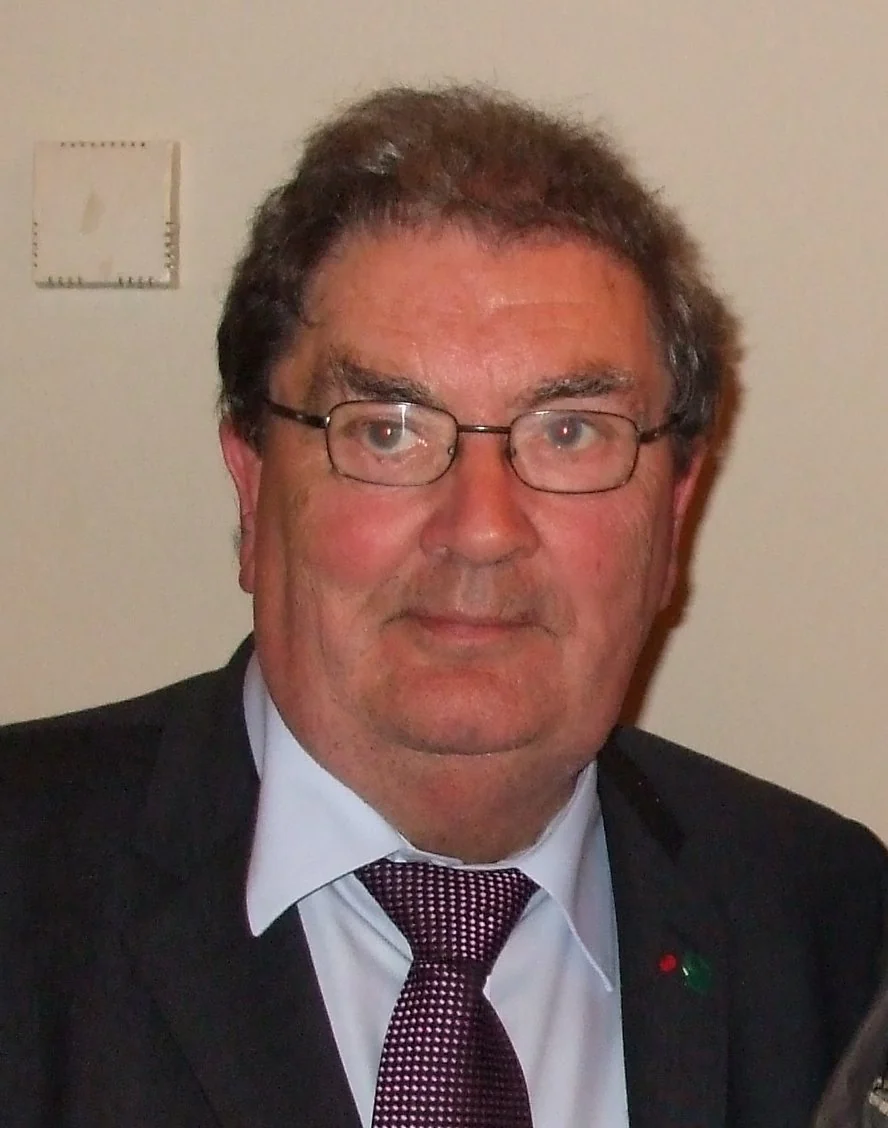
John Hume was born on 18 January 1937 in Derry, also known as Londonderry, in Northern Ireland. He studied French and history at Maynooth and became a teacher. His early activity addressed inequalities in housing, employment and credit. He helped establish Derry Credit Union in 1960 and worked on housing provision. Those projects connected political demands with institutions people could use. Pat Hume, whom he married in 1960, became an important partner in organising his public work, including his European parliamentary office. A peace-process biography needs this local foundation as well as the later negotiations.
Civil rights led into elected politics
Hume entered the Northern Ireland Parliament as an independent in 1969. The following year he helped create the Social Democratic and Labour Party, with Gerry Fitt as its first leader. Hume’s approach joined demands for equal treatment to a commitment to peaceful political change. He served as commerce minister in the power-sharing executive of 1974, which fell during a loyalist strike. Its brief existence matters: the institutions agreed in 1998 followed earlier attempts, setbacks and disagreements about how different communities could exercise power together.
Representation at home and relationships abroad
He led the SDLP from 1979 to 2001, represented Northern Ireland in the European Parliament from 1979 to 2004 and served as MP for Foyle from 1983 to 2005. These were separate offices in different institutions. Hume’s European work made postwar cooperation a political reference point and brought opportunities to work with unionist representatives on economic interests. His American relationships also mattered. In a 2005 oral-history interview, he described the roles of Edward Kennedy, Tip O’Neill, Daniel Patrick Moynihan and Hugh Carey in encouraging British–Irish cooperation and American support. The interview is Hume’s retrospective account, rather than an independent verdict on everyone’s contribution.
Agreement required a route away from violence
Hume argued that force deepened division and that constitutional change depended on agreement among people. His discussions with Sinn Féin leader Gerry Adams were controversial because dialogue involved a movement associated with the IRA’s violence. In his November 1999 SDLP conference speech, Hume recalled beginning those conversations in 1988 and defended the attempt to establish a peaceful route into politics. That speech also credited the two governments, George Mitchell and American support. It is evidence of how he explained his strategy to party members; its claims of the SDLP’s consistency should be read as political advocacy.
The 1998 settlement was a collective achievement
The Belfast, or Good Friday, Agreement was reached on 10 April 1998 after multiparty negotiations. Hume’s work helped create conditions for that settlement, but it did not make him the sole author of peace. David Trimble’s participation, other parties, the British and Irish governments and the negotiating process were essential. The Nobel Committee awarded Hume and Trimble the Peace Prize jointly in 1998 for their efforts toward a peaceful resolution. Recognition of those efforts should not imply that every participant endorsed every part of the settlement or that later implementation was free from conflict.
A political legacy with institutional limits
Hume’s 1999 address presented partnership within Northern Ireland, cooperation across the island and relations between the two governments as connected requirements. That is a more specific legacy than a general preference for harmony: political structures had to accommodate legitimate differences. He stepped down from party leadership in 2001 and left Westminster in 2005; he died on 3 August 2020. Northern Ireland’s place within the United Kingdom and Hume’s Irish nationalist political outlook belong to the account together. A birthplace, an electoral constituency and a person’s national identification are distinct kinds of information.
Quick answers
Frequently asked questions about John Hume
- Was John Hume the only person awarded the 1998 Peace Prize?
- No. He shared it equally with David Trimble.
- Did Hume support a united Ireland through force?
- He advocated peaceful change based on consent and agreement between people.
- Where was Hume born?
- Derry (Londonderry), Northern Ireland, within the United Kingdom. That geographic statement does not determine citizenship or personal national identity.
Keep exploring
Lives connected to this story
- Mary Robinson
Compare another career connecting Irish public life, rights and international institutions.
- Helen Clark
Compare a different parliamentary leadership career and its international work.
- Garret FitzGerald
Read the Irish premier who negotiated the 1985 intergovernmental agreement, alongside the SDLP’s separate political role.
- Bernadette Devlin McAliskey
Compare a different Northern Ireland civil-rights and republican-left strategy without implying political agreement.
- Albert Reynolds
Compare a Taoiseach’s distinct role in the developing peace process.
Sources and further reading
Explore the evidence
These references support the biography and offer further reading. Official records, first-person accounts and independent reporting provide different perspectives; image records document attribution and licensing.
- 1. European Parliamentary Research Service / Aidan ChristieJohn Hume: Northern Ireland’s peace-maker and committed European (June 2022)
Research-service synthesis with named author, references and institutional disclaimer. Browser challenge prevented full web extraction; original PDF acquired and extracted locally. Its photographs are not reused.
- 2. Miller Center, University of VirginiaJohn Hume oral history, interview of 29 September 2005
Interview is a first-person recollection. Timeline preview incorrectly conflates a 1960 local credit union with the Irish League; that wording is not repeated.
- 3. John Hume / CAIN, Ulster UniversitySDLP conference address, 6 November 1999
Primary political speech, preserved by CAIN. Self-assessment and retrospective claims are explicitly attributed.
- 4. Nobel Prize OutreachThe Nobel Peace Prize 1998: joint award
Joint-award summary accessible; specific Hume biography/lecture endpoints returned 403. No biography text inferred from blocked pages.
- 5. History of ParliamentJohn Hume: parliamentary and party service
Used for birth/death dates and office dates. Its broad birth-place field says UK; specific Derry location is corroborated by EPRS/Miller.