
The short answer
The Belfast or Good Friday Agreement of 10 April 1998 joined a constitutional principle to a set of political institutions. It did not require unionists and nationalists to adopt the same national identity. Instead, it established ways to share government, cooperate across borders and determine any future change in Northern Ireland’s status through consent.
Three relationships
What did each strand organise?
The strands operate across different political relationships and belong to one connected settlement.
| Strand | Relationship | Principal institutions |
|---|---|---|
| One | Government within Northern Ireland | Northern Ireland Assembly and power-sharing Executive |
| Two | Northern Ireland–Ireland cooperation | North/South Ministerial Council and implementation bodies |
| Three | East–West cooperation | British–Irish Council and British–Irish Intergovernmental Conference |
Chronology
A timeline of the turning points
Multi-party talks entered a new phase
The process developed under independent chairs and earlier British and Irish administrations.
The agreement was reached
The multi-party settlement and British–Irish treaty addressed institutions, constitutional questions and rights.
Voters endorsed the settlement
Concurrent referendums in Northern Ireland and Ireland supplied democratic approval through different questions.
The settlement entered into force
Implementation and the transfer of powers followed further legislation and negotiation.
Why did the agreement need three strands?
The conflict concerned several relationships at once. Government within Northern Ireland could not alone settle the relationship between the two parts of Ireland or that between the British and Irish states. The three-stranded approach acknowledged these different political scales. It allowed participants to negotiate arrangements together without pretending that a single assembly could carry every responsibility.
Strand One provided an Assembly and power-sharing Executive. Strand Two supplied North–South institutions, including a ministerial council and implementation bodies. Strand Three created East–West institutions, including the British–Irish Council and Intergovernmental Conference. Each addressed a different relationship; all formed part of the settlement. Their names describe functions, not successive stages completed in chronological order.
Consent concerned constitutional status; identity could remain plural
The consent principle meant that Northern Ireland’s constitutional position would not change without majority support there. It accommodated the legitimacy of competing constitutional aspirations while requiring change to proceed through peaceful, democratic means. Agreement on that procedure did not require agreement on whether the eventual preferred outcome should be the Union or a united Ireland.
The settlement also recognised the birthright of the people of Northern Ireland to identify as British, Irish or both, and to hold both citizenships. Constitutional status, personal identity and participation in devolved institutions are related but distinct questions. A person could retain an Irish identity while Northern Ireland remained within the UK; shared government was intended to operate amid continuing differences of allegiance.
The negotiation had many authors and a longer history
Tony Blair and Bertie Ahern played major roles in the final negotiations, but they inherited a process shaped by earlier governments and Northern Ireland’s political leaders. The National Archives reproduces contemporary acknowledgements of this groundwork. Independent chairs George Mitchell, Harri Holkeri and John de Chastelain helped sustain the talks, while American support under Bill Clinton added international involvement.
Mo Mowlam’s contemporary statement credited the party leaders as well as the prime ministers and chairs. John Hume of the SDLP and David Trimble of the UUP were significant Northern Ireland participants. Support was not universal: the DUP opposed the agreement. Commitments needed backing within the communities and organisations represented at the table. Political bargaining, officials’ work and decisions within parties supplied authority that could not be replaced by a private understanding between two heads of government.
Signing, voter approval and implementation were separate steps
The agreement comprises two connected texts: the Multi-Party Agreement and the British–Irish Agreement, an international treaty between the governments. This structure connected arrangements for political participation with obligations between states. Calling it simply a personal promise by Blair or a single piece of Westminster legislation misses the different sources of its authority.
The referendums of 22 May 1998 approved the settlement in Northern Ireland and constitutional change in Ireland. Approval was followed by legislation and further practical negotiation before the settlement entered into force on 2 December 1999. The intervening period matters: voters could endorse the framework before all questions of operating institutions and implementing commitments had been resolved. A signing ceremony did not itself transfer every power.
A framework for peace still required difficult work
Institutional design was only one part of the agreement. Rights, decommissioning, policing, security and prisoners also appeared within the settlement. These commitments affected people with different experiences of violence and different fears about the future. An institutional diagram cannot capture those experiences, but it helps explain why implementation involved more than opening a debating chamber.
The agreement’s historical importance lies in making peaceful political arrangements possible without demanding the immediate resolution of every constitutional disagreement. Continuing disputes about institutions or obligations should therefore be examined against the commitments and relationships actually established. They do not justify rewriting the 1998 document as either one leader’s achievement or a promise that political conflict would cease altogether.
Continue the chronology
Related history guides
Biography context
Explore United Kingdom through connected lives
Connected biographies
Read the participants’ wider political lives

1953–
Tony Blair
British Labour politician and prime ministerTony Blair served as UK prime minister from 1997 to 2007 and led Labour to three general-election victories. His governments combined constitutional and public-service reforms with an interventionist foreign policy whose most disputed decision was participation in the 2003 invasion of Iraq.Read biography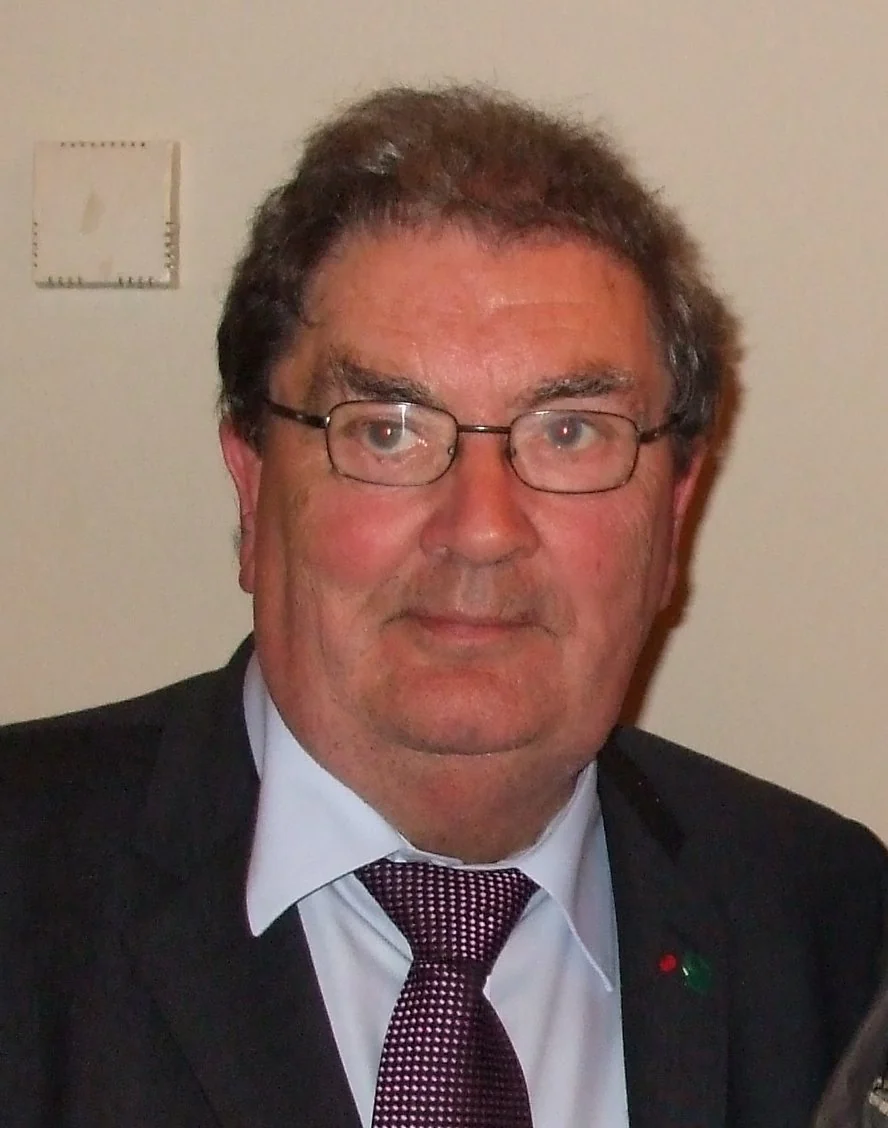
1937–2020
John Hume
Civil rights campaigner, SDLP leader and peace negotiatorJohn Hume connected community development in Derry with a sustained argument for political agreement in Northern Ireland. A co-founder and later leader of the SDLP, he shared the 1998 Nobel Peace Prize with David Trimble.Read biographyQuick answers
Common questions
- Are the Belfast Agreement and Good Friday Agreement the same settlement?
- Yes. Both names refer to the settlement reached on 10 April 1998, comprising the Multi-Party Agreement and the British–Irish Agreement.
- Did the agreement require everyone to identify as British?
- No. It recognised British, Irish or dual identity and the relevant birthright to hold both citizenships.
- Did the UK and Ireland simply impose the agreement?
- The governments were central, but the process involved Northern Ireland’s parties, independent chairs and later voter approval in concurrent referendums.
- Did it come into force on the day it was signed?
- No. Agreement on 10 April and referendums on 22 May 1998 preceded entry into force on 2 December 1999.
Primary and institutional sources
How this history was checked
Read the Commons Library and Northern Ireland Office summaries alongside the National Archives’ selected contemporary transcripts. This is not a claim to have reviewed the complete negotiating archive. The 2003 photograph is contextual. This article was reviewed on 23 October 2026.
- House of Commons Library / David Torrance and John CurtisThe Belfast/Good Friday Agreement: 25 years on
- House of Commons LibraryThe Belfast/Good Friday Agreement: party participation and positions, printed pages 10–11
- House of Lords LibraryBelfast Agreement: 20 Year Anniversary, passage on Hume and Trimble
- Northern Ireland OfficeThe Belfast Agreement: principles and institutions
- The National ArchivesWhat led to the Belfast Agreement? Selected documents and transcripts
- The National ArchivesThe Belfast Agreement: selected documents and Ahern’s acknowledgements
- US National Archives / Wikimedia CommonsBlair and Bush in the Cross Hall: exact photograph and public-domain record
- Creative CommonsPublic Domain Mark 1.0