In this biography
Quick facts
- Born
- 5 June 1939
- Birthplace
- High River, Alberta
- Country
- Canada
- Nationality
- Canadian
- Known for
- Canada’s 1979 minority government, external affairs and the Charlottetown negotiations
- Education
- University of Alberta, BA in history 1960; MA in political science 1973
- Prime minister
- 1979–1980
- External affairs
- Secretary of state, 1984–1991
- Constitutional affairs
- Minister responsible, 1991–1993
Why this life matters
Clark’s career shows how parliamentary defeat and the loss of a party leadership could precede influential service in another prime minister’s cabinet.
Timeline
Key moments
Alberta roots and political training
Born in High River; studies at Alberta, works for Conservative politicians and enters Parliament in 1972.
Party leader
Wins the Progressive Conservative leadership at age 36.
A minority premiership
Takes office on 4 June 1979; loses Commons confidence in December and the subsequent February election.
Rivalry followed by cabinet service
Loses the leadership to Brian Mulroney, then serves as secretary of state for external affairs.
Constitutional negotiations
Takes responsibility for constitutional affairs and helps negotiate the Charlottetown Accord.
A final political return
Regains the party leadership in 1998 and leaves Parliament in 2004.
Alberta journalism and party work shaped his beginnings
Charles Joseph Clark was born in High River, Alberta, on 5 June 1939. He grew up around a family newspaper and combined an interest in journalism with political organizing. At the University of Alberta he edited The Gateway. His degrees were a BA in history in 1960 and an MA in political science in 1973; periods of law study did not produce a law degree.
His early political experience came through student Conservative organizations and work for senior party figures. He lectured at Alberta and became Robert Stanfield’s executive assistant after Stanfield took the federal leadership. These roles gave Clark practical experience in speeches, organization and opposition politics before he sought a parliamentary seat.
An unexpected leadership victory led to a minority government
Clark entered the Commons for Rocky Mountain in 1972. Four years later, at 36, he won the Progressive Conservative leadership. His limited public recognition prompted the enduring newspaper nickname “Joe Who?” Yet the victory followed years of work inside the party rather than a sudden entry into politics.
The Conservatives won 136 of 282 seats in the election of 22 May 1979. Clark was sworn in on 4 June, the day before his fortieth birthday, becoming Canada’s youngest prime minister. The seat total gave him a minority: winning more constituencies than another party did not give his government a reliable Commons majority.
The brief premiership combined humanitarian decisions and political defeat
The government expanded Canada’s response to refugees from Southeast Asia. Operation MAGNET II supported their transport and reception, alongside civilian immigration authorities. The policy sought to admit upwards of 50,000 refugees by the end of 1980, so its operational history extended beyond Clark’s time in office. His government also supported the effort to shelter and evacuate six American diplomats from Iran.
Its parliamentary position proved fragile. On 13 December 1979 the Commons adopted a budget subamendment by 139 votes to 133, defeating the government on confidence. The Liberals won the ensuing election on 18 February 1980. Clark remained prime minister during the transition; the defeat in the House, the election and Pierre Trudeau’s return to office on 3 March were separate events.
External affairs became a second major political career
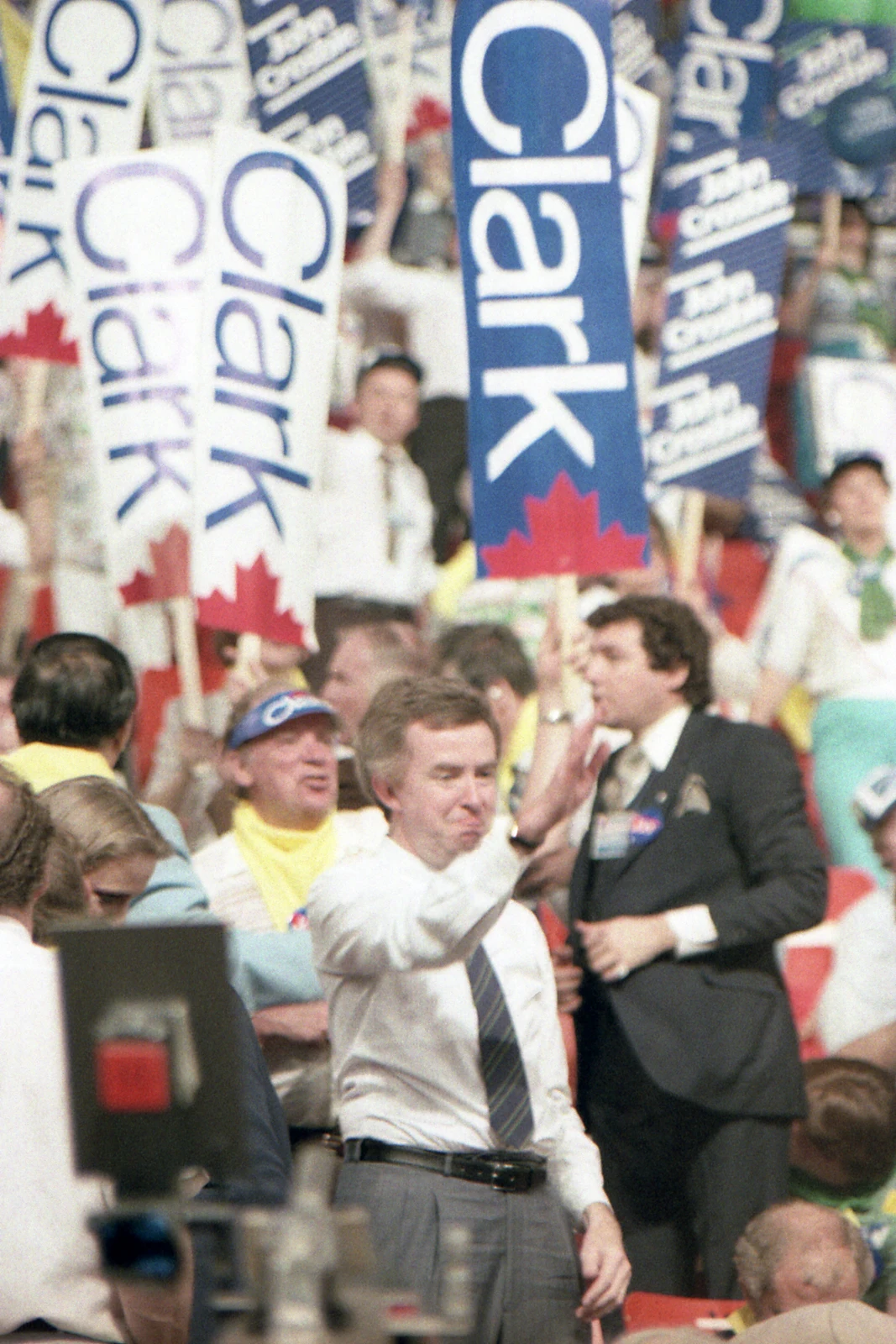
Clark stayed in politics after the election loss. In 1983 he sought a new leadership mandate but lost to Brian Mulroney. Rather than leave the caucus, he served under his former rival. After the Conservatives won government in 1984, Mulroney appointed him secretary of state for external affairs, a portfolio he held until 1991.
His work included Canadian opposition to apartheid, famine relief and wider engagement with Latin America. Canada joined the Organization of American States during this period. The partnership required cabinet cooperation despite earlier competition for the same leadership. It also enlarged Clark’s reputation beyond the parliamentary miscalculation that had ended his government.
Constitutional agreement did not guarantee public acceptance
In April 1991 Clark became president of the Privy Council and minister responsible for constitutional affairs. His task included developing Ottawa’s position and organizing consultations and negotiations after the failure of Meech Lake. The process sought accommodation among governments and Indigenous representatives during a period of intense disagreement about the federation.
He helped negotiate the Charlottetown Accord in 1992, but voters rejected the package in the subsequent referendum. Agreement among political leaders had not secured approval from the electorate. Clark did not stand in the 1993 federal election, ending this phase of his ministerial and parliamentary service.
A return to leadership preceded work beyond Parliament
Clark returned as Progressive Conservative leader in 1998, taking on a party weakened by losses and competition on the right. Its twelve seats in the 2000 election fell far short of restoring its former national strength. He opposed its eventual merger with the Canadian Alliance and left the Commons in 2004.
Teaching, consulting and international governance work also formed part of his later career. McGill’s historical visitor biography records his involvement in its teaching and research programs and in governance initiatives abroad. These activities continued his interest in public institutions outside elected office. His record therefore encompasses several kinds of leadership, each with different powers, constraints and results.
Quick answers
Frequently asked questions about Joe Clark
- How old was Joe Clark when he became prime minister?
- He was 39 when sworn in on 4 June 1979, one day before his fortieth birthday.
- Did the December 1979 vote immediately make Trudeau prime minister?
- No. An election followed in February 1980. Clark’s government remained in office through the transition, and Trudeau’s next ministry began on 3 March.
- Did Clark serve in Mulroney’s cabinet after losing the leadership?
- Yes. He was secretary of state for external affairs from 1984 to 1991 and then minister responsible for constitutional affairs.
- Was the Charlottetown Accord adopted?
- No. Negotiators reached agreement, but voters rejected the constitutional package in the 1992 referendum.
Keep exploring
Lives connected to this story
- Pierre Trudeau
Follow the Liberal prime minister whom Clark displaced in 1979 and who returned after the 1980 election.
- Brian Mulroney
Read the career of Clark’s leadership rival and later cabinet partner.
- Bob Rae
Meet the NDP parliamentarian who moved the December 1979 budget subamendment.
Sources and further reading
Explore the evidence
These references support the biography and offer further reading. Official records, first-person accounts and independent reporting provide different perspectives; image records document attribution and licensing.
- 1. Library and Archives CanadaJoe Clark fonds: biographical and administrative history
The fonds biography verifies major offices. Its 1979 constituency wording conflicts with the contemporary journal, which identifies Clark with Yellowhead; that disputed riding sequence is omitted.
- 2. Government of AlbertaAlberta Order of Excellence: Charles Joseph Clark, historical member biography
Used for education and early employment. Its historical text gives imprecise election-to-office dates and ages; the parliamentary chronology controls those fields here.
- 3. Canadian Museum of HistoryXavier Gélinas: Portrait of a Prime Minister, Joe Clark, 5 July 2024
- 4. University of Nebraska–Lincoln, Encyclopedia of the Great PlainsJohn C. Courtney: Clark, Joe
- 5. McGill UniversityMcGill Institute for the Study of Canada: past visitor Joe Clark
A historical past-visitor biography, not evidence that its business positions or university appointments are current in 2026.
- 6. Prime Minister of Canada26 June 2026 remarks acknowledging former prime minister Joe Clark’s support for restoring 24 Sussex
- 7. Department of National DefenceOperation MAGNET II: refugee transport and reception, 1979–1981
- 8. Treasury Board of Canada SecretariatArchived Unity Reserve: support for the minister for constitutional affairs
- 9. Elections CanadaHistory of Election Outcomes: 1979, 1980, 1984 and 1988 entries
- 10. House of Commons / Library of ParliamentJournals, 13 December 1979, pages 345–346: budget subamendment and Division No. 8
- 11. CPAC / Library of ParliamentPrime Ministers of Canada: parliamentary chronology
- 12. Wikimedia Commons / Alasdair RobertsJoe Clark PC LeadershipConvention 1983: photographer’s full original and CC BY 3.0 grant