In this biography
Quick facts
- Born
- 31 October 1968
- Birthplace
- Houaphanh Province, Laos
- Country
- Laos
- Nationality
- Lao
- Known for
- Multilateral diplomacy and the October 2026 appointment as Lao prime minister
- Born
- 31 October 1968, Houaphanh Province
- Monash qualification
- Master of International Studies and Development, 1997
- UN ambassador
- 2012–2013
- Foreign minister
- 2016–November 2024
- Deputy prime minister
- Appointed June 2022; later transferred to the Prime Minister’s Office
- Prime minister
- National Assembly approval, 5 October 2026
Why this life matters
His progression connects multilateral diplomacy with national administration, making the dates and responsibilities of his foreign-ministry, deputy-premier and prime-minister roles important to distinguish.
Timeline
Key moments
Birth
Born in Houaphanh Province on 31 October.
Diplomatic desks
Works on Australia and then United States affairs.
Monash qualification
Completes the international studies and development master’s.
United Nations ambassador
Returns to the UN mission in a senior representative role.
Foreign minister
Moves from vice-minister service to the ministry’s leadership.
Deputy premiership
Assembly approves the additional role in June.
Portfolio change
Leaves foreign affairs in November while retaining the deputy premiership.
Prime minister
Assembly approves him on 5 October; Sonexay Siphandone becomes Assembly president.
Education and early diplomatic assignments
Saleumxay Kommasith was born in Houaphanh Province on 31 October 1968. His training included international relations in Russia and a Master of International Studies and Development at Monash University in 1997. The Australian qualification forms one part of an education directed toward diplomacy and international affairs.
His early foreign-ministry work moved between geographic desks: Australia from 1992 to 1994 and the United States from 1994 to 1996. These assignments preceded the more visible ministerial career and developed his experience of bilateral relations. Later work would place him within multilateral institutions as well as exchanges between individual governments.
United Nations and multilateral diplomacy
Kommasith served as second secretary at Laos’s United Nations mission from 2000 to 2003. He later directed the ministry’s international-organisations department from 2007 to 2011 and returned to the UN as ambassador in 2012–2013. Those were distinct stages of responsibility, not one continuous ambassadorial posting.
He became vice foreign minister for multilateral affairs in 2014 and foreign minister in 2016. The progression connects mission work, departmental administration and political leadership of the ministry. It also helps explain why international organisations and regional cooperation remained prominent subjects when his responsibilities expanded beyond foreign affairs.
Sources for this section: [1]
Foreign minister and deputy prime minister
In June 2022, the National Assembly approved Kommasith as a deputy prime minister while he retained the foreign-affairs portfolio. The two offices were concurrent rather than successive. He therefore combined diplomatic responsibilities with a place in the government’s broader leadership.
A November 2024 reshuffle changed that arrangement. Following approval on 15 November and an announcement on 18 November, Thongsavanh Phomvihane became foreign minister. Kommasith retained the deputy premiership but transferred to the Prime Minister’s Office. Leaving the ministry did not mean leaving government, and the change should not be described as his appointment to the premiership.
Prime minister from October 2026
On 5 October 2026, the National Assembly approved Kommasith as prime minister with the support of all 158 members present. Sonexay Siphandone moved to the Assembly presidency. The decision was a parliamentary appointment, not a direct popular election to the presidency.
At a 16 October meeting with ASEAN ambassadors, Kommasith described implementation of the 2026–2030 development plan, economic self-reliance and graduation from least-developed-country status as priorities. The account, published on 19 October, provides a dated view of his early agenda. These were commitments for the new administration, not evidence that the intended economic outcomes had already been achieved.
Quick answers
Frequently asked questions about Saleumxay Kommasith
- What is Saleumxay Kommasith’s current office?
- He became prime minister of Laos following National Assembly approval on 5 October 2026.
- When was Saleumxay Kommasith foreign minister?
- He became foreign minister in 2016 and left that portfolio in the November 2024 reshuffle.
- What did Saleumxay Kommasith study at Monash?
- Monash records a Master of International Studies and Development in 1997.
- Who succeeded Saleumxay Kommasith as foreign minister?
- Thongsavanh Phomvihane took over the foreign-affairs portfolio in November 2024.
Keep exploring
Lives connected to this story
- Alounkeo Kittikhoun
Explore another Lao diplomat’s route from United Nations representation to the ASEAN Chair’s Myanmar envoy work in 2024.
- Sonexay Siphandone
Read about the predecessor who moved from the premiership to the National Assembly presidency in October 2026.
- Somsavat Lengsavad
Explore an earlier Lao foreign minister’s distinct diplomatic and economic-policy career.
Sources and further reading
Explore the evidence
These references support the biography and offer further reading. Official records, first-person accounts and independent reporting provide different perspectives; image records document attribution and licensing.
- 1. Republic of Korea Prime Minister’s Office · September 2022Official biography: birth, qualifications and diplomatic career
The official biography provides the exact birth date and province. Its broad Russian-institution wording is not expanded into an unverified university name or doctorate.
- 2. Monash University · alumni archive1997 international studies and development qualification
- 3. Vientiane Times · June 2022Assembly approval of the deputy-premier appointment
- 4. Vientiane Times · November 2024Foreign-ministry succession and retained deputy premiership
15 November approval and 18 November announcement are different dates. The foreign-ministry transfer did not end his deputy-premier service.
- 5. KPL · 5 October 2026Assembly approval as prime minister and Sonexay’s new office
All 158 members present approved the parliamentary appointment. This is not a claim of a direct national popular vote or a presidential office.
- 6. KPL · 19 October 202616 October ASEAN meeting and the new administration’s stated priorities
The meeting occurred on 16 October; publication followed on 19 October 2026. Development goals are stated priorities, not independently demonstrated outcomes.
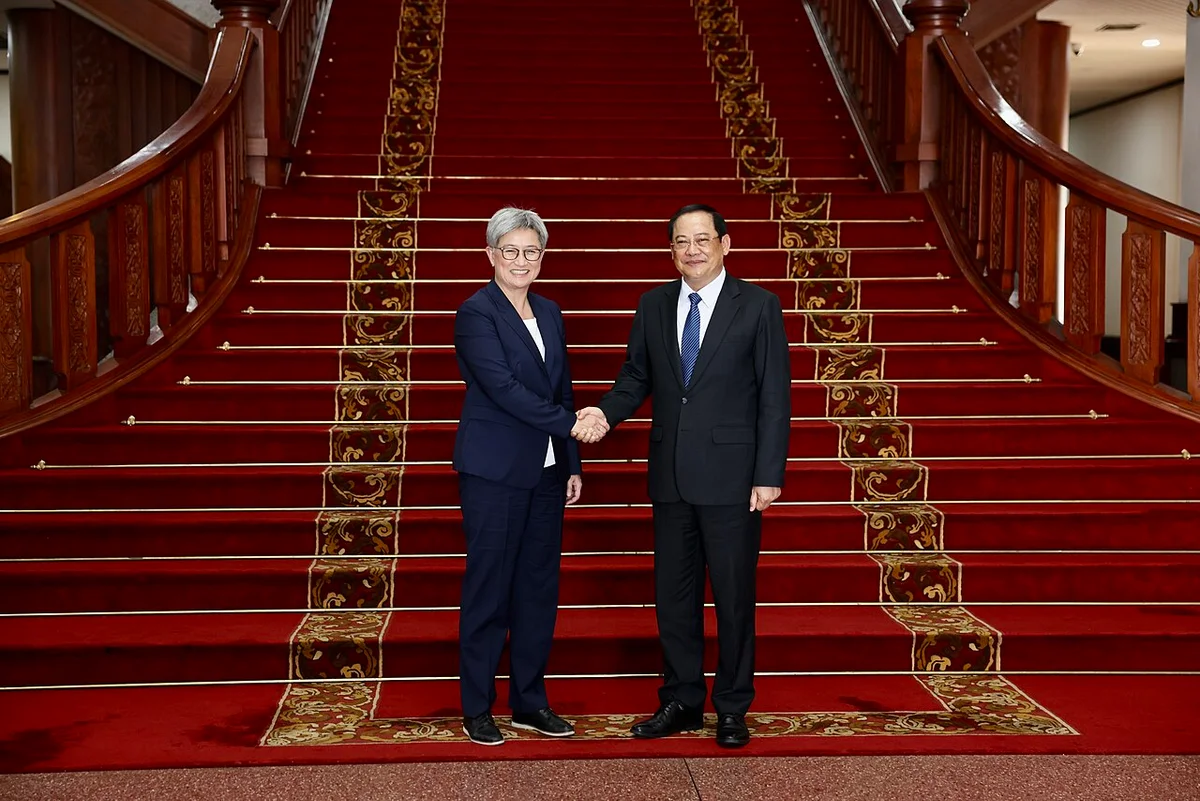
- 7. Wikimedia Commons · image provenanceSaleumxay Kommasith photograph, creator and reuse terms
The complete 3024 × 2126 ministry photograph is used instead of the 501px portrait crop. Original Flickr names both ministers and photographer; the EXIF Dragan TATIC copyright is consistent with the explicitly licensed institutional publication. The separate 2022 Commons portrait has conflicting embedded identity metadata and is not used.