In this biography
Quick facts
- Born
- 30 April 1916
- Died
- 24 February 2001
- Birthplace
- Petoskey, Michigan, United States
- Country
- United States
- Nationality
- Not independently established
- Known for
- Switching-circuit analysis, the 1948 communication theory and experimental machines
- Master’s and doctorate
- MIT, 1940
- Switching paper
- Published 1938
- Communication paper
- Two parts, 1948
- National Medal of Science
- 1966 award; presented 6 February 1967
Why this life matters
His influence lies in precise models that separated the information produced by a source from the physical channel carrying it, while preserving the importance of actual engineering assumptions.
Timeline
Key moments
Michigan degrees
Graduated in mathematics and electrical engineering.
Switching analysis published
Used symbolic methods to analyse and synthesise relay networks.
MIT qualifications
Received the master’s degree and doctorate.
Bell Laboratories
Joined a research environment concerned with communications and security.
Communication theory
Published the two-part paper.
Dartmouth proposal
Coauthored a proposal with McCarthy, Minsky and Rochester for the following summer’s research.
Donner Professor
Held the MIT professorship before becoming emeritus.
Death
Died in Medford, Massachusetts, on 24 February.
A practical interest in machines met formal education
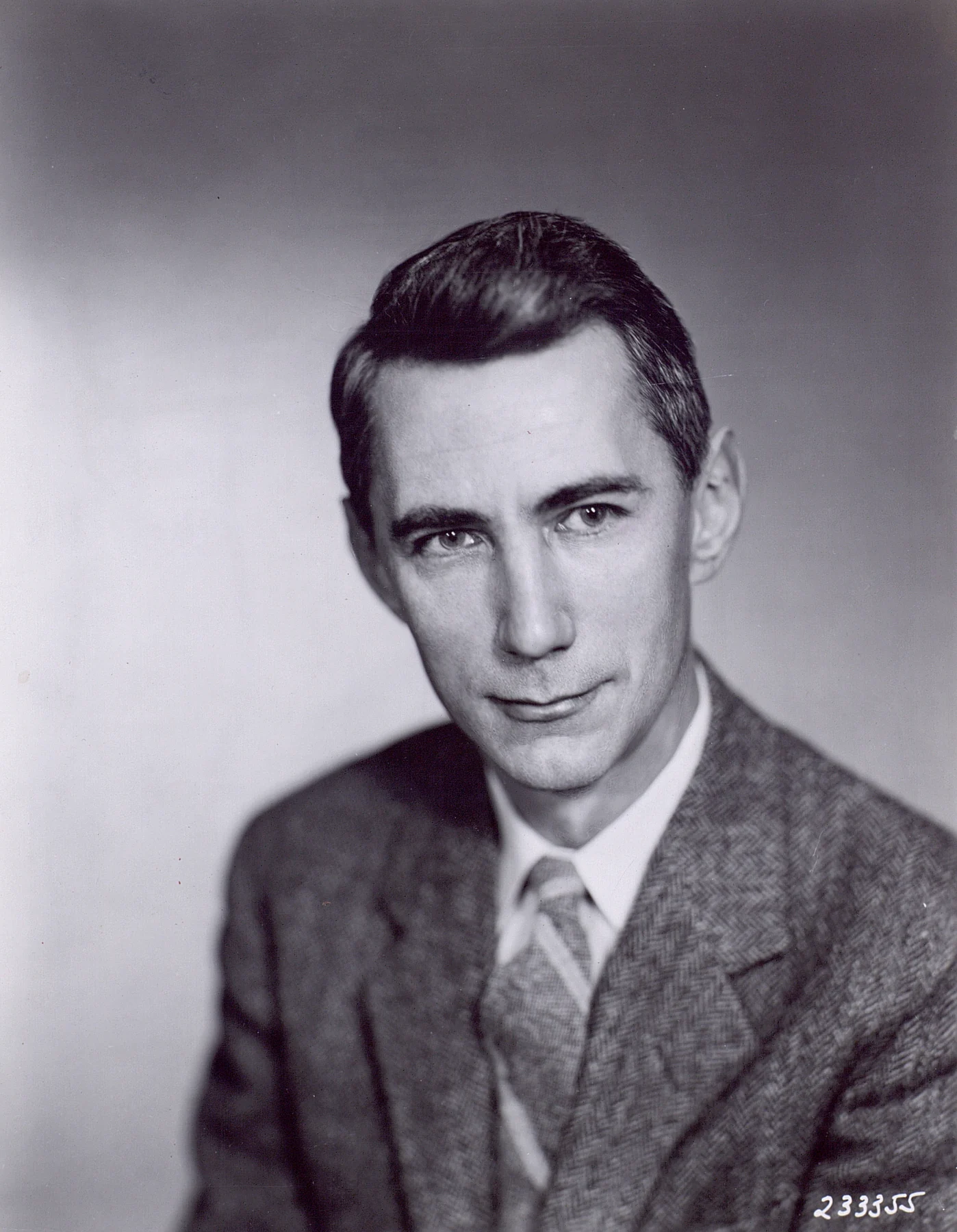
Claude Elwood Shannon was born in Petoskey on 30 April 1916 and grew up in Gaylord, Michigan. Radio and mechanical devices interested him before they became research subjects. He graduated from the University of Michigan in 1936 with degrees in mathematics and electrical engineering. Moving to MIT brought those subjects together in a working environment: as a research assistant he helped with Vannevar Bush’s differential analyzer, an analog machine built to solve differential equations. Understanding such an apparatus required attention to physical mechanisms as well as mathematical operations.
Switches became objects of algebraic reasoning
The relay work published in 1938 asked how a desired pattern of open and closed connections could be realised efficiently. Shannon represented networks algebraically, transformed the expressions and translated them back into circuits. His paper credited encouragement and criticism from Frank L. Hitchcock, Bush and Samuel H. Caldwell. It also identified its connection to the algebraic tradition originating with George Boole. The achievement was a powerful method of analysis and synthesis; it did not mean that Shannon had personally invented every circuit later described with Boolean expressions.
Sources for this section: [3]
Graduate qualifications and Bell Labs created different settings
MIT awarded him both an electrical-engineering master’s degree and a mathematics doctorate in 1940. The date of those degrees should be distinguished from the earlier published switching paper. After a fellowship at the Institute for Advanced Study, he joined Bell Laboratories in 1941. Wartime work involved communication security, followed by publication of Communication Theory of Secrecy Systems in 1949. His Bell association continued after he returned to academic work. Institutional employment, a classified research project and a later public paper were separate stages through which an idea could develop and circulate.
The 1948 paper defined an engineering problem
A Mathematical Theory of Communication appeared in two parts in 1948. It began with the problem of reproducing a selected message elsewhere and developed models for sources, transmitters, channels, receivers and destinations. Shannon explicitly built on Nyquist and Hartley and credited John W. Tukey for the word bit. Entropy described uncertainty under a probability model; channel capacity concerned a transmission limit. Setting semantic interpretation aside for this engineering question did not establish that human meaning was unimportant. The distinction made it possible to compare different messages through a common mathematical framework.
Coding connected a statistical model with a physical constraint
For a source with unequal symbol probabilities, assigning shorter representations to more probable events can lower the average message length. Shannon’s paper related efficient coding to entropy while also addressing noise and continuous signals. These results were limits and existence arguments under specified models, not a ready-made implementation for every communications system. Practical codes, equipment, protocols and networks required further work by many people. His lasting contribution was to make such work answerable to quantitative questions about rate, uncertainty and error rather than to a single preferred mechanical design.
Sources for this section: [4]
Research also took the form of playful apparatus
At Bell Labs he met Mary Elizabeth “Betty” Moore, a numerical analyst, and they married in 1949. The MIT account describes their later move to Winchester, his 1956 visiting appointment and the Donner professorship from 1958 to 1978. It also remembers juggling, unicycling and constructed devices, including the maze-running electromechanical mouse Theseus. Such apparatus let a researcher explore mechanisms, memory and behaviour on a manageable scale. A mouse finding a route was an experiment with a particular arrangement, rather than evidence that one small machine had reproduced every aspect of animal learning.
Sources for this section: [1]
Machine learning also became a collective research question
Shannon was one of four authors of the 31 August 1955 proposal for a summer research project at Dartmouth, alongside John McCarthy, Marvin Minsky and Nathaniel Rochester. His attached statement proposed studying reliable computing with unreliable elements and the use of information concepts in computing and brain models. The document sought support for work in summer 1956; it did not announce that those ambitious problems were already solved. Reading the proposal keeps his contribution concrete and collaborative, instead of turning a later label such as artificial intelligence into a claim that he alone founded an entire field.
Sources for this section: [7]
Recognition followed a continuing research programme
Shannon became MIT professor emeritus in 1978 and died in Medford on 24 February 2001. NSF identifies his National Medal of Science with the 1966 award year and a White House presentation on 6 February 1967. The IEEE community later preserved his papers and honoured the field through the Shannon Award. His career spans devices, proofs and institutional collaboration. Reading the switching paper beside the communication paper reveals a consistent habit: choose a tractable representation, state what its symbols mean and investigate what can be established within it.
Quick answers
Frequently asked questions about Claude Shannon
- Who was Claude Shannon?
- Claude Shannon was a mathematician, electrical engineer and information theorist. His influence lies in precise models that separated the information produced by a source from the physical channel carrying it, while preserving the importance of actual engineering assumptions.
- What is Claude Shannon best known for?
- Claude Shannon is best known for switching-circuit analysis, the 1948 communication theory and experimental machines.
- When and where was Claude Shannon born?
- Claude Shannon was born on 30 April 1916 in Petoskey, Michigan, United States.
- When did Claude Shannon die?
- Claude Shannon died on 24 February 2001.
Keep exploring
Lives connected to this story
- George Boole
Read the earlier logician whose algebraic tradition Shannon explicitly connected to switching circuits.
- Norbert Wiener
Explore the separate mathematical and feedback research acknowledged in Shannon’s communication paper.
- John McCarthy
Read a coauthor of the 1955 Dartmouth proposal and his separate work on programming and AI.
- Alan Turing
Compare computability and its limits with Shannon’s separate theories of switching and information.
Sources and further reading
Explore the evidence
These references support the biography and offer further reading. Official records, first-person accounts and independent reporting provide different perspectives; image records document attribution and licensing.
- 1. MIT NewsClaude Shannon: MIT obituary, 27 February 2001
Read education, Bell association, family, MIT appointments and death. Its popular summary of information as an actual message’s count of ones and zeros is not repeated as a general entropy definition; the original paper supplies the technical account.
- 2. IEEE Information Theory SocietyClaude E. Shannon: biography and research legacy
Read career and research outline; use original paper for circuit conventions and the institutional degree record for department and award date.
- 3. Claude E. Shannon; MIT course copyA Symbolic Analysis of Relay and Switching Circuits, 1938, reproduced paper
Acquired and viewed the reproduced 27-page article; read indexed original text, introduction, hindrance convention, algebra, propositions table and synthesis passages. It is a reproduction of the published 1938 paper, not the full separately catalogued master’s thesis.
- 4. Claude E. Shannon; California State University, Long Beach copyA Mathematical Theory of Communication, corrected reprint of the July and October 1948 paper
Acquired the 55-page corrected reprint. Read introduction, source model, entropy, noiseless coding theorem and construction passages; the original diagrams are not reused.
- 5. Nokia Bell LabsA Mathematical Theory of Communication: original publication record
Read the publication date and original introductory text on semantics and choice.
- 6. U.S. National Science FoundationClaude E. Shannon: 1966 National Medal of Science
Read award year 1966 and presentation 6 February 1967.
- 7. John McCarthy, Marvin Minsky, Nathaniel Rochester and Claude Shannon; Stanford-hosted author copyA Proposal for the Dartmouth Summer Research Project on Artificial Intelligence, 31 August 1955
Reused the previously reviewed proposal and re-read its opening, named affiliations and Shannon’s proposed research. The appended 1996 note distinguishes the interested-persons list from verified workshop attendance. Proposed activities are not treated as completed results.