In this biography
Quick facts
- Born
- 2 November 1815
- Died
- 8 December 1864
- Birthplace
- Lincoln, England
- Country
- Ireland
- Nationality
- Not independently established
- Known for
- The Mathematical Analysis of Logic, The Laws of Thought and mathematics teaching in Cork
- Academic appointment
- Queen’s College Cork, 1849–1864
- Logical books
- 1847 and 1854
- Royal Medal
- 1844
- Other major books
- Differential equations, 1859; finite differences, 1860
Why this life matters
His work made logical relations susceptible to systematic symbolic calculation, providing resources that later researchers transformed for switching circuits and digital design.
Timeline
Key moments
Lincoln childhood
Born on 2 November.
Royal Medal
Recognised for work in mathematical analysis.
First logical treatise
Published The Mathematical Analysis of Logic.
Cork appointment
Became the college’s first mathematics professor.
The Laws of Thought
Published the larger inquiry into logic and probability.
Death
Died in Cork on 8 December.
Teaching helped sustain a self-directed education
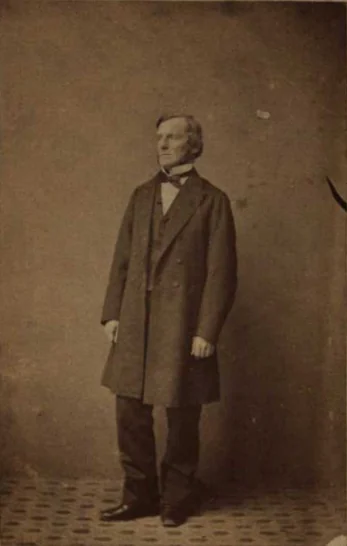
George Boole was born in Lincoln on 2 November 1815. His father John, a shoemaker with interests in scientific instruments, encouraged his learning. Family finances limited conventional educational opportunities, and George began earning through teaching while still young. He worked in schools before running establishments of his own in and around Lincoln. Mathematics developed alongside that demanding occupation: books, correspondence and local intellectual contacts supplied opportunities that did not come through a university degree. His later professorship therefore followed an established record of independent study and publication.
Analysis established his reputation before logical algebra
Boole’s early mathematical work concerned transformations, differential equations and the symbolic manipulation of operators. His 1844 paper On a General Method in Analysis received the Royal Society’s Royal Medal. This matters because his route into logic did not begin by designing an electrical machine. He was investigating how formal rules could organise mathematical operations. Contacts with established mathematicians, including Augustus De Morgan, encouraged that work and provided references when a new academic appointment became possible. His research career included sustained mathematical analysis as well as the logical work for which he is now most widely known.
Cork provided an institutional home
In 1849 he became the first professor of mathematics at Queen’s College Cork, which opened for teaching that November. He remained there until his death. The college’s records place him in a new institution serving several faculties and professional schools; the university’s account describes daily teaching to arts and engineering students in 1863–1864. A regular salary changed the conditions under which he researched, without removing teaching responsibilities. Later honorary degrees from Dublin and Oxford recognised his work; they should not be presented as the undergraduate or doctoral training that qualified him for his original appointment.
Two logical books belonged to a developing project
The Mathematical Analysis of Logic appeared in 1847, followed by An Investigation of the Laws of Thought in 1854. In the later book’s preface, Boole explained that it extended his earlier inquiry with more general methods and a wider range of applications. He also acknowledged George Stephens Dickson’s assistance with revision. In the chapters on signs, symbolic selection could be repeated without changing its result, giving a rule such as x² = x. The book then connected logical operations with questions of probability. Its ambitions extended beyond a modern introductory table of AND and OR gates.
The historical algebra needs its own interpretation
Boole used symbols for classes and operations, with restrictions that differ from some later conventions. For example, his discussion of addition assumed distinct classes in the relevant context. Replacing every plus sign with today’s unrestricted inclusive OR would obscure that distinction. His project helped establish a tradition in which reasoning could be investigated through formal transformations, but later logicians revised and generalised the system. Reading his own definitions gives a more accurate account than imagining that a nineteenth-century book already contained the entire modern vocabulary or physical architecture of a digital computer.
Sources for this section: [4]
Later engineering made one route from his work visible
Boole died in Cork on 8 December 1864 after a lung illness. His books and papers remained available to later mathematicians and logicians. Shannon’s 1938 switching paper explicitly named the Boolean tradition when explaining the relation between symbolic logic and relay networks. That is a documented later application, rather than a meeting or collaboration between two men separated by generations. Boole’s significance includes that afterlife, but also the original problem he set himself: how to represent reasoning with symbols, establish their laws and test what their manipulation could justify.
Quick answers
Frequently asked questions about George Boole
- Who was George Boole?
- George Boole was a mathematician, teacher and algebraic logician. His work made logical relations susceptible to systematic symbolic calculation, providing resources that later researchers transformed for switching circuits and digital design.
- What is George Boole best known for?
- George Boole is best known for the Mathematical Analysis of Logic, The Laws of Thought and mathematics teaching in Cork.
- When and where was George Boole born?
- George Boole was born on 2 November 1815 in Lincoln, England.
- When did George Boole die?
- George Boole died on 8 December 1864.
Keep exploring
Lives connected to this story
- Claude Shannon
Follow the later application of symbolic logic to switching networks, keeping the two careers and their conventions distinct.
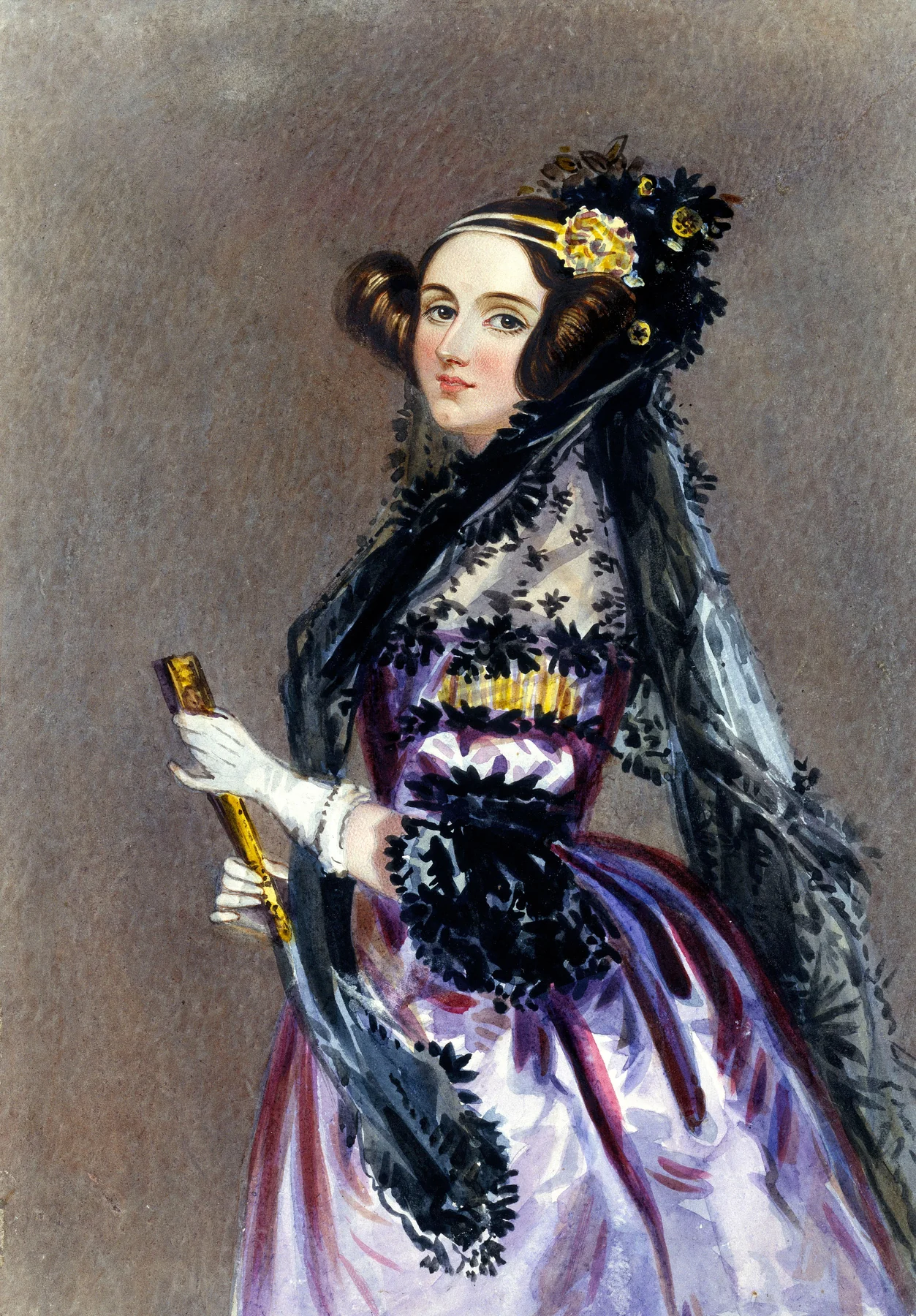
- Ada Lovelace
Compare another nineteenth-century mathematical writer’s explanation of symbols and machine operations.
Sources and further reading
Explore the evidence
These references support the biography and offer further reading. Official records, first-person accounts and independent reporting provide different perspectives; image records document attribution and licensing.
- 1. University College CorkProfessor George Boole: life, teaching, publications and archival references
Read biography, teaching, bibliography and archive references. Parent birth-year disagreements are omitted. Death is described as lung illness without asserting a disputed home treatment caused it.
- 2. Royal Irish Academy, Dictionary of Irish BiographyBoole, George, by Roderick Gow
Read full indexed biography. Live direct download was redirected; indexed text supplies the entry. Borrowed phraseology and unsupported death anecdotes are not reproduced.
- 3. University College CorkSome facts about Queen’s College Cork: first lectures and faculty
Read first lectures 7 November 1849 and academic structure.
- 4. George Boole; Project GutenbergAn Investigation of the Laws of Thought, 1854; electronic transcription
Acquired the 343-page Project Gutenberg transcription. Read preface and selected ChaptersII–III on signs, repetition, distinct classes, addition and x²=x. It is an electronic transcription, not a first-edition scan or a claim to have read every probability chapter.
- 5. University College Cork LibraryBoole Collection: biographical history and holdings
Read collection history, biography and listed books; collection description is not consultation of all manuscripts.
- 6. Claude E. Shannon; MIT course copyA Symbolic Analysis of Relay and Switching Circuits, 1938, reproduced paper
Acquired and viewed the reproduced 27-page article; read indexed original text, introduction, hindrance convention, algebra, propositions table and synthesis passages. It is a reproduction of the published 1938 paper, not the full separately catalogued master’s thesis.