In this biography
Quick facts
- Born
- 23 June 1912
- Died
- 1954
- Birthplace
- London, England
- Country
- United Kingdom
- Nationality
- Not independently established
- Known for
- Computability, wartime codebreaking, machine intelligence and morphogenesis
- Doctorate
- Princeton mathematics, 1938
- Early paper
- On Computable Numbers, 1936–1937
- Later field
- Mathematical morphogenesis
- Posthumous pardon
- 24 December 2013
Why this life matters
His theoretical machine clarified both the reach and the limits of computation; that achievement is distinct from any claim that he built every early computer.
Timeline
Key moments
Cambridge studies
Studied mathematics at King’s and became a fellow in 1935.
Logic and Princeton
Developed the computability paper and completed doctoral work with Alonzo Church.
Wartime cryptanalysis
Worked in the British codebreaking organisation, including naval Enigma research.
ACE project
Worked at the National Physical Laboratory before moving to Manchester.
Intelligence and biological pattern
Published on machine intelligence and morphogenesis.
Prosecution and death
Underwent court-imposed hormonal treatment and died in June 1954.
Royal pardon
Received a posthumous pardon on 24 December.
An education in mathematical questions
Turing was born in London on 23 June 1912. After school at Sherborne, he entered King’s College, Cambridge, in 1931, received a first in the Mathematical Tripos in 1934 and became a fellow in 1935. Max Newman’s lectures introduced a question about whether mathematical provability could be decided by a general mechanical procedure. This was a problem in logic before it became a story about electronic hardware. Turing went to Princeton in 1936 and completed a mathematics doctorate in 1938 under Alonzo Church. His work on ordinal logics was different from the earlier paper defining computation.
What a theoretical machine established
On Computable Numbers describes a finite set of instructions, symbols and internal states operating on an extensible tape. A universal machine can interpret the encoded description of another such machine. Turing also established limits: a machine that can simulate procedures does not thereby decide every question about their behaviour. The paper acknowledges Church’s differently formulated approach. Its examples concern sequences of digits and a logical decision problem, not a transistor design or a demonstration of intelligence. It appeared in the 1936–1937 journal volume; the received and read dates printed on its opening page are separate publication milestones.
Sources for this section: [2]
Codebreaking depended on a wider organisation
At the outbreak of war Turing joined the Government Code and Cypher School at Bletchley Park. His naval Enigma work was part of an organisation involving intercept stations, linguists, mathematicians, machine operators and engineers. GCHQ’s account names Gordon Welchman and Joan Clarke and acknowledges Polish cryptanalytic knowledge that informed British developments. Turing’s contribution to the Bombe and analytical methods was substantial, but describing him as a lone person who broke every German code erases both earlier work and the continuing changes in the systems being attacked. A cryptanalytic machine also had a different purpose from his universal mathematical model.
From a proposed computer to work at Manchester
After the war Turing worked on the Automatic Computing Engine at the National Physical Laboratory. He moved to Manchester in 1948, where practical computer construction already had its own engineering history. The university’s account identifies Freddie Williams and Tom Kilburn with the working stored-program machine operating before Turing’s arrival. His subsequent involvement in programming, numerical methods and mathematical applications matters without transferring their engineering credit to him. The 1950 essay Computing Machinery and Intelligence proposed an imitation-game framework and discussed objections, learning and surprise. It was an argument about how to investigate machine intelligence, not an announcement that a conscious machine had been built.
Mathematics also addressed living patterns
Turing’s later research included morphogenesis: how organised biological patterns might arise from interactions among processes that initially look relatively simple. King’s records the 1952 publication of his paper in the Proceedings of the Royal Society. This work broadened his interests beyond codebreaking and computing machinery. It should not be presented as a complete explanation of all biological form. His different projects shared an interest in processes and their consequences, but they required different evidence: a logical construction, a working engineering system and an account of biological development cannot be validated by the same demonstration.
Sources for this section: [1]
Persecution belongs in the account of his career
In 1952 Turing was prosecuted over a sexual relationship with another man. He accepted probation conditional on hormonal treatment rather than imprisonment; his security clearance was removed. These were consequences of discriminatory criminal law, not evidence of scientific misconduct. He died in June 1954 and was found on 8 June. The King’s exhibition distinguishes the cyanide-poisoning findings from his mother’s belief that the death was accidental; no new forensic conclusion is proposed here. A royal pardon took effect on 24 December 2013. Recognition after his death could acknowledge injustice, but could not return the years or opportunities that he lost.
Quick answers
Frequently asked questions about Alan Turing
- Did Turing build the first computer by himself?
- No. His mathematical model, ACE design work and Manchester contributions had distinct purposes and involved different collaborators and engineering teams.
- Where did he obtain his PhD?
- He completed a mathematics doctorate at Princeton in 1938, supervised by Alonzo Church.
Keep exploring
Lives connected to this story
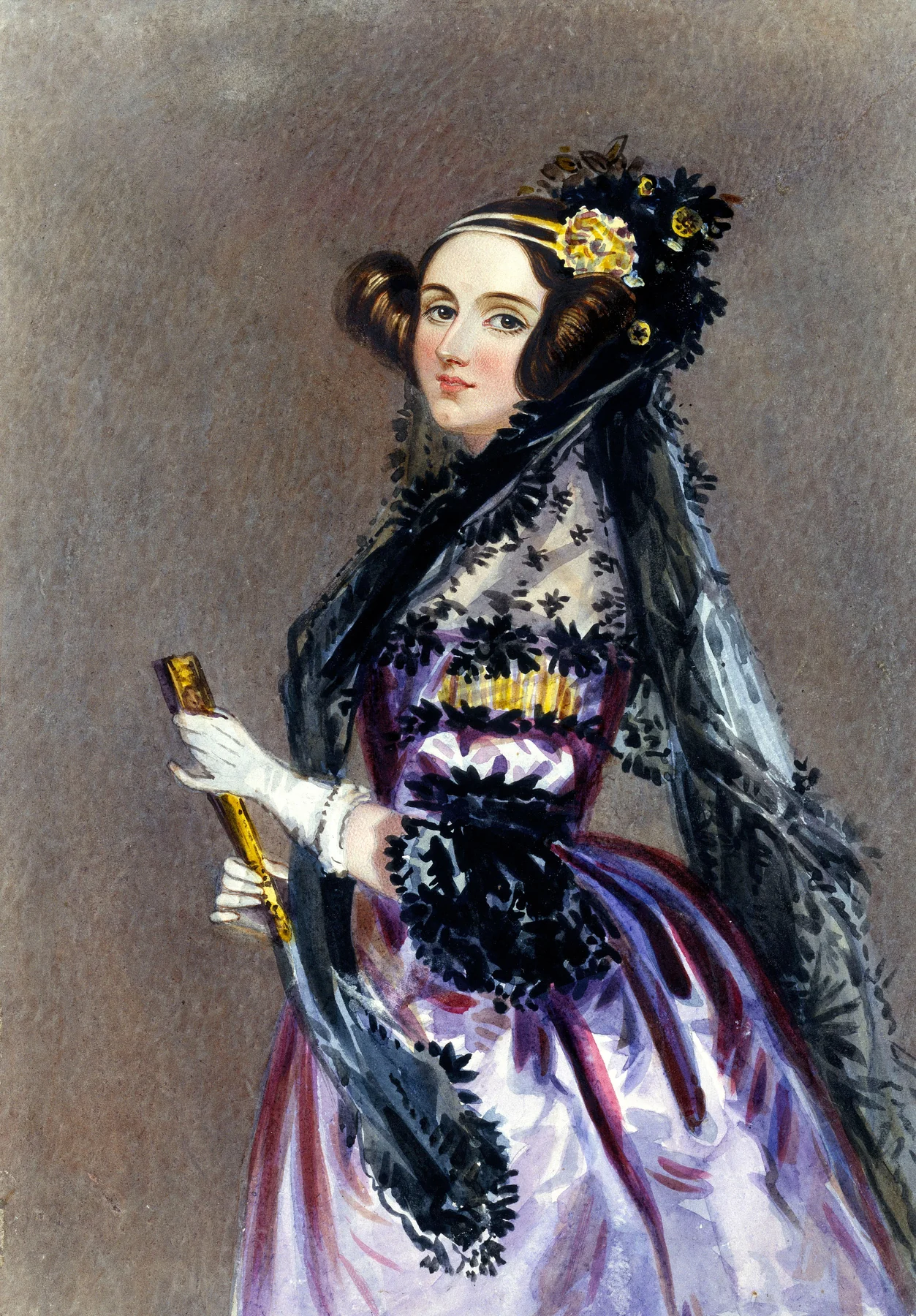
- Ada Lovelace
Turing explicitly discussed Lovelace’s argument about machine originality in his 1950 essay.
- Claude Shannon
Compare a different mathematical account of information and the separate history of switching circuits.
- John von Neumann
Compare stored-program design and collaborative engineering with Turing’s earlier abstract computation model.
Sources and further reading
Explore the evidence
These references support the biography and offer further reading. Official records, first-person accounts and independent reporting provide different perspectives; image records document attribution and licensing.
- 1. King’s College, CambridgeAlan Mathison Turing (1912–54): archival exhibition
The exhibition describes discovery of the body on 8 June; this biography does not turn that observation into an independently verified exact death day. Exact-day structured data is withheld.
- 2. Alan M. Turing; University of Virginia hosted copyOn Computable Numbers, 1936–1937, original journal scan
Selected definitions, examples, universal-machine and decision-problem passages of the original journal scan were read. This is not a new verification of every formal proof.
- 3. Government Communications HeadquartersAlan Turing, institutional historical account, 11 July 2019
- 4. University of ManchesterCoupland Building 1: computing history
- 5. Alan M. Turing; University of Maryland, Baltimore County hosted copyComputing Machinery and Intelligence, 1950, text reproduction
The acquired text reproduction includes the imitation-game opening and the Lovelace-objection discussion. It is not the original journal facsimile.
- 6. UK Ministry of JusticeRoyal pardon for WW2 code-breaker Dr Alan Turing, 24 December 2013