In this biography
Quick facts
- Born
- 24 April 1919
- Died
- 8 July 2010
- Birthplace
- Centralia, Illinois, United States
- Country
- United States
- Nationality
- Not independently established
- Known for
- Conditional expectation, statistical decision theory, probability and game theory
- Earned doctorate
- Mathematics, University of Illinois, 1941
- Berkeley transition
- Visiting year 1954–1955; permanent appointment in 1955
- National Academy of Sciences
- Elected in 1965
- National Medal of Science
- Posthumous recognition, 2014
Why this life matters
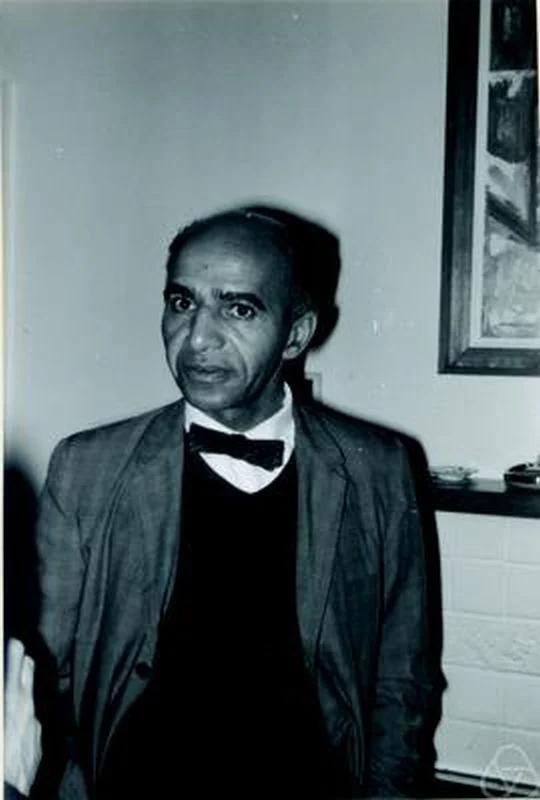
David Blackwell pursued mathematical understanding across probability, statistics, games and information. His career combined foundational results, demanding teaching and sustained collaboration, while confronting racial barriers in American academic life.
Timeline
Key moments
Birth in Illinois
Born in Centralia on 24 April.
Doctorate
Completed doctoral work under Joseph Doob.
Howard University
Taught and led the mathematics department before moving to Berkeley.
Conditional expectation paper
Published the work associated with Rao–Blackwell improvement.
Berkeley transition
Visited before accepting a permanent statistics appointment.
Academy election
Elected to the National Academy of Sciences.
Death
Died in Berkeley on 8 July.
From Centralia to a doctorate in probability
David Harold Blackwell was born in Centralia, Illinois, on 24 April 1919. He entered the University of Illinois at sixteen, initially imagining a career teaching school. He earned his BA in mathematics in 1938, his MA in 1939 and his doctorate in 1941. Joseph Doob supervised his doctoral research on Markov chains. The progression records earned qualifications, rather than the honorary doctorates he received later.
A postdoctoral fellowship took him to the Institute for Advanced Study. Racial discrimination restricted the opportunities open to him, including access and possible appointments at institutions that welcomed other young mathematicians. His later oral history describes both the obstacles and his expectations at the time. It should be read as a participant’s recollection, not as proof that every rejected application had an identical cause.
Howard, collaborators and a new statistical problem
After teaching at Southern and Clark, Blackwell spent a decade at Howard University. He taught a substantial course load and served as department chair. Mathematical discussions extended beyond his own department. His association with Meyer Abraham Girshick helped turn an interest in probability toward statistical decisions and sequential sampling, in which the number of observations need not be fixed beforehand.
His 1947 paper examined conditional expectation and unbiased sequential estimation. The result associated with Rao–Blackwell improvement replaces an estimator by a suitable conditional average without increasing its variance, under the required conditions. Blackwell later explicitly recognised C. R. Rao’s earlier independent work. The useful historical question is how the argument clarified a problem, rather than which surname can be made to erase the other.
Berkeley and several connected fields
Blackwell visited Berkeley during 1954–1955 and joined the statistics department permanently in 1955, following the department’s own chronology. Shorter tributes sometimes compress those stages into a single 1954 appointment. His research covered more than the estimation result. It included comparison of statistical experiments, renewal processes, information theory, dynamic programming and the relation between games and sets.
These subjects share questions about information, uncertainty and choice, but they are not one interchangeable theorem. Work with Leo Breiman and Aram Thomasian addressed communication channels, while his book with Girshick, Theory of Games and Statistical Decisions, organised another body of ideas. Coauthorship and the movement between research communities help explain that breadth more clearly than a list of modern technologies supposedly invented by one person.
Teaching, recognition and mathematical understanding
Blackwell was elected to the National Academy of Sciences in 1965, its first African American member. Colleagues also remembered his ability to make a difficult problem understandable in conversation and in teaching. He supported opportunities for Black students and worked with Leon Henkin on programmes connecting students with mathematical research. These activities belonged to his academic contribution alongside his papers.
He retired in the late 1980s and died in Berkeley on 8 July 2010. A posthumous National Medal of Science followed in 2014. The chronology of recognition should not obscure the institutions and colleagues that shaped the earlier work. His account of research repeatedly returns to understanding a question well enough to explain it. The two-toss exercise linked to this biography offers a small, independently checkable example of that approach, without pretending to reproduce the full general theorem or the entire range of his research.
Quick answers
Frequently asked questions about David Blackwell
- What is David Blackwell known for?
- His contributions include statistical estimation and decisions, probability, information theory, dynamic programming and game theory. The Rao–Blackwell result is one influential part of that work.
- Did he invent the Rao–Blackwell result alone?
- No. Blackwell acknowledged C. R. Rao’s earlier independent contribution. His 1947 paper gave the method an influential formulation and application.
- When did he join Berkeley?
- The statistics department distinguishes a 1954–1955 visit from his permanent appointment in 1955. Some shorter accounts combine those stages.
Keep exploring
Lives connected to this story
- John Backus
Compare two distinct careers in formal methods and the institutions that supported their work.
- Katherine Johnson
Compare mathematical decision-making within a different research setting, without implying a collaboration.
Sources and further reading
Explore the evidence
These references support the biography and offer further reading. Official records, first-person accounts and independent reporting provide different perspectives; image records document attribution and licensing.
- 1. University of California, BerkeleyObituary, 15 July 2010
- 2. Bancroft Library, University of California, Berkeley; Tufts-hosted copyOral history, interviews by Nadine Wilmot, 2002–2003; selected passages consulted
Selected biographical, teaching and estimation passages were consulted. A remembered reference to Rao’s 1945 “thesis” is not adopted as a verified bibliographic description.
- 3. PNAS / University of California, BerkeleyPeter J. Bickel: research retrospective, 2020
The retrospective gives compressed Howard/Berkeley and retirement dates that differ from the department’s chronology. This biography distinguishes the Berkeley visit and permanent appointment and does not force a precise retirement year.
- 4. Berkeley Department of StatisticsDepartmental history
- 5. Berkeley Department of StatisticsDepartmental memorial
- 6. Institute of Mathematical StatisticsConditional Expectation and Unbiased Sequential Estimation, 1947: publication reference
Publication identity and indexed summary checked. Direct full-text requests returned HTML challenges, and an indexed Harvard copy returned 404; the full 1947 article was not acquired.