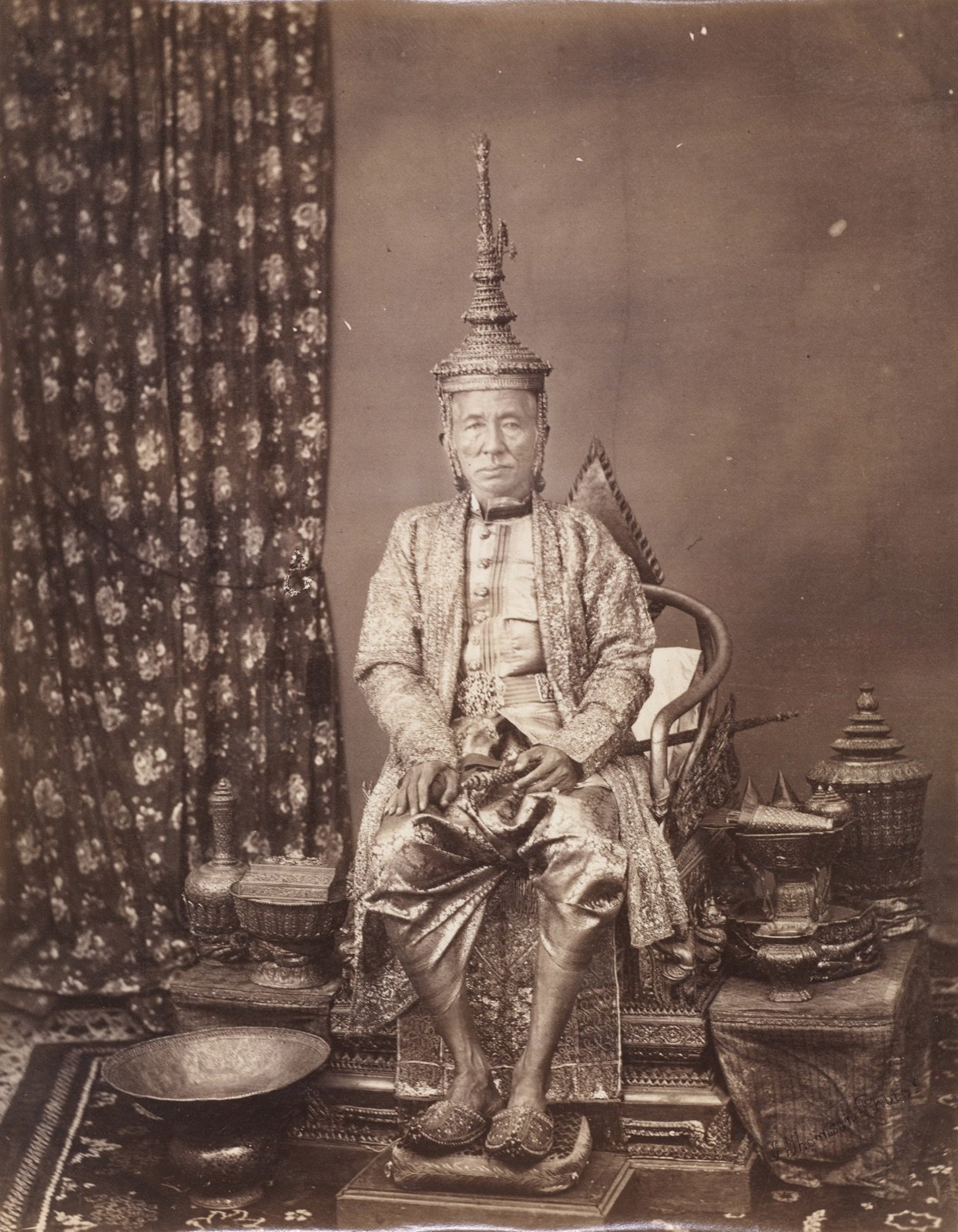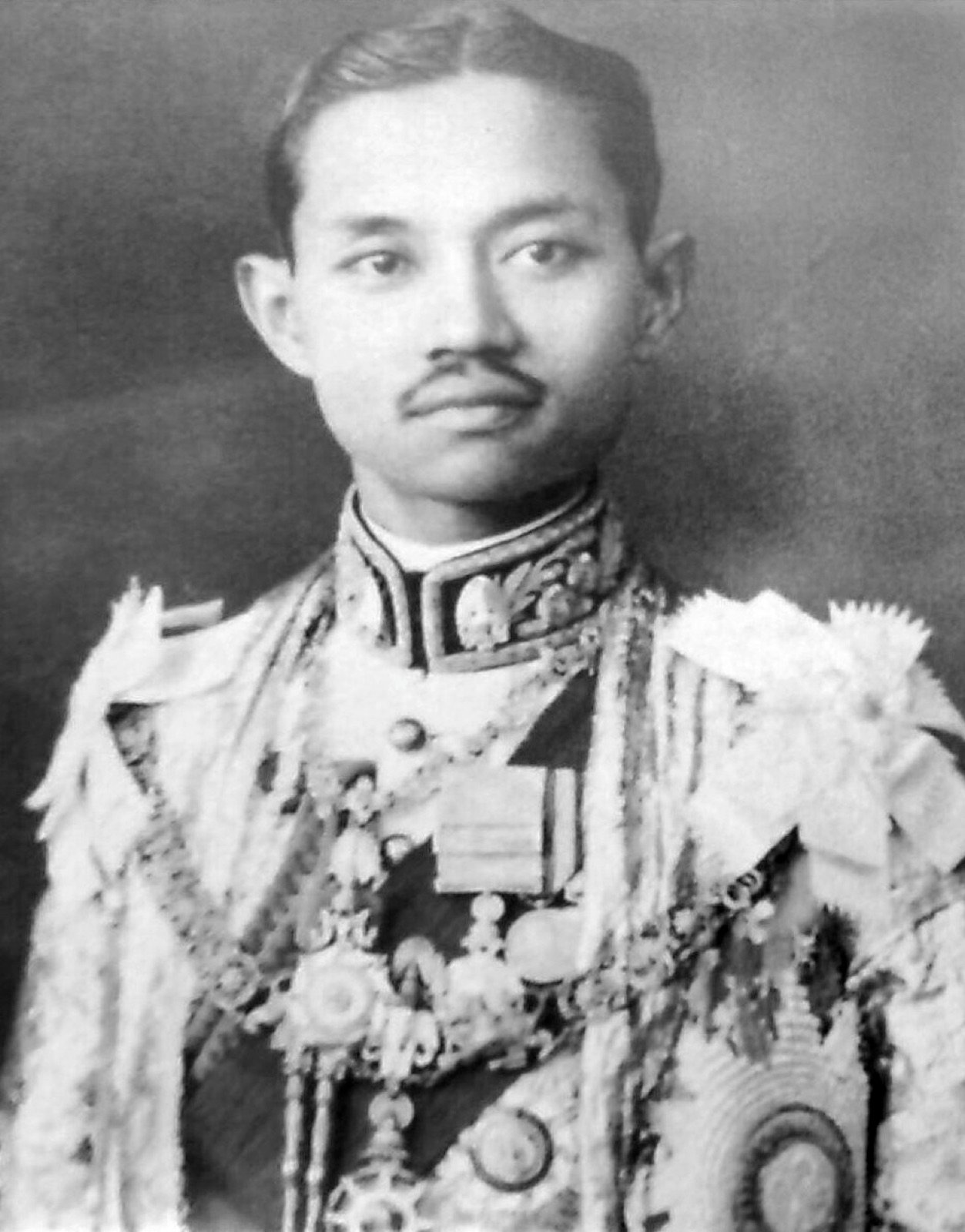

In this biography
Quick facts
- Born
- 20 September 1853
- Died
- 23 October 1910
- Birthplace
- Bangkok, Siam
- Country
- Thailand
- Nationality
- Thai
- Known for
- Administrative centralisation, legal reform and the gradual abolition of slavery and corvée labour
- Regnal name
- Rama V
- Reign
- 1 October 1868 – 23 October 1910
- Major reforms
- Ministries, provinces, courts, education and transport
- Commemoration
- Chulalongkorn Day, 23 October
Why this life matters
Chulalongkorn’s reforms strengthened a centralised state that preserved sovereignty under colonial pressure, while also changing the relationship between Bangkok, provincial power and ordinary subjects.
Timeline
Key moments
Born in Bangkok
Born on 20 September, a son of King Mongkut.
Became king
Succeeded his father while still a teenager.
Began personal rule
Assumed full authority after a regency and introduced early administrative changes.
Reorganised the ministries
Built a functional cabinet system as part of wider centralisation.
Faced the Franco-Siamese crisis
Territorial concessions followed French military pressure on the Mekong frontier.
Advanced the end of slavery
Legislation completed a gradual programme that avoided sudden mass indebtedness.
Died after a forty-two-year reign
Died in Bangkok on 23 October.
A state rebuilt around ministries
Chulalongkorn inherited the throne in 1868 and took full control of government in the early 1870s. He and a rising generation of officials sought to make the court’s authority more regular, specialised and visible across the kingdom.
The ministry reforms of the 1890s reorganised government by function. A new provincial system extended Bangkok’s reach, while schools, postal services, railways and other infrastructure helped create a more integrated state.
Labour, law and unequal treaties
Reform gradually dismantled systems of slavery and corvée labour. The staged approach reduced the risk that newly freed people would be trapped by immediate debts, although hierarchy and rural inequality did not disappear.
New courts and legal codes were also part of a long effort to recover jurisdiction limited by nineteenth-century treaties. Administrative reform served domestic change and the diplomatic argument that Siam should be treated as a sovereign state.
Modernisation and centralisation
Chulalongkorn travelled in Asia and Europe and used foreign advisers, but his government adapted outside models to royal priorities. Britain and France still forced territorial concessions, especially around Laos, Cambodia and the Malay Peninsula.
His reign is celebrated for preserving independence and ending old labour systems. It also concentrated power in Bangkok and absorbed semi-autonomous regions, making modernisation inseparable from the expansion of the central state.
Quick answers
Frequently asked questions about Chulalongkorn
- Who was Chulalongkorn?
- Chulalongkorn was a king of Siam, 1868–1910. Chulalongkorn’s reforms strengthened a centralised state that preserved sovereignty under colonial pressure, while also changing the relationship between Bangkok, provincial power and ordinary subjects.
- What is Chulalongkorn best known for?
- Chulalongkorn is best known for administrative centralisation, legal reform and the gradual abolition of slavery and corvée labour.
- When and where was Chulalongkorn born?
- Chulalongkorn was born on 20 September 1853 in Bangkok, Siam.
- When did Chulalongkorn die?
- Chulalongkorn died on 23 October 1910.
Sources and further reading
How this biography was checked
Core dates and offices are checked against the sources below. This profile was last reviewed on 8 September 2026.