In this biography
Quick facts
- Born
- 8 November 1893
- Died
- 30 May 1941
- Birthplace
- Bangkok, Siam
- Country
- Thailand
- Nationality
- Thai
- Known for
- Reigning during the 1932 revolution and the transition from absolute to constitutional monarchy
- Regnal name
- Rama VII
- Reign
- 26 November 1925 – 2 March 1935
- Political turning point
- Siamese Revolution, 24 June 1932
- Successor
- Ananda Mahidol
Why this life matters
Prajadhipok’s reign marks the decisive institutional boundary between Siam’s absolute monarchy and its contested constitutional order.
Timeline
Key moments
Born in Bangkok
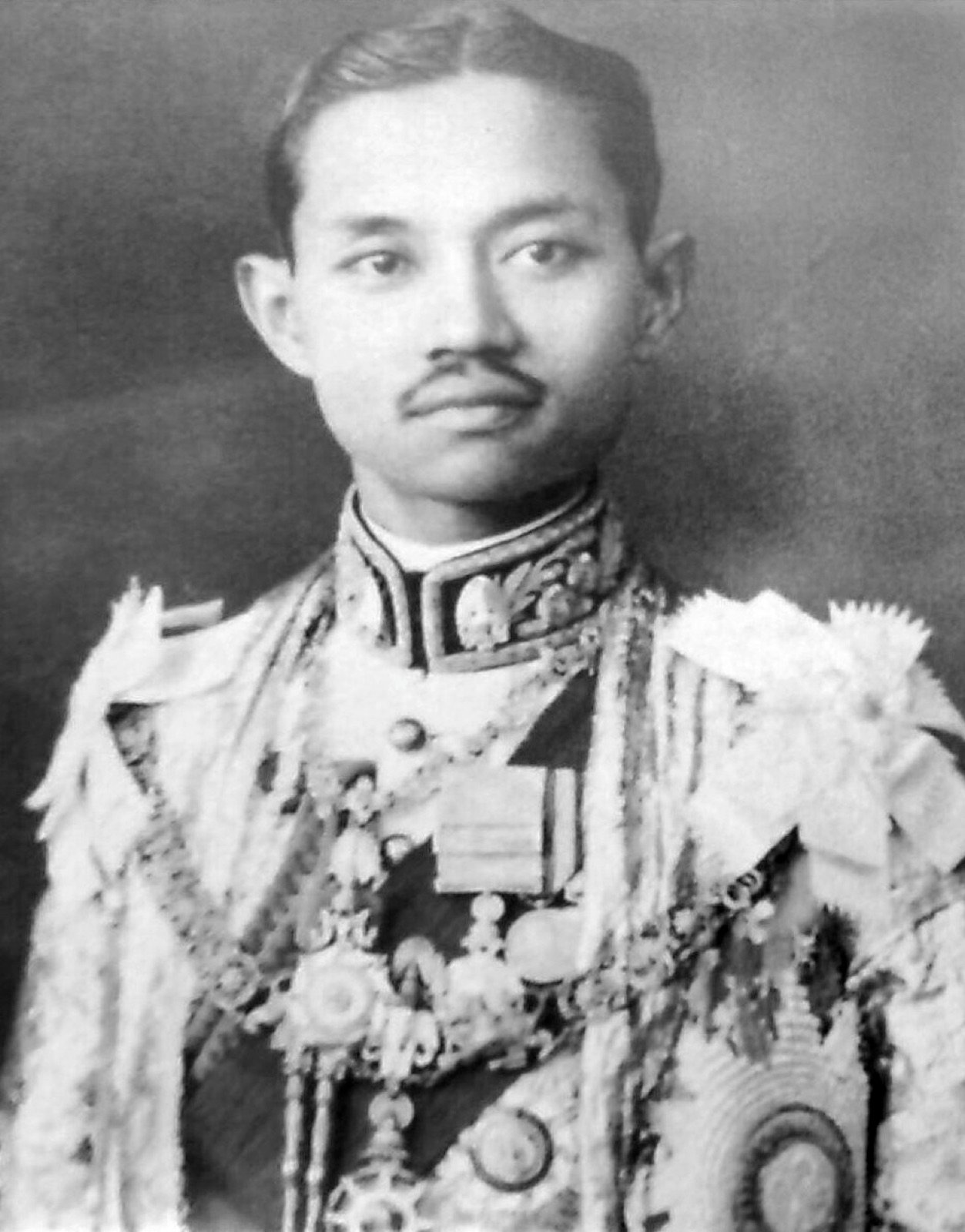
Born on 8 November, the youngest son of King Chulalongkorn and Queen Saovabha.
Became king
Succeeded his brother Vajiravudh in November.
Absolute monarchy ended
The People’s Party seized power on 24 June and established a constitutional system.
Permanent constitution promulgated
The constitution of 10 December defined a new institutional order.
The Boworadet Rebellion failed
Royalist forces challenged the new government and were defeated.
Abdicated
Relinquished the throne on 2 March while living in Britain.
Died in England
Died on 30 May at Virginia Water.
An unexpected accession
Prajadhipok was not originally expected to inherit the throne. Military education in Britain and France prepared him for service rather than kingship, but the deaths of older brothers placed him next in succession in 1925.
His government faced falling revenue, administrative retrenchment and the global economic crisis. Debate over reform existed inside the court, yet no representative constitution had been adopted before June 1932.
The 1932 constitutional rupture
On 24 June 1932, the People’s Party took control in a largely bloodless operation and demanded constitutional government. Prajadhipok accepted a provisional constitution, followed by a permanent charter on 10 December.
The transition did not settle where sovereign authority would rest. Conflict among royalists, civilian reformers and military leaders continued, and the failed Boworadet Rebellion in 1933 hardened political divisions.
Abdication and historical debate
Prajadhipok left Siam for medical treatment and abdicated in March 1935 after disagreements with the government. His young nephew Ananda Mahidol succeeded him.
Royal, parliamentary and academic narratives interpret his intentions differently. The securely documented point is that his reign ended absolute monarchy and opened a constitutional era shaped by repeated conflict over the powers of monarchs, cabinets, assemblies and the military.
Quick answers
Frequently asked questions about Prajadhipok
- Who was Prajadhipok?
- Prajadhipok was a king of Siam, 1925–1935. Prajadhipok’s reign marks the decisive institutional boundary between Siam’s absolute monarchy and its contested constitutional order.
- What is Prajadhipok best known for?
- Prajadhipok is best known for reigning during the 1932 revolution and the transition from absolute to constitutional monarchy.
- When and where was Prajadhipok born?
- Prajadhipok was born on 8 November 1893 in Bangkok, Siam.
- When did Prajadhipok die?
- Prajadhipok died on 30 May 1941.
Sources and further reading
How this biography was checked
Core dates and offices are checked against the sources below. This profile was last reviewed on 8 September 2026.