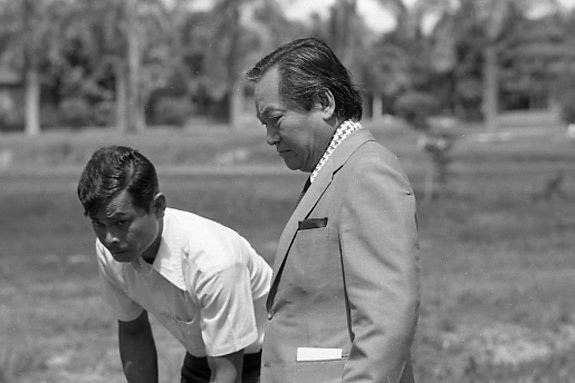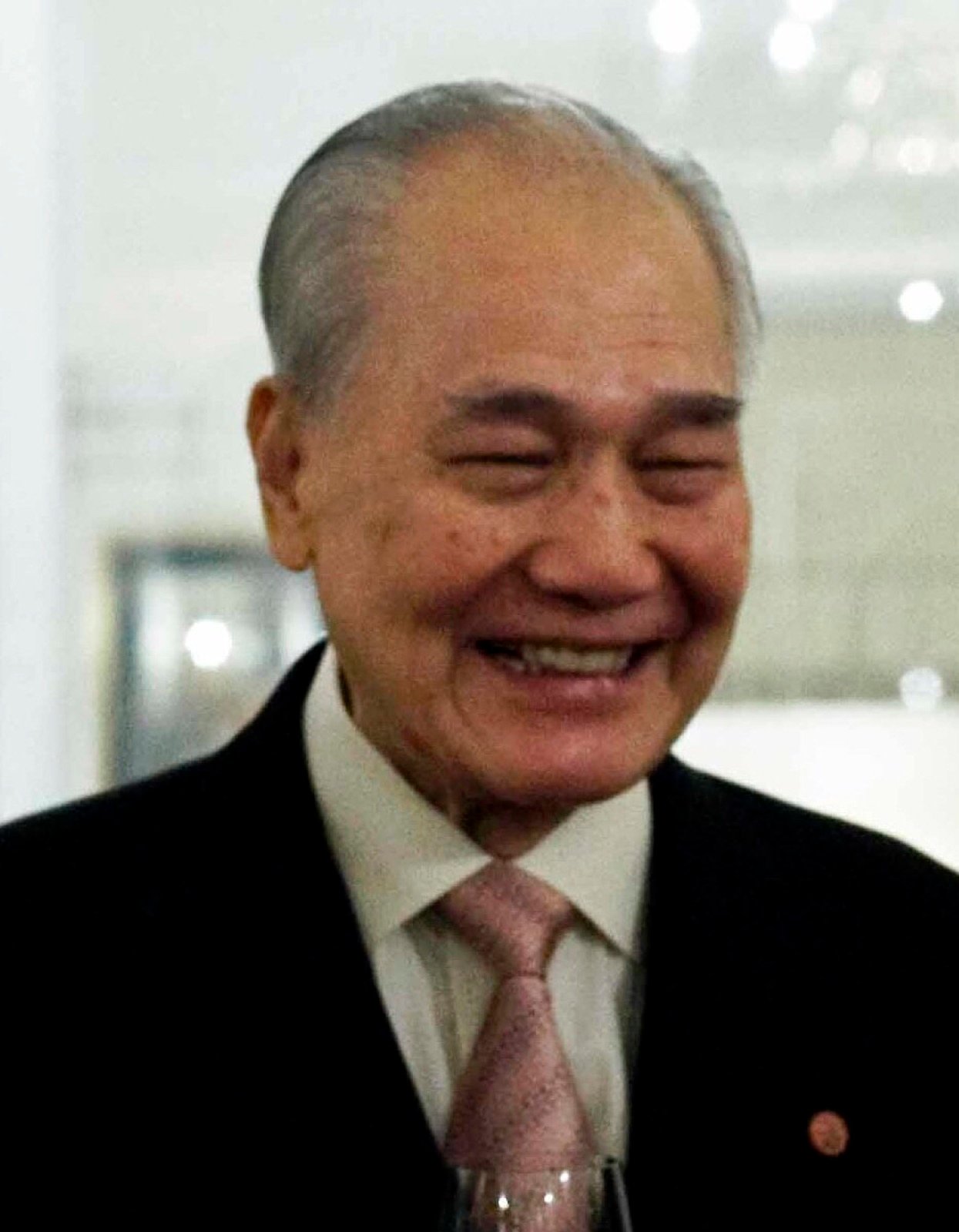
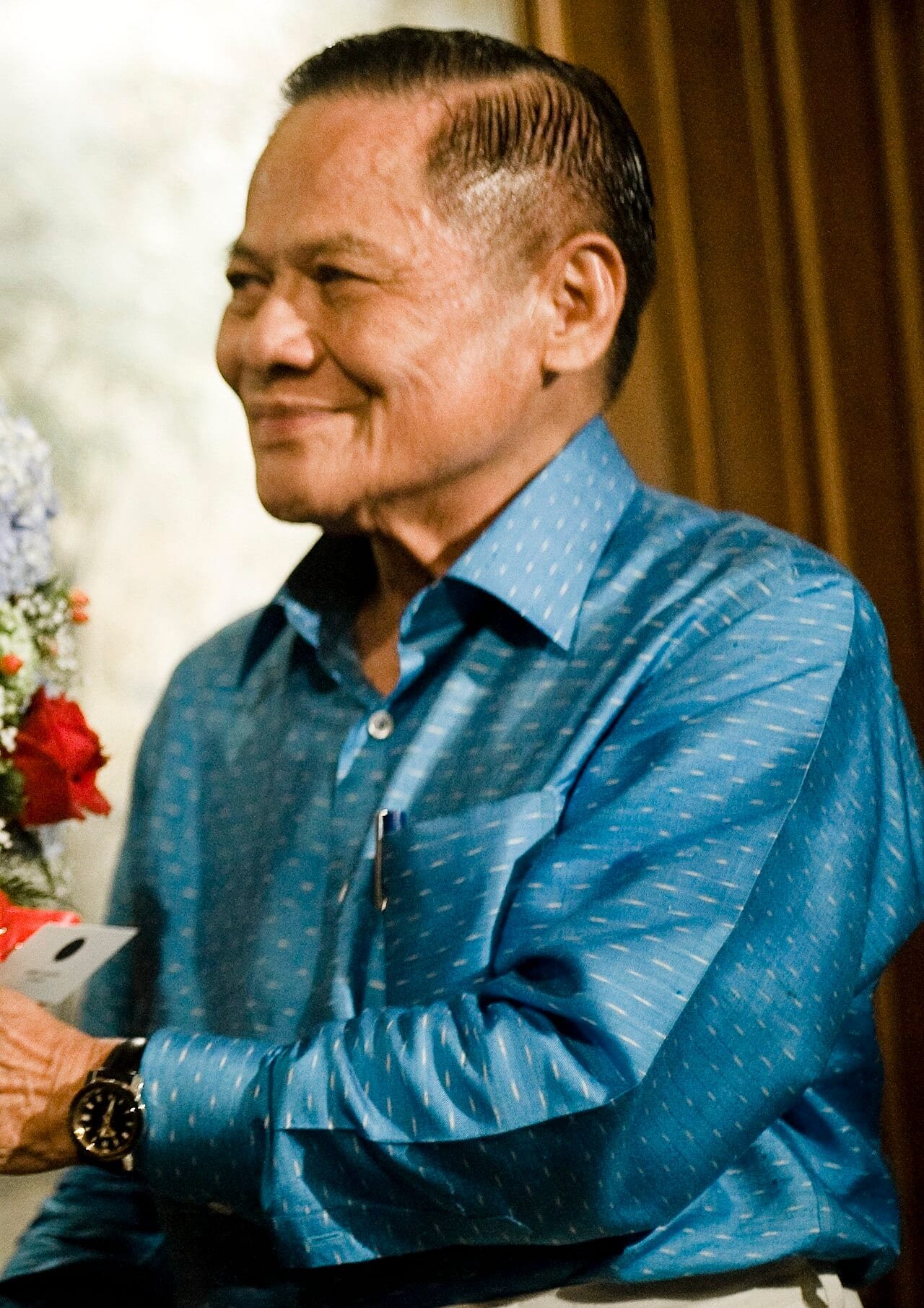
In this biography
Quick facts
- Born
- 19 August 1932
- Died
- 23 April 2016
- Birthplace
- Suphan Buri, Siam
- Country
- Thailand
- Nationality
- Thai
- Known for
- Provincial development, coalition brokerage and launching the process that produced the 1997 Constitution
- Office
- 21st Prime Minister, 13 July 1995 – 24 November 1996
- Constituency
- Suphan Buri
- Political party
- Chart Thai Party
- 1995 election
- Chart Thai won 92 of 391 House seats
Why this life matters
Banharn’s career shows both the local-development strengths and the patronage, party fragmentation and accountability problems that Thailand’s 1997 constitutional reformers sought to change.
Timeline
Key moments
Born in Suphan Buri
Born on 19 August to a Thai Chinese merchant family in Thailand’s central plain.
Built a construction business
Entered commerce in Bangkok and prospered during Thailand’s infrastructure expansion.
Entered parliament
Won election for Suphan Buri and began a four-decade career in national politics.
Held major cabinet portfolios
Served in finance, industry, transport and interior posts while rising through Chart Thai.
Chart Thai finished first
The party won 92 seats and assembled a seven-party coalition commanding 233 MPs.
Became prime minister
Succeeded Chuan Leekpai as head of Thailand’s 21st premiership.
Enabled constitutional drafting
A constitutional amendment created the process for an outside drafting assembly that later produced the 1997 charter.
Dissolved the House
Called an early election after surviving a censure debate but losing reliable coalition support.
Chart Thai was dissolved
A court ruling over electoral violations dissolved the party and imposed a five-year political ban on its executives.
Died in Bangkok
Died at Siriraj Hospital on 23 April after complications following an asthma attack.
Business success and a provincial political base
Banharn Silpa-archa was born in Suphan Buri on 19 August 1932 to a family of Chinese descent. After leaving formal education, he moved into business and founded a construction enterprise. Thailand’s road-building and infrastructure boom helped make him wealthy and gave him relationships with contractors, officials and provincial networks that later supported his political career.
He entered the House of Representatives for Suphan Buri in 1976 and repeatedly retained the constituency. Over the next two decades he served in portfolios that included industry, transport, interior and finance. In his home province, roads, schools, hospitals, water projects and prominent civic landmarks made him unusually popular. Admirers credited direct attention to local needs; critics described the same system as concentrated patronage and called the province “Banharn-buri.”
Chart Thai victory and a seven-party government
Chuan Leekpai dissolved the House in May 1995 after the Palang Dharma Party withdrew from his coalition during a land-reform controversy. In the 2 July election, Banharn’s Chart Thai won 92 of the enlarged House’s 391 seats, six more than the Democrats. No party had anything close to a majority, so leadership depended on coalition arithmetic rather than a direct nationwide mandate.
Banharn assembled seven parties with 233 seats and became prime minister on 13 July. His cabinet entered office during rapid economic growth and promised development and political reform. Yet the breadth of the alliance also made it vulnerable: parties and factions competed for ministries, policy control and resources, while the opposition repeatedly challenged the government over alleged corruption and administrative competence.
Political reform amid criticism
The premiership attracted persistent accusations involving procurement, banking decisions, appointments and the use of public resources. These were political allegations of varying strength, not a single adjudicated verdict against Banharn. They nevertheless damaged the government’s credibility as economic growth slowed and weaknesses in finance companies became harder to ignore.
A more durable part of the government’s record was constitutional reform. Pressure had grown since Black May in 1992 for stronger rights, cleaner elections and institutions able to scrutinise ministers. A 1996 amendment provided for a 99-member Constitution Drafting Assembly outside the normal parliamentary bargaining process. The assembly was completed under Chavalit Yongchaiyudh, chaired by Anand Panyarachun and produced the 1997 “People’s Constitution.”
The 1996 election and loss of office
In September 1996, Banharn survived a no-confidence debate only after coalition partners pressed him to leave office. He dissolved the House on 27 September and remained caretaker prime minister for the seven-week campaign. Economic management, corruption claims and vote buying dominated the contest.
The November result sharply reduced Chart Thai from 92 seats to 39. Chavalit’s New Aspiration Party won 125 seats, narrowly ahead of the Democrats on 123, and built a new coalition. Banharn left office on 24 November. The financial crisis that erupted the following year grew from vulnerabilities accumulated over several governments; later criticism of Banharn’s cabinet should be read within that longer institutional and economic context.
Enduring influence and a contested legacy
Banharn remained the central broker of Chart Thai long after his premiership. In 2008 the Constitutional Court dissolved the party for an executive’s electoral offence and banned its leadership from politics for five years. Allies and family members continued through Chart Thai Pattana, preserving the Suphan Buri organisation and its role in coalition politics.
He died in Bangkok on 23 April 2016, aged eighty-three. His legacy remains deliberately difficult to separate into success or failure. Suphan Buri demonstrates the tangible appeal of locally directed development, while his national career illustrates the unstable multi-party bargaining and weak oversight that reformers tried to correct. The constitutional process his government enabled became more consequential than the short-lived coalition that started it.
Quick answers
Frequently asked questions about Banharn Silpa-archa
- Who was Banharn Silpa-archa?
- Banharn Silpa-archa was the 21st Prime Minister of Thailand, 1995–1996. Banharn’s career shows both the local-development strengths and the patronage, party fragmentation and accountability problems that Thailand’s 1997 constitutional reformers sought to change.
- What is Banharn Silpa-archa best known for?
- Banharn Silpa-archa is best known for provincial development, coalition brokerage and launching the process that produced the 1997 Constitution.
- When and where was Banharn Silpa-archa born?
- Banharn Silpa-archa was born on 19 August 1932 in Suphan Buri, Siam.
- When did Banharn Silpa-archa die?
- Banharn Silpa-archa died on 23 April 2016.
Sources and further reading
How this biography was checked
Core dates and offices are checked against the sources below. This profile was last reviewed on 3 October 2026.
- Secretariat of the Prime Minister of ThailandDirectory of Prime Ministers of Thailand
- Inter-Parliamentary UnionThailand House election, 2 July 1995
- Inter-Parliamentary UnionThailand House election, 17 November 1996
- ConstitutionNet · International IDEAConstitutional history of Thailand
- Australian National UniversityThe Domination of a Fussy Strongman in Provincial Thailand
- Associated Press via The Washington PostBanharn Silpa-archa, former prime minister, dies at 83
- The Nation ThailandFormer PM Banharn passes away at 83
- Wikimedia CommonsPortrait and CC BY 2.0 licence record