
The short answer
What did a prostaglandin assay reveal about aspirin's action?
Evidence comparison
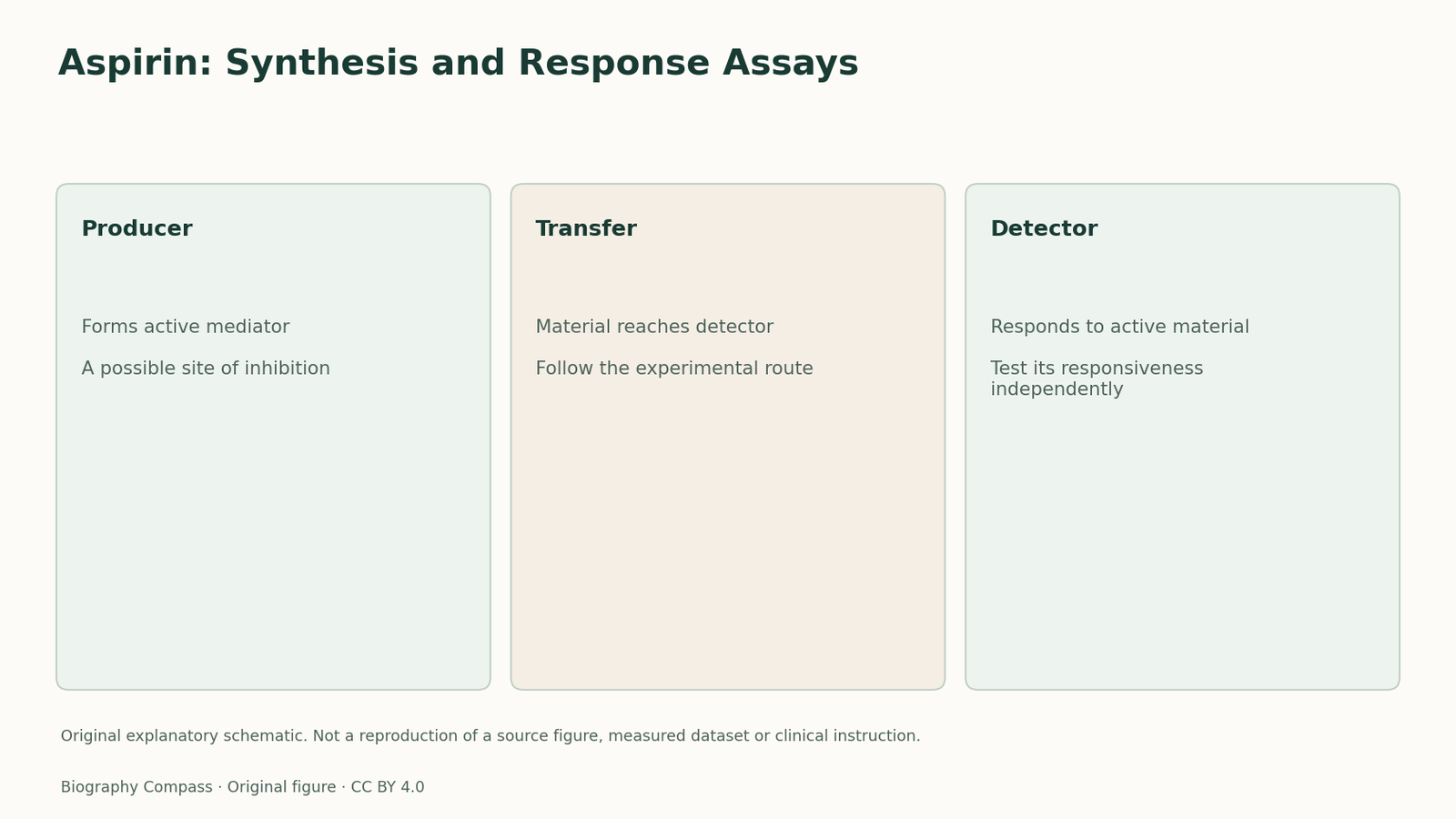
Aspirin: Synthesis and Response Assays
Compare the observations with the narrower conclusions they support.
| Record or observation | What it supports | What remains separate |
|---|---|---|
| Reporter-tissue response | Detects biologically active material reaching the detector | A lower response may arise at more than one stage |
| Production tested with detector controls | Can support a biosynthesis-inhibition explanation | Does not constitute a full clinical evaluation |
A reduced response can have several causes
If a tissue responds less after a drug is added, the drug might reduce production of a mediator, block the mediator's action or impair the responding preparation. These are distinct explanations. Vane's 1971 work connected aspirin-like drugs with inhibition of prostaglandin biosynthesis. His Nobel lecture explains why the biochemical connection mattered in a field where many in-vitro enzyme effects had not convincingly explained therapeutic action.
Separate production from detection
A bioassay uses a biological response to detect active material. To investigate synthesis, the experiment must distinguish the preparation producing the material from the system reporting its activity. A change in the reporter alone could otherwise be mistaken for reduced production. Vane's lecture describes cascade-superfusion methods and the use of responsive tissues, making this separation between source and detector central to interpreting the experimental pathway.
Sources for this section: [3]
A two-stage classroom fault test
Draw a hypothetical producer feeding an active substance to a detector. Place an inhibitor first at the producer and then at the detector. If only the final response is observed, ask whether the two placements can be distinguished. The answer is no. Now propose adding a known amount of the active substance directly to the detector. Preserved detector response would help localise the earlier loss to the producing stage. This is an original reasoning model, not a claim that its simplified layout reproduces a particular historical experiment.
Sources for this section: [3]
A mechanism is not a complete treatment evaluation
Evidence about biosynthesis can explain an important action of a drug class without describing every effect, dose or clinical circumstance. The guide addresses historical experimental inference and supplies no personal recommendation about using aspirin. Its practical lesson is to identify which stage of a multi-part assay actually changed.
Sources for this section: [3]
Continue the chronology
Related history guides
Biography context
Explore United Kingdom through connected lives
Connected biographies
Researchers and related questions
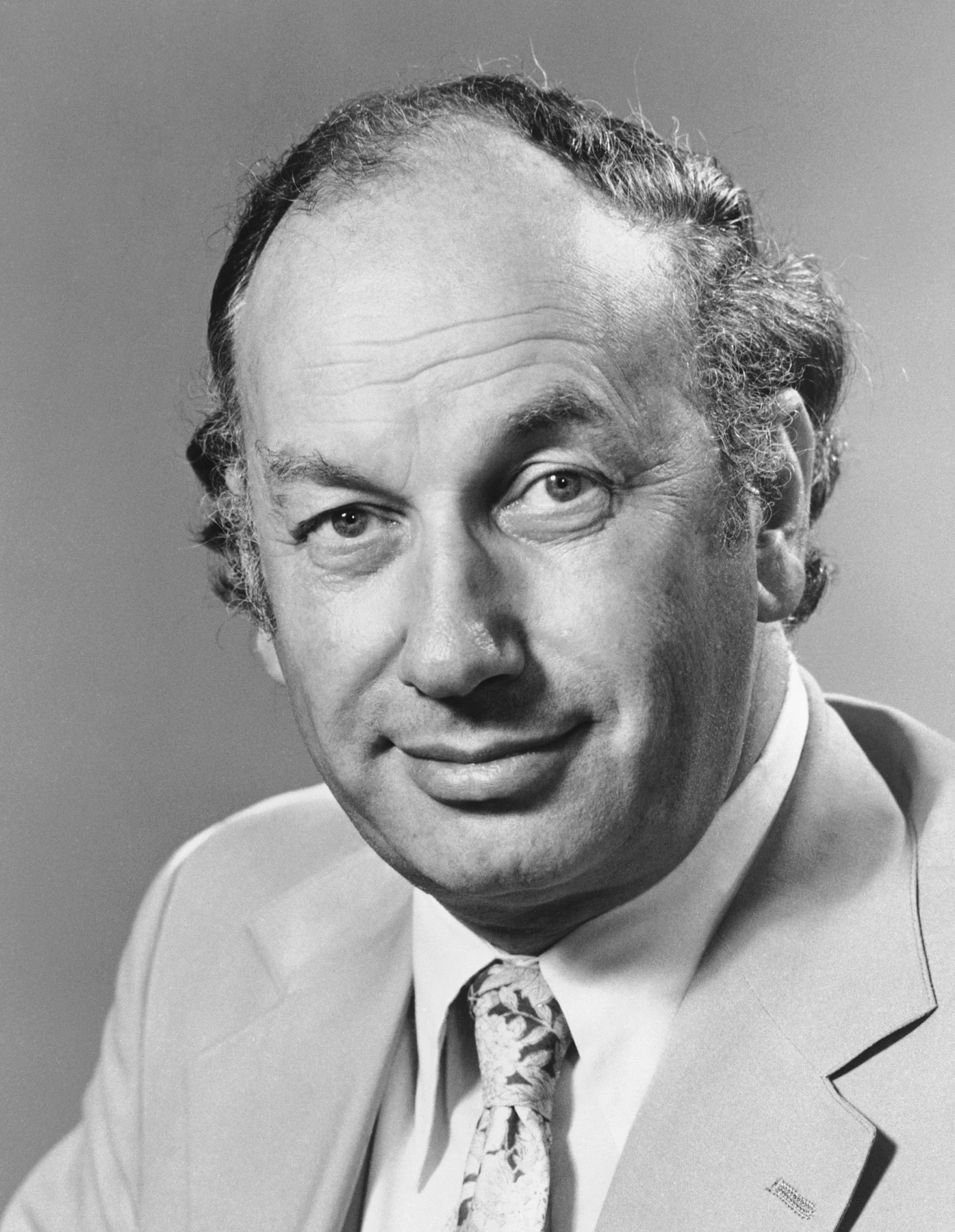
1927–2004
John R. Vane
Pharmacologist and bioassay researcherWith his research group, Vane developed cascade-superfusion bioassay methods for observing the release and fate of biologically active substances.Read biography1924–2010
James W. Black
Physician and analytical-pharmacology researcherAt ICI, Black worked with chemists and development colleagues including John Stephenson, Bert Crowther and Bill Duncan.Read biography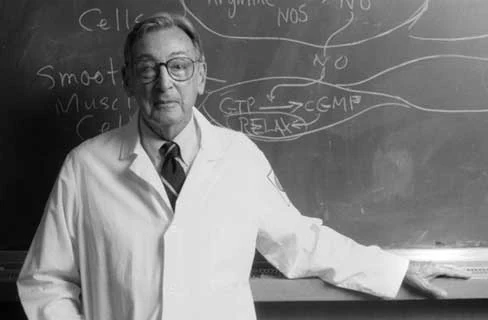
1916–2009
Robert F. Furchgott
Pharmacologist and vascular-physiology researcherIn 1980 Furchgott and John Zawadzki reported that acetylcholine-induced relaxation of isolated blood-vessel preparations required endothelial cells.Read biographyQuick answers
Common questions
- What did a prostaglandin assay reveal about aspirin's action?
- Detects biologically active material reaching the detector. A lower response may arise at more than one stage.
- Are the classroom examples historical measurements?
- No. Invented examples are labelled as classroom models; the source-based discussion identifies the historical evidence separately.
Primary and institutional sources
How this history was checked
Official biographical and award records are read alongside the researcher’s technical account. Source scope and hypothetical examples remain distinct. This article was reviewed on 7 November 2026.