
The short answer
Why did the intact inner lining of an artery change an experiment?
Evidence comparison
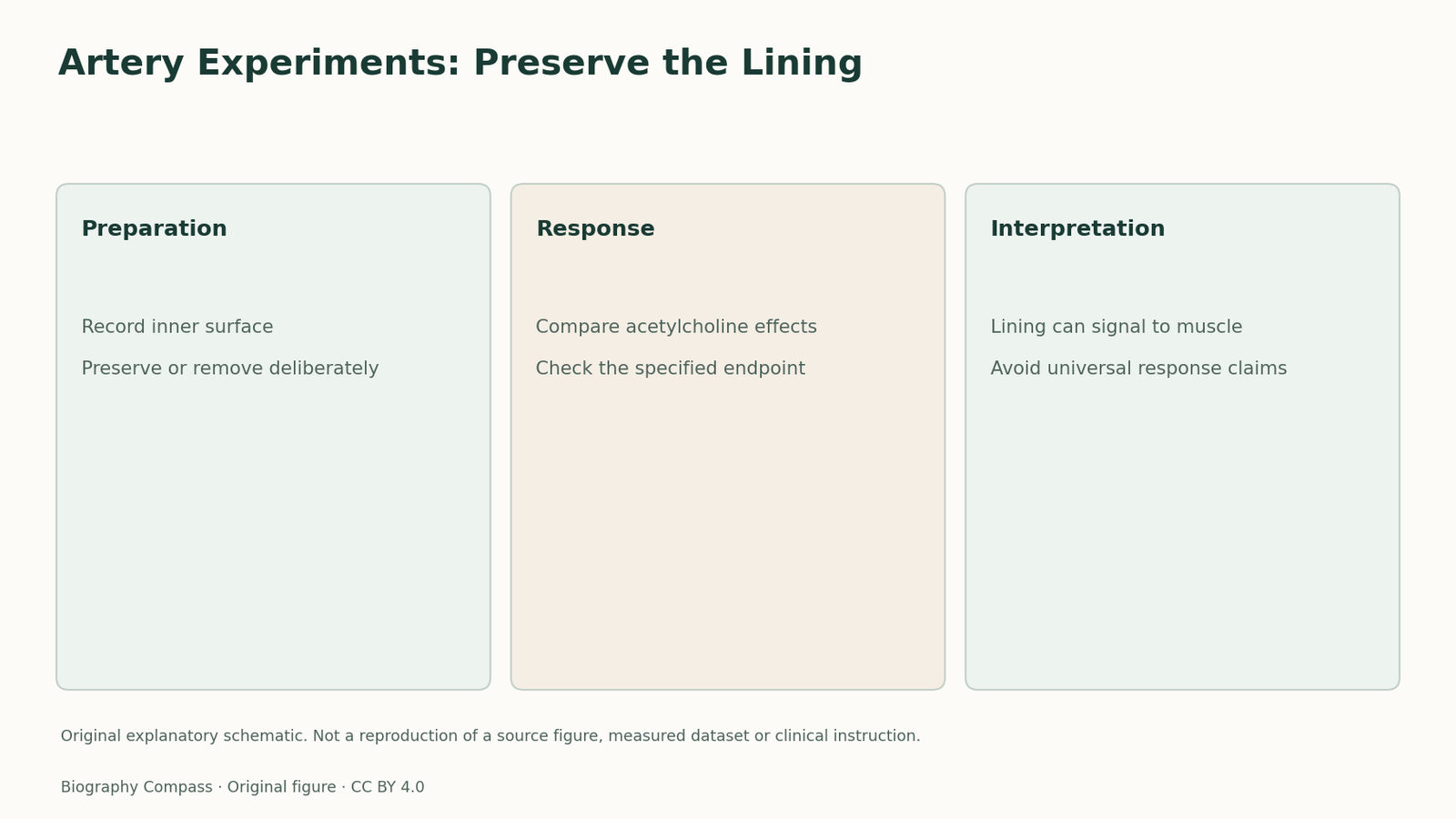
Artery Experiments: Preserve the Lining
Compare the observations with the narrower conclusions they support.
| Record or observation | What it supports | What remains separate |
|---|---|---|
| Preserved endothelial surface | Allows the reported acetylcholine relaxation response | Specific to the tested response and preparation |
| Mechanically rubbed surface | Can remove a necessary signalling component | Does not prove all smooth-muscle responses are impossible |
A paradox between preparations
Furchgott and Zawadzki's 1980 paper begins with a discrepancy: acetylcholine was a potent vasodilator in living systems but did not consistently relax isolated vessel preparations. The investigators found that handling could rub the inner surface and remove endothelial cells. This shifted the question from whether the substance worked to what the preparation still contained. An experiment on an isolated tissue is interpretable only if its relevant components survive preparation.
The lining is a variable, not background
The paper reports relaxation when care was taken to preserve the inner surface, and identifies endothelial cells as necessary for the response in the tested preparations. It proposes release of a substance acting on the underlying smooth muscle. The finding does not mean that removing endothelium prevents every possible contraction or relaxation. Its force lies in the specified response to acetylcholine and the comparison of tissues with different preparation histories.
Sources for this section: [3]
A classroom experiment without tissues
Give students two diagrams of the same vessel: one with a labelled lining and one with the lining removed. Supply the historical observation that the acetylcholine relaxation response differed. Ask what extra comparison would help distinguish loss of a signalling layer from a complete failure of the muscle. A good answer proposes checking whether the muscle can still respond through a different, independently established route. This is a reasoning exercise; it does not claim that a newly suggested comparison was the exact protocol of the 1980 paper.
Sources for this section: [3]
An interpretation worth carrying elsewhere
The broader lesson is about experimental components, not a universal rule that more intact tissue always produces better evidence. Controlled removal can reveal a function when the comparison is explicit. Accidental removal can conceal that same function when no one records what changed.
Sources for this section: [3]
Continue the chronology
Related history guides
Biography context
Explore United States through connected lives
Connected biographies
Researchers and related questions
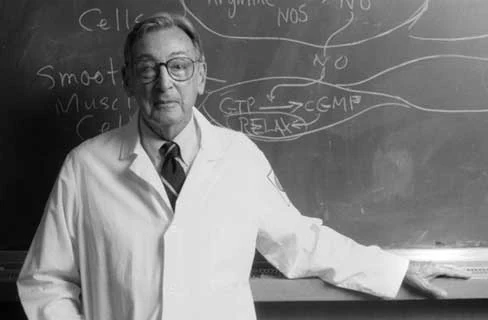
1916–2009
Robert F. Furchgott
Pharmacologist and vascular-physiology researcherIn 1980 Furchgott and John Zawadzki reported that acetylcholine-induced relaxation of isolated blood-vessel preparations required endothelial cells.Read biography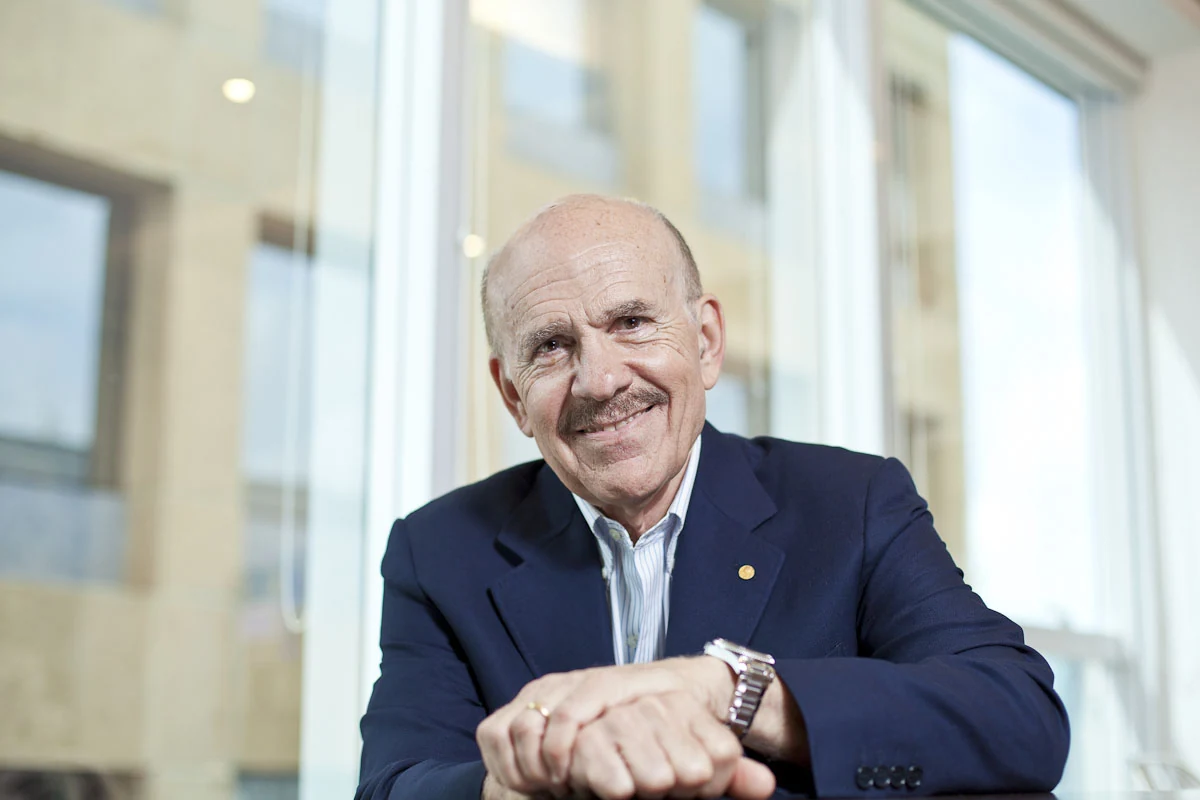
1941–
Louis J. Ignarro
Pharmacologist and nitric-oxide researcherIgnarro's group investigated nitric oxide and the unidentified endothelium-derived relaxing factor, usually abbreviated EDRF.Read biography
1936–2023
Ferid Murad
Physician and pharmacology researcherA 1977 paper by William Arnold, Chandra Mittal, Shigeo Katsuki and Murad investigated nitric oxide's activation of guanylate cyclase in tissue preparations.Read biographyQuick answers
Common questions
- Why did the intact inner lining of an artery change an experiment?
- Allows the reported acetylcholine relaxation response. Specific to the tested response and preparation.
- Are the classroom examples historical measurements?
- No. Invented examples are labelled as classroom models; the source-based discussion identifies the historical evidence separately.
Primary and institutional sources
How this history was checked
Official biographical and award records are read alongside the researcher’s technical account. Source scope and hypothetical examples remain distinct. This article was reviewed on 7 November 2026.