
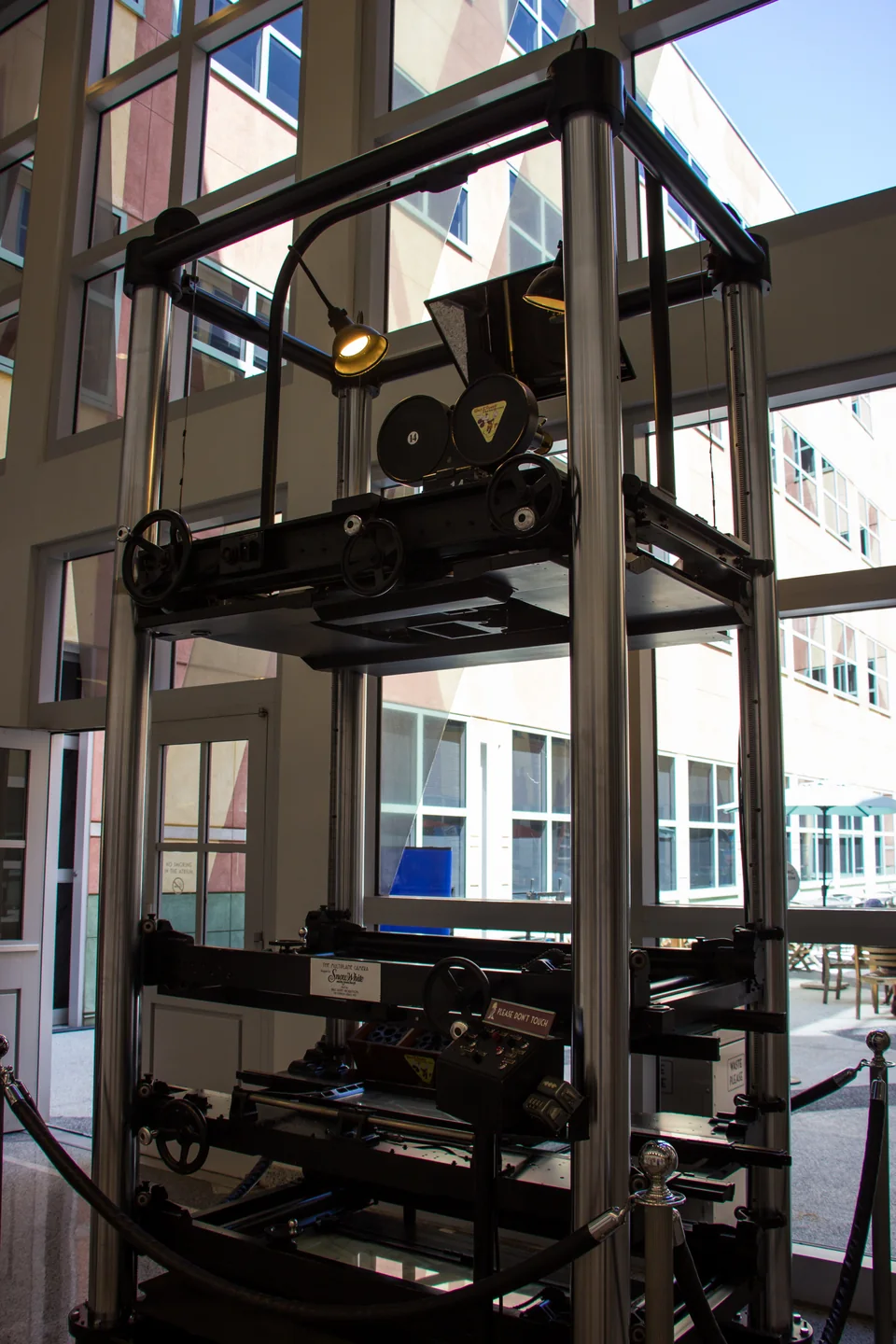
The short answer
The Old Mill turns a storm around an abandoned windmill into a study of movement, atmosphere and vulnerable animals. Its technical reputation becomes more informative when we separate the short’s creative team, the camera’s operating principles, the patent record and the awards given to different kinds of work.
Keep each attribution attached to its record
People, patents and awards at a glance
This comparison separates production roles from equipment development and the recipient named in an award record.
| Person or record | Documented role or subject | Evidence and boundary |
|---|---|---|
| Walt Disney | Producer of The Old Mill. | Academy cartoon-award entry; producer is a defined credit. |
| Wilfred Jackson / Graham Heid | Jackson in D23; both directors in the Gent programme. | The later programme does not allocate individual scenes. |
| Leigh Harline / Dick Rickard | Music / scenario in the Gent programme. | These are separate creative responsibilities. |
| William E. Garity | Studio camera development; inventor on 2,198,006. | Technical attribution differs from a film-directing credit. |
| Patent 2,201,689 | Disney’s method for locating characters and shadows. | Read its procedure separately from the control-device patent. |
| Walt Disney Productions, Ltd. | Recipient of the camera’s Class II technical plaque. | Company named in the Academy database. |
Chronology
A timeline of the turning points
An earlier Iwerks arrangement
The Family Museum dates Ub Iwerks’s own horizontal multiplane design to this year.
The short is released
The Old Mill reaches audiences as a Silly Symphony.
Film and equipment are recognized
The ceremony honors 1937 releases; the cartoon award and the technical plaque have separate entries.
A later technical filing and grant
Garity’s control-device application and grant follow the film’s release.
National Film Registry selection
The Library of Congress includes The Old Mill in that year’s preservation selection.
A short film built around a changing environment
D23 dates The Old Mill to 5 November 1937 and identifies it as a Silly Symphony directed by Wilfred Jackson. Animals shelter in a disused mill as a storm develops. Wind sets its machinery moving, and the occupants face a danger created by their own shelter. The return of calm gives the episode its resolution.
The Library of Congress emphasizes lighting, animal behavior and Leigh Harline’s orchestral score alongside the camera. This broader description matters: the effect of a threatening environment depends on the coordination of image, action and sound. A machine can provide ways to photograph depth; artists still decide what the audience notices and when.
How separated planes create an impression of depth
Moving closer to a flat painting enlarges its near and distant scenery together. The Family Museum explains how separating foreground, middle distance and background allows selected levels to move independently, creating a more convincing impression of travel into the picture.
Garity’s patent describes separated artwork photographed frame by frame, with control of illumination and positioning. Its interlock permits exposure after the operators complete their adjustments. This makes coordination part of the explanation of the apparatus.
The crew’s work extends beyond the name on the film
The Academy identifies Walt Disney as the short’s producer. D23 names Jackson as director, while Film Fest Gent’s 2023 programme lists both Jackson and Graham Heid as directors, Dick Rickard for scenario and Harline for music. The programme is a later screening record; it does not explain the division of direction between Jackson and Heid. These descriptions should remain attributed rather than being merged into an invented account of who supervised each scene.
The Family Museum associates the studio’s vertical design with Bill, or William, Garity and describes technicians adjusting lights, cel setups and plane positions. Its account does not supply this film’s full camera crew.
First use needs a defined technical scope
The Walt Disney Archives’ retrospective calls this the first Silly Symphony to use the multiplane camera in production. That is a useful, bounded claim. The Family Museum also describes Iwerks’s horizontal arrangement from 1933, developed during his period running a separate studio. His earlier experiment and the Disney studio’s later vertical system belong in a history of related approaches.
Consequently, this guide treats The Old Mill as the landmark introduction of Disney’s studio system within that series. It does not turn a company milestone into proof that nobody had previously separated image planes. Comparing technical arrangements is more informative than assigning all experiments in animated depth to one inventor.
Two patent numbers answer different questions
U.S. Patent 2,198,006 names Garity as inventor and Walt Disney Productions as assignee. It records filing on 16 November 1938 and grant on 23 April 1940. Read those dates as milestones for the documented control device. Establishing the precise apparatus used for an earlier shot would require production records.
U.S. Patent 2,201,689, Art of Animation, names Walter E. Disney. Filed on 1 September 1936 and granted on 21 May 1940, it describes projecting a character image onto a three-dimensional model to help locate the character and its shadow in a finished drawing or photographic record. Its inventor, procedure and number differ from Garity’s control-device patent. Citing one number as though it documents the other procedure obscures what the originals actually describe.
The cartoon award and the camera award are separate
The Academy’s ceremony record dates the 10th awards to 10 March 1938, honoring films released in 1937. It lists The Old Mill as the Short Subject (Cartoon) winner, with Walt Disney identified as producer. The eligibility year and presentation year explain why a 1937 film appears on a 1938 ceremony page.
The Academy’s database separately records a Scientific or Technical Award, Class II, to Walt Disney Productions, Ltd., for the camera’s design and use in production, in the form of a plaque. It labels this entry 1937 (10th). The named recipient is the company. Historical discussion of Garity’s engineering contribution should preserve that distinction rather than rewrite the formal award as an individual directing or inventing credit.
Use the records to guide a closer viewing
The Library’s 2015 selection describes the short as a place for technological and artistic experimentation associated with the studio’s feature ambitions. That assessment supports studying it alongside Snow White. It does not provide a scene-by-scene equipment log or a complete list of contributions by every worker.
For a viewing exercise, choose an approach toward the mill and record how near and distant objects change size or overlap. Keep that observation separate from the technical explanation, then ask which record could establish the apparatus used for the shot. Finally, compare what the soundtrack contributes to the same passage. These are suggested research questions, without claiming that this article reconstructed the film’s camera sheets or verified every shot.
Continue the chronology
Related history guides
Fantasia and Fantasound
Continue from depth photography to sound recording, theater systems and their collaborators.
Read the timeline1937Snow White: Artists and Collaboration
Continue from photographic technique to the departments and performers behind the feature.
Read the timeline1923–1937Walt and Roy Disney: Building the Studio
Place technical experimentation in the studio’s wider financing and distribution history.
Read the timeline1928Who Created Mickey Mouse?
Investigate Iwerks’s earlier creative work and the distinction between different kinds of attribution.
Read the timelineStudy resourceDisney Animation History: Study Worksheet
Practice comparing records, dates and production responsibilities.
Read the timelineConnected biographies
Read the engineer’s and producer’s careers
1899–1971
Bill Garity
Sound and camera engineer; studio production managerBill Garity, also known as William E. Garity, was a sound and camera engineer whose career linked early sound-film work with Disney animation and later Walter Lantz productions. His contribution involved practical systems, engineering teams and the organization of production, extending beyond a single camera or soundtrack.Read biography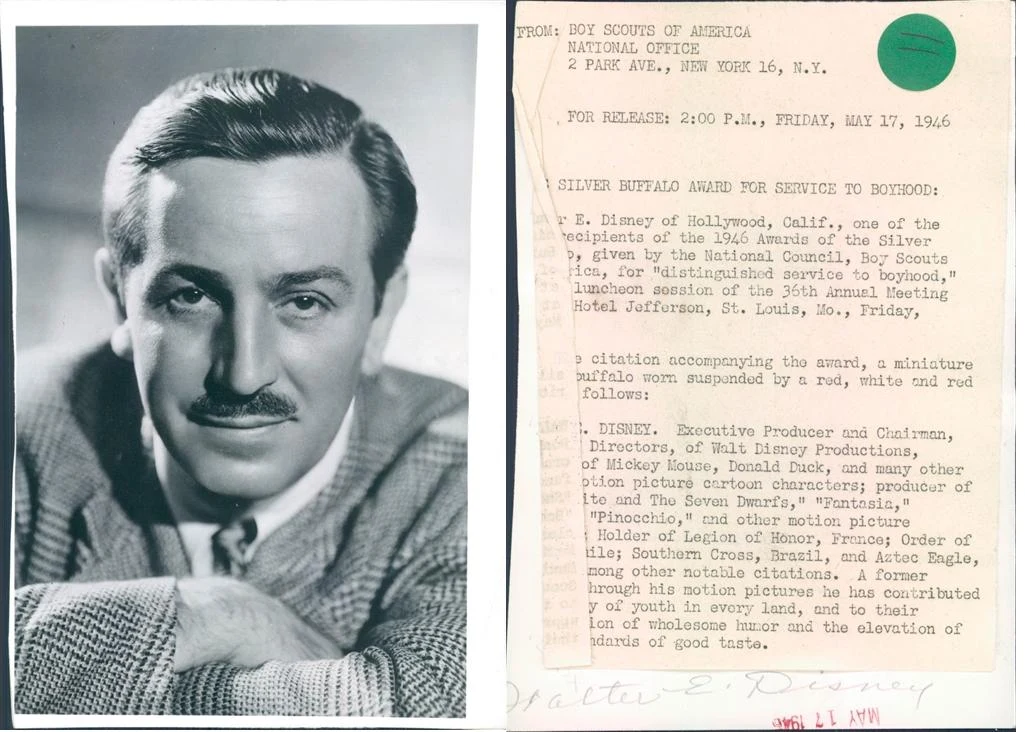
1901–1966
Walt Disney
Animation producer and entertainment entrepreneurWalt Disney was an American animation producer and entrepreneur who built an entertainment business with his brother Roy. His work ranged from silent cartoon production to Mickey Mouse, animated features, television and Disneyland, with essential contributions from artists, performers and business partners.Read biographyQuick answers
Common questions
- How does a multiplane camera create depth?
- It photographs artwork arranged on separated levels. Controlled changes in their positions and lighting help create an impression of space in the composite image.
- Who directed The Old Mill?
- D23 identifies Wilfred Jackson. Film Fest Gent’s later programme also lists Graham Heid. The records cited here do not establish their scene-by-scene division of work.
- Did The Old Mill win its Oscar in 1937 or 1938?
- The film belongs to the 1937 eligibility year. Its Short Subject (Cartoon) award was presented at the 10th ceremony in March 1938; the camera received separate technical recognition.
- Does the 1940 grant date tell us when every camera component was built?
- No. The grant documents a patent milestone; a component’s construction or use on a particular shot requires other evidence.
Primary and institutional sources
How this history was checked
Compared two original patent specifications with museum technical guidance, studio accounts, the Academy’s ceremony and award database, and a festival programme. The Disney-related sources have overlapping institutional interests. The Library’s summary was available in indexed text; its direct page returned an access error during review. No original crew ledger, complete camera-sheet set or full-film technical reconstruction was inspected. The photograph shows equipment displayed in 2014 and does not identify the particular camera used on every 1937 shot. Photo attribution and licence are available through the site’s image-licensing directory. This article was reviewed on 24 October 2026.
- D23 / Disney A to ZThe Old Mill: release date, story and Jackson directing credit
- Christina Pappous / Walt Disney Archives, D23A Look Back at the Oscars—The Old Mill (2021): scope of the Silly Symphony milestone
- The Walt Disney Family MuseumMultiplane Educator Guide: PDF pp. 3–7, operation, Iwerks and Garity
- U.S. Patent Office / Google PatentsWilliam E. Garity, Control Device for Animation, 2,198,006: original specification at PDF p. 11
- U.S. Patent Office / Google PatentsWalter E. Disney, Art of Animation, 2,201,689: original specification at PDF p. 5
- Academy of Motion Picture Arts and SciencesThe 10th Academy Awards: 1938 ceremony and cartoon award
- Academy Awards DatabaseWalt Disney Productions, Ltd.: 1937 (10th) Scientific or Technical Award, Class II
- Library of Congress / National Film Preservation BoardThe Old Mill (1937): National Film Registry description, 2015 selection
- Film Fest GentThe Old Mill: 2023 screening programme and selected production credits
- HarshLight / Flickr and Wikimedia CommonsMultiplane Camera: 2014 photograph, original 2015 Commons upload and CC BY 2.0 record