
The short answer
Snow White and the Seven Dwarfs emerged from a chain of creative and production decisions. Following those responsibilities explains how a studio made a feature, while giving contributors a clearer place than a single producer’s name can provide.
A production relationship map
Follow the work from planning to a finished image
This is a selected role map. It is not a complete crew list or an estimate of the share of work performed by each person.
| Person or team | Contribution | Connection to other work |
|---|---|---|
| Walt Disney / David Hand | Producer / supervising director. | Production leadership and screen direction. |
| Adriana Caselotti | Voice performance. | A recorded element of the character. |
| Marjorie Belcher | Movement reference. | Actions available for animators to interpret. |
| Hazel Sewell / Ink and Paint | Visual decisions and cel preparation. | Lines and color carried toward photography. |
| Churchill / Harline / Smith | Music contributions. | Music connected with the visual performance. |
| Roy O. Disney | Studio business responsibilities. | Organizational context, not an animation credit. |
Chronology
A timeline of the turning points
Movement is studied
Marjorie Belcher performs reference actions that artists interpret for the character.
A test-reel record
The museum dates a document associated with Ingeborg Willy; the listing alone does not reveal its full contents.
Hollywood premiere
The Carthay Circle premiere is a specific event, separate from later reissues.
Production leadership and screen direction were separate jobs
AFI lists Walt Disney as producer and David Hand as supervising director, alongside sequence directors and other departments. Those headings describe a production structure. They do not identify the maker of every drawing or prove that the producer personally directed each scene. A department credit is a starting point for attribution, not a substitute for scene-level research.
Sources for this section: [1]
The voice and the movement came from different performers
Adriana Caselotti supplied Snow White’s voice. D23’s profile describes her recording work and later memories of the role. Marjorie Belcher, later known as Marge Champion, performed movement reference. D23’s remembrance describes dancing and acting that animators could interpret. The two contributions belong to different stages of making the same character.
An animated performance can combine recorded delivery, observed movement and artists’ decisions about timing and expression. A reference performer should receive recognition without being described as the person who drew every frame. Likewise, identifying a voice does not identify the movement model. The film’s production is clearer when both names remain visible.
Hazel Sewell connects color decisions with skilled production work
The Family Museum identifies Hazel Sewell as head of Ink and Paint and an art director on Snow White. Its account refers to production notes recording her views on color. That is evidence of a named contribution to visual decisions, beyond a generic acknowledgment that the film had a large workforce.
The museum’s separate Ink and Paint account explains how workers transferred lines to transparent cels and applied paint before photography. Precision at this stage affected what audiences eventually saw. Calling it simply mechanical tracing understates the judgment involved; calling every inker an animator erases a different kind of work.
Credit the music without reducing it to one famous song
D23 describes Frank Churchill’s work on Snow White’s songs and his collaboration with Leigh Harline. AFI’s broader music listing also includes Paul Smith. Songwriting and the film’s complete musical construction are related but different credits. This guide names those roles without reproducing lyrics or assigning every musical passage to a single composer.
Cooperation operated within unequal opportunities
The museum’s account of women artists documents restrictions steering applicants toward Ink and Paint, while also describing Bianca Majolie’s entry into the story department. A general employment rule and an exception need to be read together. Recognizing collaboration does not establish that workers had equal access to training, promotion or public recognition.
Roy O. Disney’s business responsibilities supplied another part of the organization. His corporate biography identifies financing, licensing and distribution work. These responsibilities help explain how a studio could operate; they should not be turned into a claim that Roy held an unlisted animation credit on this film.
Separate a credit, a recollection and an archive description
AFI combines credits with historical notes that distinguish contemporary trade reporting from later accounts. D23’s Champion remembrance contains retrospective testimony. The museum’s test-reel record names Ingeborg Willy and dates an object, but supplies no readable full transcription. We use that listing as evidence that the described record exists, without inventing its recommendations or effect on the finished film.
Continue the chronology
Related history guides
The Old Mill and the Multiplane Camera
Compare depth photography, named production roles, patent records and two separate awards.
Read the timeline1923–1937Walt and Roy Disney: Building the Studio
Follow the contracts, financing and distribution behind the studio’s growth.
Read the timeline1928Who Created Mickey Mouse?
Compare the evidence for creative credit, production order and the sound breakthrough.
Read the timelineStudy resourceDisney Animation History: Study Worksheet
Practice source comparison with 14 questions, including image and sound technology, evidence pointers and sample answers.
Read the timelineConnected biographies
The founders in their wider careers
1901–1966
Walt Disney
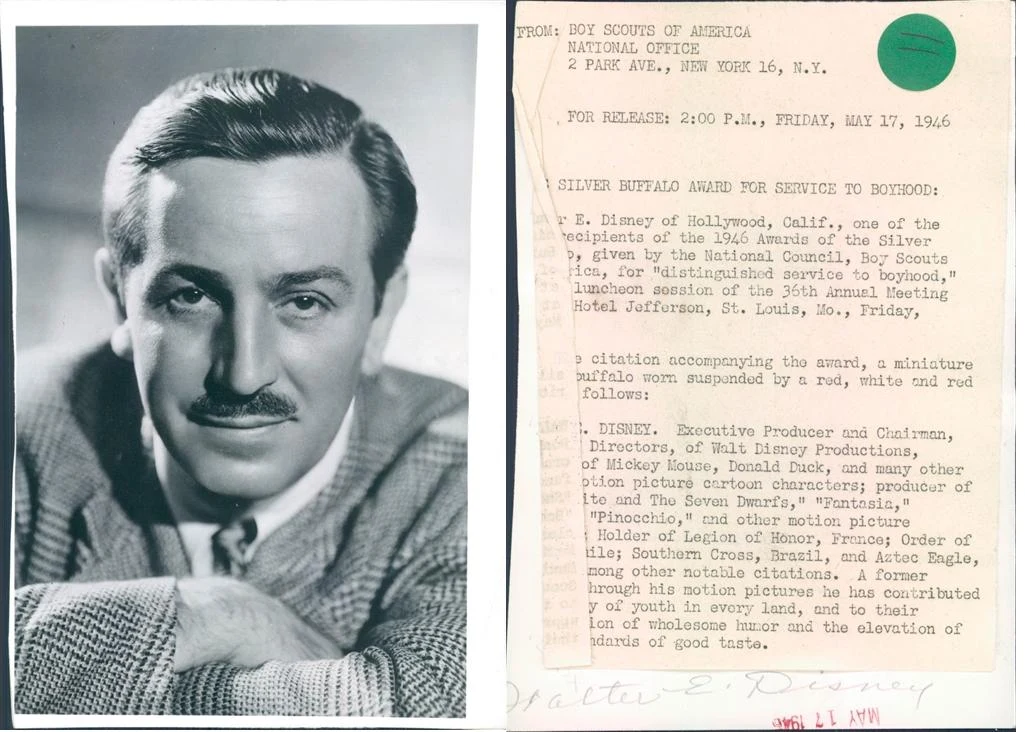
Animation producer and entertainment entrepreneurWalt Disney was an American animation producer and entrepreneur who built an entertainment business with his brother Roy. His work ranged from silent cartoon production to Mickey Mouse, animated features, television and Disneyland, with essential contributions from artists, performers and business partners.Read biography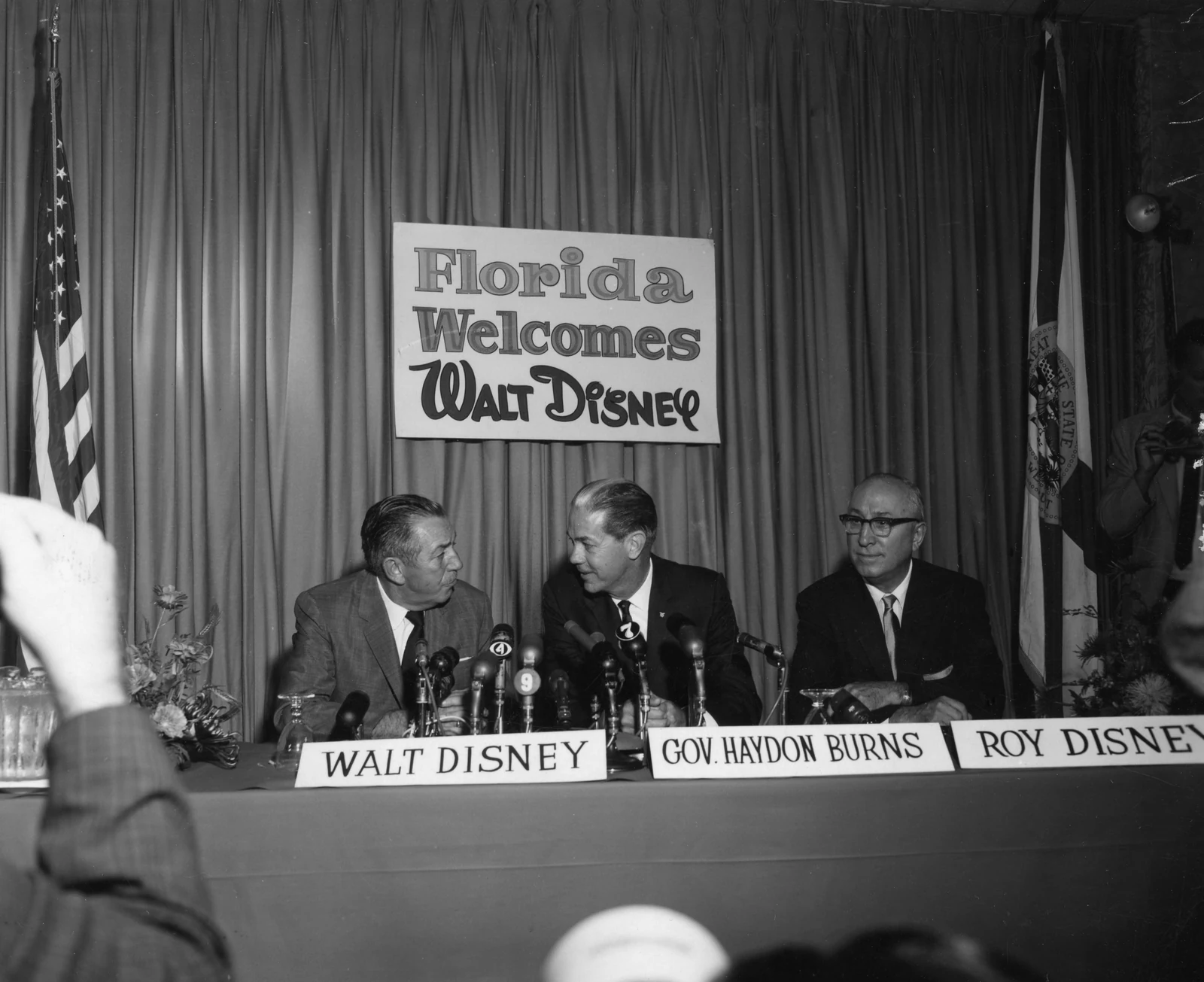
1893–1971
Roy O. Disney
Studio cofounder, business executive and financierRoy O. Disney was the business partner and older brother of Walt Disney. He helped sustain the studio’s growth, develop distribution and licensing, and carry the Florida resort project through to its 1971 opening after Walt’s death.Read biographyQuick answers
Common questions
- Who directed the 1937 Snow White?
- David Hand was supervising director. Walt Disney was producer; AFI also lists sequence directors and other production roles.
- Were Snow White’s voice and movement model the same person?
- No. Caselotti provided the voice; Belcher, later Marge Champion, performed movement reference.
- Is this about the later live-action adaptation?
- No. The scope is the 1937 animated feature and the evidence for its production roles.
Primary and institutional sources
How this history was checked
Checked AFI’s role headings and selected historical notes against museum and D23 accounts. Those institutions have different purposes; D23 and the Family Museum are interested Disney-history sources. No claim is made to have watched the complete film, inspected every original credit frame, transcribed the test-reel document or reconciled disputed character-by-character assignments. The later portrait does not depict this production. This article was reviewed on 24 October 2026.
- American Film InstituteSnow White and the Seven Dwarfs (1937): credits and historical notes
- D23 / Disney LegendsAdriana Caselotti: voice performer
- Beth Deitchman / D23Remembering Marge Champion (2020)
- Brenda Litzinger / The Walt Disney Family MuseumImportant Women in Disney History: Hazel Sewell
- The Walt Disney Family MuseumLook Closer: Women in the Disney Ink and Paint Department
- D23 / Disney LegendsFrank Churchill: music and songwriting
- Paula Sigman Lowery / The Walt Disney Family MuseumWorth as Much as a Man: Cracking the Celluloid Ceiling
- D23 / Disney A to ZDisney, Roy Oliver: company offices and business responsibilities
- The Walt Disney Family MuseumComments on Snow White and the Seven Dwarfs Test Reels: object record