
The short answer
Mickey Mouse’s creation involved different kinds of work. A useful answer identifies the people and their contributions, separates the order films were made from their release, and checks exactly what a source means by “first.”
Read the claim and its boundary
What each source helps establish
The rows compare the questions these sources answer. Institutional reputation does not remove the need to inspect wording and authorship.
| Source | Useful evidence | Limit |
|---|---|---|
| MoMA | Direction and design/animation roles. | Its discussion cites Smith; it is not wholly independent of his essay. |
| Dave Smith’s essay | Film sequence and a qualified origin account. | An archivist’s retrospective essay, not a transcript of the train journey. |
| Family Museum | Additional artists and Iwerks’s career context. | Interested institutional interpretation, not a complete staff record. |
| Copyright Office | A narrowly framed Mickey-and-Minnie sound milestone. | A 2024 copyright discussion, not a full history of sound animation. |
Chronology
A timeline of the turning points
Two silent productions
Plane Crazy and The Gallopin’ Gaucho were made before Steamboat Willie.
A sound film reaches the Colony
Steamboat Willie opens at New York’s Colony Theater.
Iwerks leaves the studio
His departure follows the early Mickey work; it is a separate event from the Oswald contract crisis.
An origin story needs a different kind of evidence
Dave Smith’s essay describes Walt considering a replacement for Oswald during a train journey, but qualifies the possible connection with a remembered mouse. It then identifies Iwerks as the designer working with Walt’s input. The qualification matters: a retrospective origin anecdote and an attribution of production work answer different questions.
The Family Museum also names Les Clark in the early drawing work. Its account follows Iwerks beyond Mickey, including his 1930 departure and later technical career. This prevents a two-person summary from becoming a claim that nobody else contributed. The article is a museum interpretation with a strong interest in Disney history; it is not a contemporaneous production ledger.
First made and first released describe different orders
The two silent films preceded Steamboat Willie in production. The sound film’s November opening became the public breakthrough. These facts can coexist. A list arranged by production order should say so, rather than silently presenting it as a theatrical-release chronology. Neither a later soundtrack nor a modern upload date changes when the original silent version was made.
D23’s work-specific entries make the distinction explicit. Plane Crazy was the first Mickey cartoon made but the third released, with sound added, in 1929. The Gallopin’ Gaucho was the second produced and was released with added sound in 1928. Reading the two entries together is more precise than assigning one undifferentiated “debut” date to all versions.
Keep the claim about sound within its evidence
MoMA and Smith use broad first-in-sound language. The Copyright Office’s 2024 account uses the narrower description of the first sound film featuring Mickey and Minnie. Our wording follows that defined scope: Steamboat Willie was an early Mickey sound breakthrough. Establishing priority across all animation would require a separate comparison with earlier sound experiments.
This comparison does not use the essay’s Library of Congress address as proof of an independent institutional verdict. Its named author was Disney archivist Dave Smith, and the essay explicitly distinguishes his views from those of the Library. MoMA also cites Smith. Agreement between these pages therefore should not be counted as wholly independent corroboration.
Continue the chronology
Related history guides
Walt and Roy Disney: Building the Studio
Follow the contracts, financing and distribution behind the studio’s growth.
Read the timeline1937Snow White: Artists and Collaboration
Distinguish direction, voices, movement reference, animation and ink-and-paint work.
Read the timelineStudy resourceDisney Animation History: Study Worksheet
Practice source comparison with 14 questions, including image and sound technology, evidence pointers and sample answers.
Read the timelineConnected biographies
Read the creators’ wider careers
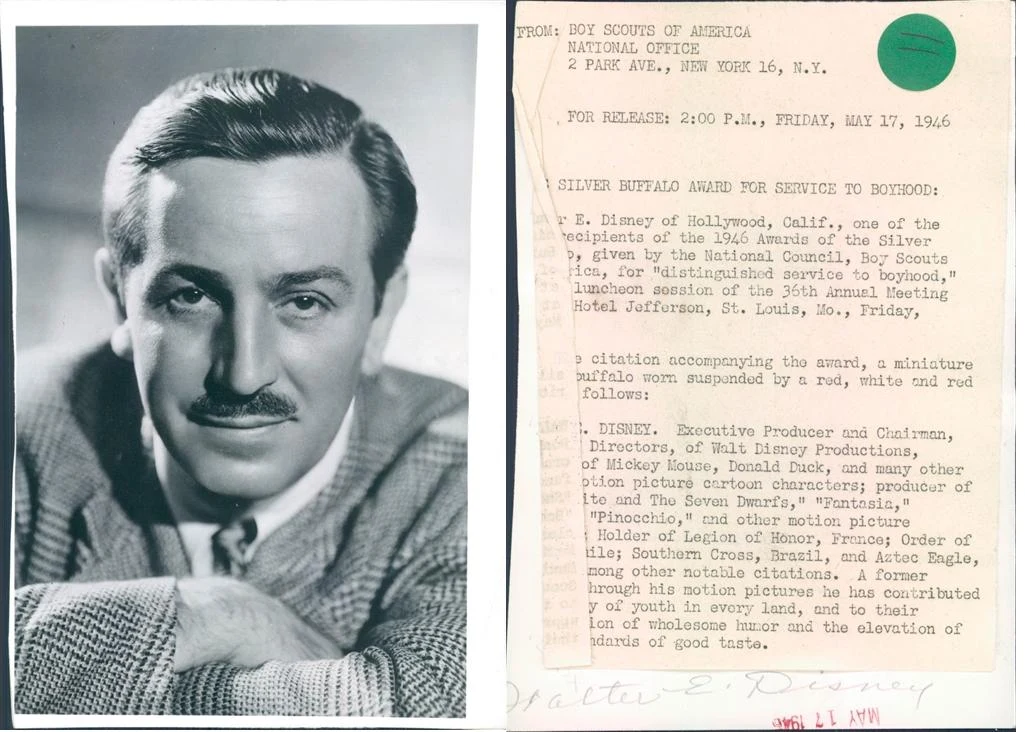
1901–1966
Walt Disney
Animation producer and entertainment entrepreneurWalt Disney was an American animation producer and entrepreneur who built an entertainment business with his brother Roy. His work ranged from silent cartoon production to Mickey Mouse, animated features, television and Disneyland, with essential contributions from artists, performers and business partners.Read biography1901–1971
Ub Iwerks
Animator and photographic-effects innovatorUb Iwerks helped shape the earliest Mickey Mouse films before running his own animation studio and later returning to Disney as a technical specialist. His career moved from drawing characters to developing ways of combining and reproducing images.Read biographyQuick answers
Common questions
- Did Walt Disney create Mickey Mouse alone?
- The sources support a collaboration, with Iwerks central to design and animation. A sole-author summary hides those different responsibilities.
- Was Steamboat Willie the first Mickey Mouse film made?
- No. The silent Plane Crazy and The Gallopin’ Gaucho were produced earlier. Production order and public release are different questions.
- Does this guide settle ownership of every Mickey design?
- No. It examines historical credit. Later character designs, trademarks and present-day licensing require separate, work-specific investigation.
Primary and institutional sources
How this history was checked
Read the named essays and museum entry, including Smith’s author disclaimer and MoMA’s reference to his essay. No full film viewing, original contract transcription, staff-ledger inspection or new archival discovery is claimed. The complete 1946 photograph is a later portrait, not evidence of the 1928 production. This article was reviewed on 24 October 2026.
- Museum of Modern ArtWalt Disney, Ub Iwerks: Steamboat Willie (1928)
- Dave Smith / National Film Preservation Board, Library of CongressSteamboat Willie: essay by Disney’s chief archivist emeritus
- Chris Mullen / The Walt Disney Family MuseumUb Iwerks: Master of Animation and Technology
- U.S. Copyright Office / Library of CongressLifecycle of Copyright: 1928 Works in the Public Domain (2024)
- D23 / Disney A to ZPlane Crazy: first produced, later sound release
- D23 / Disney A to ZThe Gallopin’ Gaucho: second produced, later sound release