
The short answer
Fantasound made the presentation of music part of Fantasia’s experiment. Understanding it means following a chain from musicians and recording sessions to mixing, synchronized playback and the auditorium. The records also reveal a collaboration among filmmakers, engineers, an equipment manufacturer and theater workers, with different responsibilities at each stage.
Read the role attached to the name
Selected contributors and the evidence for their work
Engineering papers, a production catalogue and award citations describe different kinds of contribution.
| Contributor | Documented contribution | Record to consult |
|---|---|---|
| William E. Garity / J. N. A. Hawkins | System-paper authors; named in the sound honor. | 1941 paper and Academy database. |
| Watson Jones / RCA | Manufacturer’s engineer; exhibition collaboration. | 1942 roadshow paper’s byline and affiliation. |
| C. O. Slyfield | Recording credit. | AFI’s detailed role headings. |
| C. A. Hisserich / Tickner | Automatic rear-speaker switching. | Specific attribution in the 1941 account. |
| Leopold Stokowski and his associates | Conducting; separate visualized-music recognition. | Film record and Academy citation. |
| Edward H. Plumb / Deems Taylor | Music direction / narration. | AFI credits; Plumb’s own article adds artistic analysis. |
Chronology
A timeline of the turning points
The earlier short’s recording
Garity and Jones date The Sorcerer’s Apprentice session at Pathé in Culver City to this month.
The New York premiere
Fantasia opens at the Broadway Theater with a specially equipped presentation.
The system explained by participants
Garity and Hawkins publish their technical account in the SMPE journal.
Separate achievements recognized
The 14th Academy ceremony follows the film’s original release; its database records distinct special awards.
Exhibition experience and artistic possibilities
Garity and Watson Jones discuss roadshow operation; Edward H. Plumb considers future uses.
A musical feature with several kinds of authorship
Fantasia pairs classical music with animated sequences, conducted by Leopold Stokowski and introduced by Deems Taylor. D23 places its premiere at New York’s Broadway Theater on 13 November 1940. The concert format matters to its sound history: the music is a major subject of the film, giving the presentation system an unusually prominent role.
AFI explains that its detailed credits draw on a contemporary programme and studio production information, with credits also appearing in the 1990 reissue. Its record distinguishes Edward H. Plumb’s music direction from Taylor’s narration and the work of sequence directors. A simplified single-director display cannot represent the full division of labor in this production.
Follow the chain from recording to theater playback
Garity and Hawkins describe a final sound print with left, center and right program tracks and a tone-control track. The control track governed gain, or amplification level; their mixing account also describes panning sound between speakers. Recording, mixing and playback were distinct stages, so a track count needs its production context.
The recording count needs its own qualification. The 1941 paper describes eight channels for the Philadelphia orchestral recording; Garity and Jones’s 1942 account reports nine installed recording channels there. AFI notes conflicting contemporary counts. These descriptions concern the recording stage. The cited material does not establish a definitive reconciliation, and neither number should be substituted for the final playback arrangement.
Engineering and performance credits answer different questions
Garity and Hawkins coauthored the system paper. It specifically credits C. A. Hisserich and Tickner with the automatic rear-speaker switching arrangement.
AFI lists Garity, C. O. Slyfield and Hawkins under recording. The roadshow paper identifies its coauthor Watson Jones with RCA Manufacturing Company. Read these alongside Stokowski’s conducting and Plumb’s music direction. They document complementary work, while leaving room for many contributors beyond the selected names below.
Fantasound developed through different installations
The 1941 account places Mark VIII at New York’s premiere, Mark IX with manual rear-speaker switching and Mark X with automatic switching in Los Angeles. These variants demonstrate why Fantasound should be described by installation and date.
Garity and Jones describe synchronized sound and picture films, theater-space and electrical requirements, and equipment weighing approximately 15,000 pounds in 45 cases. These practical demands help explain why the roadshow was an exhibition project as well as a recording achievement. Their report concerns particular operating experience, rather than every later stereo theater.
The Academy recognized sound and visualized music separately
The Academy database lists a special award to Walt Disney, William Garity, John N. A. Hawkins and RCA Manufacturing Company for advancing the use of sound through Fantasia. A separate special award names Stokowski and his associates for their achievement in visualized music. Both appear under 1941 (14th); the Academy’s ceremony page dates that event to 26 February 1942.
The recipients and purposes should remain distinct. These entries describe special recognition, rather than a competitive Best Sound win or the earlier camera award associated with The Old Mill. The same ceremony also included Disney’s Irving G. Thalberg Memorial Award, a separate producer honor. AFI reports that Fantasia had not played Los Angeles in 1940 and was therefore excluded from that year’s consideration, explaining the gap between its original release and Academy recognition.
A musician’s contemporary critique adds another perspective
In The Future of Fantasound, published in July 1942, Plumb argues that the film’s music-based format limited what it could demonstrate about placing dialogue and effects. He also notes that the orchestral recordings were complete before the available dimensional effects had been settled. This is a participant discussing constraints and future possibilities, rather than an independent audience survey.
Plumb stresses dramatic purpose and the need to plan writing, direction, music and recording together. He warns that extremely soft or loud sound can irritate unless the drama justifies it. His perspective shifts the question from how much equipment a theater possessed to how a production might use it. It also prevents a technical history from treating greater volume or more speakers as automatic artistic improvement.
Sources for this section: [3]
Check the edition before comparing what you hear
D23 records a new digitally recorded soundtrack conducted by Irwin Kostal in 1982, with narration by Hugh Douglas, and the return of the original soundtrack for the 1990 restoration. Later releases therefore require their own identification. Listening to a version available today cannot, by itself, recreate the original roadshow apparatus or establish what a particular 1940 audience heard.
For a listening exercise, first note the edition, conductor and playback setup. Choose one musical transition and describe its volume, apparent location and relationship to the image. Then separate those observations from claims about the original recording or theater equipment. Plumb’s article provides a useful question for discussion: what dramatic purpose would a proposed change in sound serve? This is a suggested exercise, not a report of a reconstructed historical screening.
Continue the chronology
Related history guides
The Old Mill and the Multiplane Camera
Compare a different technical collaboration and keep its camera award separate.
Read the timeline1928Who Created Mickey Mouse?
Return to early sound animation and the evidence for different creative roles.
Read the timeline1941–1945Disney’s Wartime Animation
Continue into project-specific clients, production records and wartime work.
Read the timeline1923–1937Walt and Roy Disney: Building the Studio
Place later experimentation in the studio’s business and production history.
Read the timelineStudy resourceDisney Animation History: Study Worksheet
Practice matching a historical claim to the kind of record that can support it.
Read the timelineConnected biographies
Read the engineer’s, conductor’s and producer’s careers
1899–1971
Bill Garity
Sound and camera engineer; studio production managerBill Garity, also known as William E. Garity, was a sound and camera engineer whose career linked early sound-film work with Disney animation and later Walter Lantz productions. His contribution involved practical systems, engineering teams and the organization of production, extending beyond a single camera or soundtrack.Read biography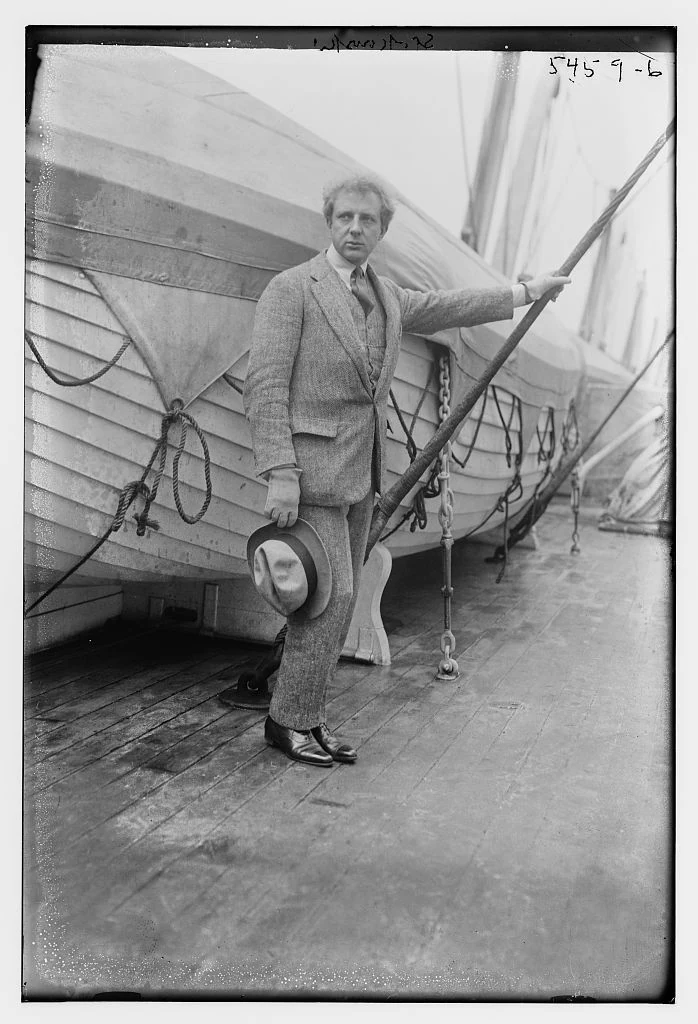
1882–1977
Leopold Stokowski
Orchestral conductor, arranger and orchestra founderLeopold Stokowski was a London-born conductor whose American career joined orchestral performance, musical arrangement, film and recording. His work on Fantasia was one part of a much longer career with musicians, composers and orchestral institutions.Read biography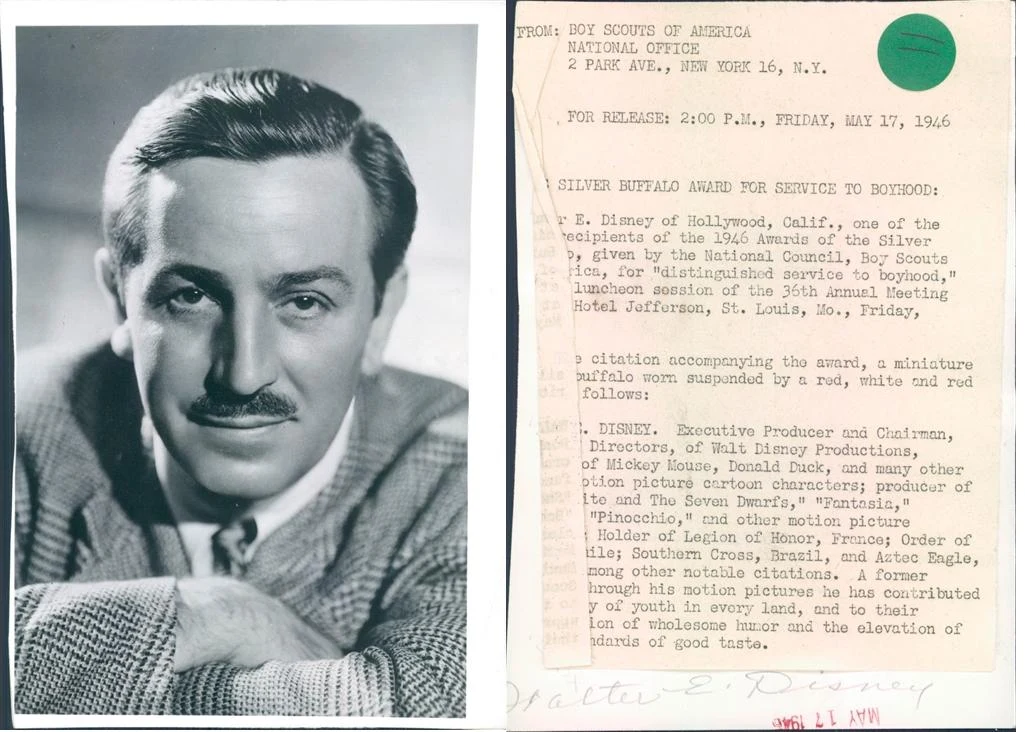
1901–1966
Walt Disney
Animation producer and entertainment entrepreneurWalt Disney was an American animation producer and entrepreneur who built an entertainment business with his brother Roy. His work ranged from silent cartoon production to Mickey Mouse, animated features, television and Disneyland, with essential contributions from artists, performers and business partners.Read biographyQuick answers
Common questions
- What was Fantasound?
- It was the developing multichannel sound system used for Fantasia’s specially equipped presentations, combining recorded sound, synchronized playback and controlled distribution in the theater.
- Did four sound-print tracks mean four musical playback channels?
- No. The described arrangement used three program tracks and a control track with a different function.
- Who received the Fantasia sound award?
- The Academy names Walt Disney, William Garity, John N. A. Hawkins and RCA Manufacturing Company. Stokowski and his associates received a separate special award.
- Why does a 1940 film appear in the 1942 ceremony record?
- AFI reports that the film’s lack of a Los Angeles engagement in 1940 kept it out of that year’s consideration. The special awards appear under 1941 (14th), presented in February 1942.
- Does a modern stereo edition reproduce the original roadshow exactly?
- Edition and playback equipment must be identified. Later recordings and restorations are part of the release history, and they do not establish the conditions of an original engagement.
Primary and institutional sources
How this history was checked
Read three period papers through the American Widescreen Museum’s transcriptions, keeping its later curatorial comments separate from the authors’ text. SMPTE’s publication record confirms the 1941 paper’s authors and date; it is the same work, not independent corroboration. Compared these accounts with AFI, D23 and the Academy’s named citations. The engineers and Plumb were participants, not independent evaluators. No full-film listening comparison, original-equipment demonstration or complete crew-file inspection is claimed. The earlier Stokowski portrait is contextual; film stills, score pages and journal photographs have not been reproduced. This article was reviewed on 24 October 2026.
- William E. Garity and J. N. A. Hawkins / Journal of the Society of Motion Picture EngineersFantasound, August 1941: period paper transcribed by the American Widescreen Museum
- William E. Garity and Watson Jones / Journal of the Society of Motion Picture EngineersExperiences in Road-Showing Walt Disney’s Fantasia, July 1942: transcription
- Edward H. Plumb / Journal of the Society of Motion Picture EngineersThe Future of Fantasound, July 1942: participant’s artistic appraisal, transcribed
- American Film InstituteFantasia (1940): credit provenance, production notes and detailed roles
- D23 / Disney A to ZFantasia: premiere, concert format and later soundtrack versions
- Academy Awards Database1941 (14th) Special Awards: the sound collaborators and Stokowski’s associates
- Academy of Motion Picture Arts and SciencesThe 14th Academy Awards: 26 February 1942 ceremony
- Bain News Service / Library of CongressStokowski, circa 1920–1925: LC-DIG-ggbain-32359 and item rights advisory
- Library of Congress, Prints & Photographs DivisionGeorge Grantham Bain Collection: rights and restrictions statement