
The short answer
After defections and political violence destabilised the one-seat PBS government elected in 1985, Sabah returned to the polls in May 1986. PBS won 34 of 48 seats, giving Joseph Pairin Kitingan a two-thirds majority before the party entered Barisan Nasional.
Election result
How the 1986 result changed the assembly
PBS expanded from a majority of one to a two-thirds majority. The seat table shows why the second mandate was institutionally different from the first.
| Party | 1986 seats | Change from 1985 | Position after election |
|---|---|---|---|
| Parti Bersatu Sabah (PBS) | 34 | +9 | Government with two-thirds majority |
| United Sabah National Organisation (USNO) | 12 | −4 | Largest opposition party |
| BERJAYA | 1 | −5 | Reduced to one seat |
| Sabah Chinese Consolidated Party | 1 | +1 | Won the remaining elected seat |
Chronology
A timeline of the turning points
PBS wins a one-seat majority
The new party won 25 of 48 seats and removed BERJAYA from the state government.
Pairin becomes chief minister
Joseph Pairin Kitingan took office after a disputed attempt to install a rival administration.
Defections weaken the narrow majority
The government’s one-seat cushion left it exposed to crossovers and repeated confidence challenges.
The state assembly is dissolved
Pairin sought a new mandate rather than continue with an unstable post-1985 alignment.
Bombings, arson and street violence escalate
Unrest affected Kota Kinabalu, Sandakan and other locations; contemporary reporting recorded deaths, injuries and a curfew.
A dusk-to-dawn curfew is imposed
Police restricted movement in the capital after clashes, fires and damage to vehicles and shops.
Sabah votes again
All 48 elected seats were contested little more than a year after the previous state election.
PBS wins 34 seats
The result gave Pairin a two-thirds majority and added nine seats to the party’s 1985 total.
PBS applies to join Barisan Nasional
The state party moved from confrontation toward formal cooperation with the federal governing coalition.
PBS governs inside BN
The arrangement reduced immediate conflict but did not resolve every federal–state disagreement.
Why was there another Sabah election in 1986?
The April 1985 election had given Parti Bersatu Sabah 25 of 48 seats, the smallest possible majority. Joseph Pairin Kitingan became chief minister, but defections and rival claims to government continued after the ballot.
By early 1986 the assembly balance was too unstable to provide a durable mandate. Pairin advised dissolution on 26 February and asked voters to decide again instead of depending on shifting allegiances.
The snap election was therefore both an electoral contest and a test of whether the 1985 PBS victory represented lasting support. It took place amid a much more dangerous security environment than the first vote.
What was the 1986 Sabah unrest?
In March 1986, political conflict spilled into bombings, arson, demonstrations and clashes in Kota Kinabalu and other urban centres. Contemporary reports recorded multiple deaths, injuries and extensive property damage.
Police imposed a dusk-to-dawn curfew in Kota Kinabalu on 19 March. UPI described attacks on shops and vehicles, while academic work on the Pairin period records bomb blasts in several of Sabah’s largest towns.
Later accounts sometimes call the episode the “Silent Riot.” Sources differ in emphasis and political attribution, so this guide separates verified events from claims about who organised them and does not present disputed responsibility as settled fact.
How were politics and communal identity connected?
PBS described itself as multiracial, but its rise was closely associated with Pairin’s Kadazandusun leadership and strong non-Muslim support. USNO drew heavily from Muslim-bumiputera constituencies, while BERJAYA retained a separate political network.
Contemporary reporting frequently framed the violence through a Christian–Muslim divide. That framing captured a visible dimension of mobilisation but could also simplify a conflict involving party competition, state power and federal–state relations.
A responsible account should therefore acknowledge communal tension without treating communities as single political actors. Election results varied across constituencies, and PBS itself included candidates and supporters from several backgrounds.
What were the 1986 election results?
PBS won 34 of 48 seats, nine more than in 1985. USNO won 12, while BERJAYA and the Sabah Chinese Consolidated Party won one each.
Thirty-four seats placed PBS above the 32 required for a two-thirds majority in a 48-seat elected chamber. Pairin no longer depended on the single-seat cushion that had defined his first administration.
The result was also a severe setback for the former governing party. BERJAYA fell from six seats to one, while USNO lost four of the 16 seats it had secured the previous year.
Why did PBS win a larger majority?
The election allowed voters to judge the government directly after a year of contested legitimacy. PBS could campaign on the argument that its 1985 mandate had been obstructed rather than tested through ordinary government.
The opposition was fragmented. USNO and BERJAYA remained separate organisations, and neither reconstructed the broad coalition needed to replace PBS across the state’s varied constituencies.
The violence also made stability a central issue. The 34-seat result supplied a clear institutional answer: Pairin and PBS would remain in office with enough seats to resist immediate defection-based reversal.
What happened after the vote?
Pairin continued as chief minister and announced that PBS would seek entry into Barisan Nasional. The party was subsequently accepted into the federal governing coalition.
Joining BN created a route to normalise relations between Kota Kinabalu and Kuala Lumpur after the confrontation surrounding the 1985 transfer of power. It also placed both PBS and USNO within the wider federal coalition while they remained state-level rivals.
The arrangement lasted until October 1990. PBS then left BN shortly before the federal general election, showing that the 1986 settlement had managed conflict without eliminating the underlying autonomy dispute.
Why does the 1986 election still matter?
It transformed the fragile 1985 victory into a decisive electoral mandate. PBS could no longer be described as a new party governing only because of a one-seat accident.
The episode also demonstrates why election history cannot be reduced to a seat table. Security, communal mobilisation, constitutional confidence and relations with the federal government all shaped the conditions under which voting occurred.
Finally, the sequence connects later Sabah turning points: the 1990 PBS landslide and exit from BN, the 1994 defection crisis and modern debates over anti-party-hopping safeguards.
Continue the chronology
Related history guides
The 1985 Sabah State Election
Start with the one-seat PBS victory that preceded the unrest.
Read the timeline16–17 July 1990The 1990 Sabah Election and PBS–BN Split
Follow PBS from its larger mandate to its departure from BN.
Read the timeline1985–presentParti Bersatu Sabah: History and Leaders
Place the snap election inside the party’s full history.
Read the timelineFebruary–March 1994The 1994 Sabah Political Crisis
See how defections later succeeded in changing the government.
Read the timelineBiography context
Explore Sabah, Malaysia through connected lives
Connected biographies
Six figures connected to PBS, USNO, BERJAYA and the 1986 turning point
1940—
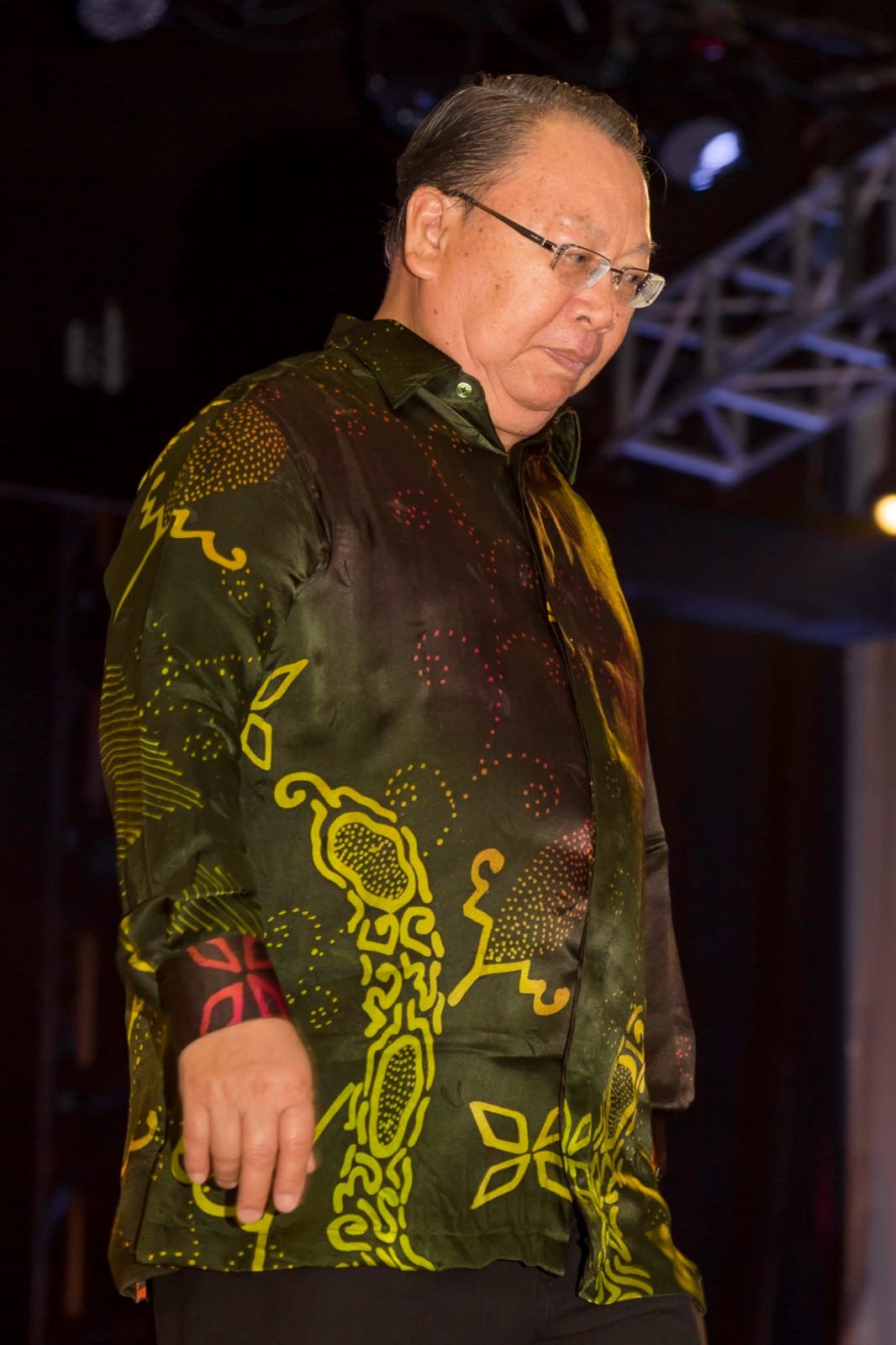
Joseph Pairin Kitingan
Founder of PBS and former Chief Minister of SabahThe lawyer and Kadazandusun leader who founded PBS, led four consecutive state-election victories and served as Sabah’s chief minister for nearly nine years.Read biography
1918—1995
Datu Mustapha Datu Harun
First Yang di-Pertua Negeri of SabahA Sabah formation-era leader who became the state’s first head of state, later served as chief minister and expanded education through the Sabah Foundation.Read biography
1953—
Maximus Ongkili
Chairman of the Energy Commission of Sabah and former PBS PresidentThe researcher-turned-politician who represented Sabah in Parliament for twenty-seven years, led several federal ministries and became PBS’s second president.Read biography
1948—
Jeffrey Kitingan
President of STAR and Member of Parliament for KeningauThe Keningau MP, Tambunan assemblyman and STAR founder whose long career centres on Sabah autonomy, MA63 and Indigenous political representation.Read biography1930—
Harris Salleh
Former Chief Minister of SabahThe civil servant turned BERJAYA co-founder who governed Sabah for almost nine years before the 1985 PBS electoral upset.Read biography1949—
Osu Sukam
Former Chief Minister of SabahThe Papar politician and long-serving member of Parliament who led Sabah for two years after the 1999 state election.Read biographyQuick answers
Common questions
- When was the 1986 Sabah state election held?
- Polling took place on 4 and 5 May 1986.
- Who won the 1986 Sabah election?
- Parti Bersatu Sabah won 34 of the 48 elected seats and Joseph Pairin Kitingan remained chief minister.
- Why did Sabah hold elections in both 1985 and 1986?
- The 1985 result left PBS with a one-seat majority that was weakened by defections and political conflict, leading Pairin to seek a fresh mandate.
- How many seats did USNO win in 1986?
- USNO won 12 seats, down from 16 in 1985.
- Did PBS have a two-thirds majority?
- Yes. Its 34 seats exceeded the 32 required for two-thirds of the 48 elected seats.
- What was the 1986 Sabah “Silent Riot”?
- The term refers to the period of bombings, arson, demonstrations and street violence around the political crisis and snap election, especially in March 1986.
- How many people died in the unrest?
- Academic and contemporary accounts commonly report five deaths across the broader period of violence.
- Did PBS join Barisan Nasional after the election?
- Yes. PBS applied to join BN after its victory and governed as a coalition component until leaving in October 1990.
Primary and institutional sources
How this history was checked
Academic studies establish the political sequence and federal–state context; the historical results dataset supplies the seat count; contemporary reports document the curfew and violence without resolving disputed attribution. This article was reviewed on 4 October 2026.
- JATI, University of MalayaSabah Politics Under Pairin
- IRASEC / Universiti Malaysia SarawakPolitical Development in Sabah, 1985–2010
- Tindak Malaysia1986 Sabah State Election Constituency Results Dataset
- UPI ArchivesCurfew Imposed on Sabah State Capital, 19 March 1986
- The Washington PostChristian-Muslim Violence Flares in Malaysia
- Christian Science MonitorSabah’s Multiracial Political Experiment After the Election
- Government of SabahFormer Chief Ministers of Sabah
- Wikimedia CommonsJoseph Pairin Kitingan Portrait and Licence Record